
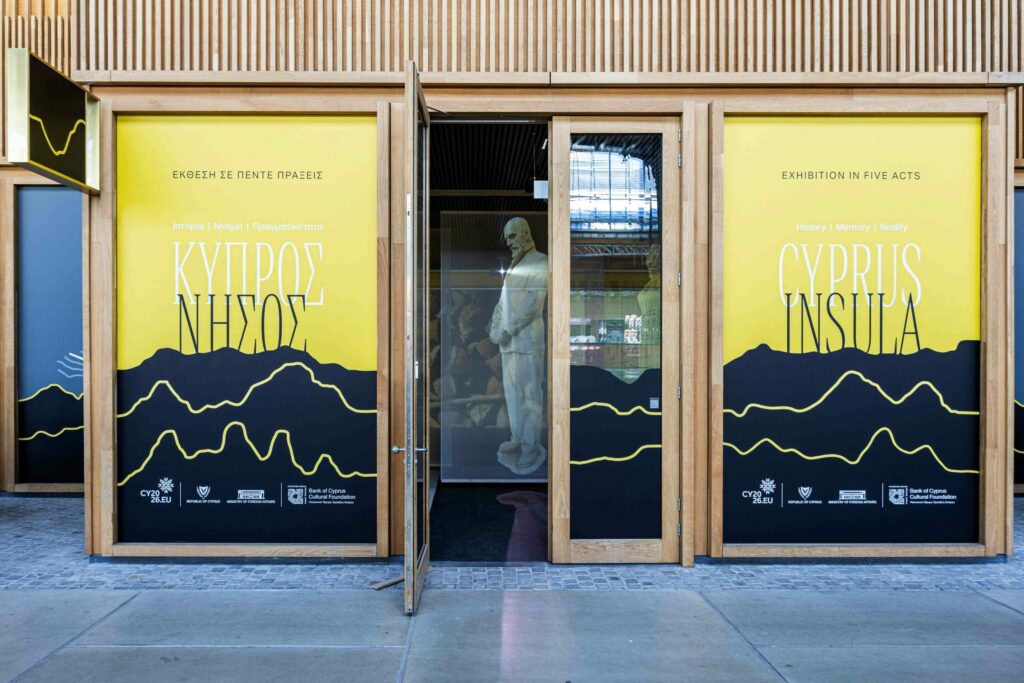
Halfway during the Cyprus EU Presidency, Cyprus brings its history and culture to Brussels in the form of a digital exhibition at the Gare Maritime venue on the Tour & Taxis site in Brussels.
The exhibition, which opened last week, is an adaptation of ‘Cyprus Insula - History, Memory, Reality’, the landmark exhibition of the Bank of Cyprus Cultural Foundation. Using digital media and complemented by materials from the Foundation’s photographic and archival collections, it shows elements of the country’s rich, complex, and multifaceted past.
The Cyprus EU Presidency was officially opened in beginning of January in Nicosia with a cultural event. The opening was designed as a cultural journey through the country's long history showing its archaeological heritage and traditions and culminating in the anti-colonial struggle for independence in 1960 and the joining of the EU in 2004.
At the opening ceremony in Nicosia, European Commission President Ursula von der Leyen described Cyprus as “a land of remarkable beauty, fitting for the birthplace of Aphrodite”. But Cyprus is much more. Structured around the notions of 'Time, Place, and People', the exhibition introduces visitors to the concept of Cypriotness by highlighting what has shaped Cyprus’s unique culture and identity.
“Cyprus Insula invites reflection on Cypriot identity over time, opening space for inquiry, dialogue, and contemplation,” curators Yiannis Toumazis and Demetra Ignatiou told The Brussels Times.
“Through interactive and immersive experiences, the exhibition presents Cyprus’s material culture, natural wealth, and long history through narratives and paths addressed to audiences of all ages.”
Credit: Nicolas Economou
The exhibition unfolds in five ‘acts’. Act I focuses on the people who inhabited Cyprus since the early Neolithic era (10th millennium–3900 BCE), as depicted through the centuries by craftsmen working in stone, clay, metal, and wood. The anthropomorphic objects they created continue to inspire artists today.
Already in the dawn of history, before the island was named ‘Cyprus’, derived after the Greek and Latin words for the copper which was mined there, Cyprus was a gateway to Europe. The exhibition shows a model of a village of round houses with flat roofs during the Neolithic period. By then the dwarf elephants and dwarf hippos on the island had become extinct.
Much later, during one of its ‘golden periods’ in the first millennium BCE, when Cyprus was divided into city-kingdoms, people were gathering around sacred cult sites as the one found at Ayia Irini. A Swedish archaeological expedition in the late 1920s excavated there about 2,000 small terracotta figures arranged in a semicircle around a sacred stone.
The figures can be interpreted as offerings to a god or goddess or be seen as stand-in for cult members (almost all men). According to the Swedish Museum of Mediterranean and Near Eastern Antiquities in Stockholm, the findings were divided between Sweden and Cyprus with permission from the British Colonial Government, as was practice at that time.
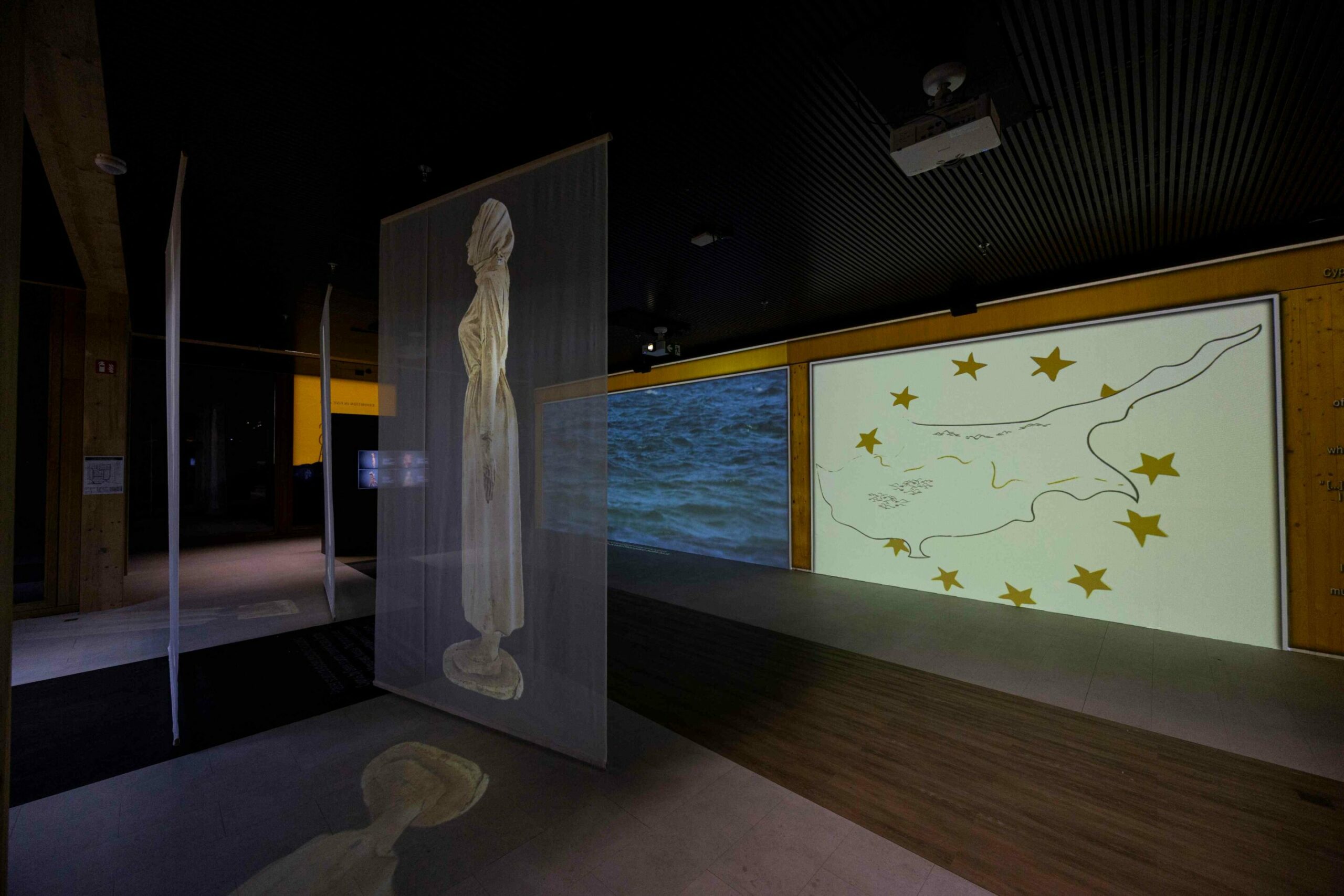
Moving quickly to the present, an installation of digitised plaster casts on translucent scrim shows the Liberty Monument in Nicosia in memory of the fight for independence.
The monument is built as a pyramid with 17 bronze statues. At the top stands a figure personifying freedom, watching over two fighters who are pulling chains to open a prison gate. From the prison, Cypriot farmers, soldiers, priests and villagers step out towards freedom, representing the liberation of the Cypriot people from British colonial rule.
Act II presents examples linked to religious beliefs and customs, the production and organisation of space, building and architecture, that shaped the island’s inherent insular identity.
Act III on modernity and the Republic of Cyprus focuses on the establishment of an independent Cyprus in 1960 and its consolidation following the end of British colonial rule, alongside the modern aspirations of the newly founded state.
Act IV focuses on the difficult years that followed the establishment of the Republic of Cyprus, culminating in the tragic events of 1974, the Turkish invasion and the imposed division of the island. The invasion was triggered by a coup against President Makarios which aimed to unify Cyprus with Greece, then ruled by a military junta.
Act V reflects on the future and invites the visitors to envision ways how to restore the cultural continuity and reunification of Cyprus.
Credit: Nicolas Economou
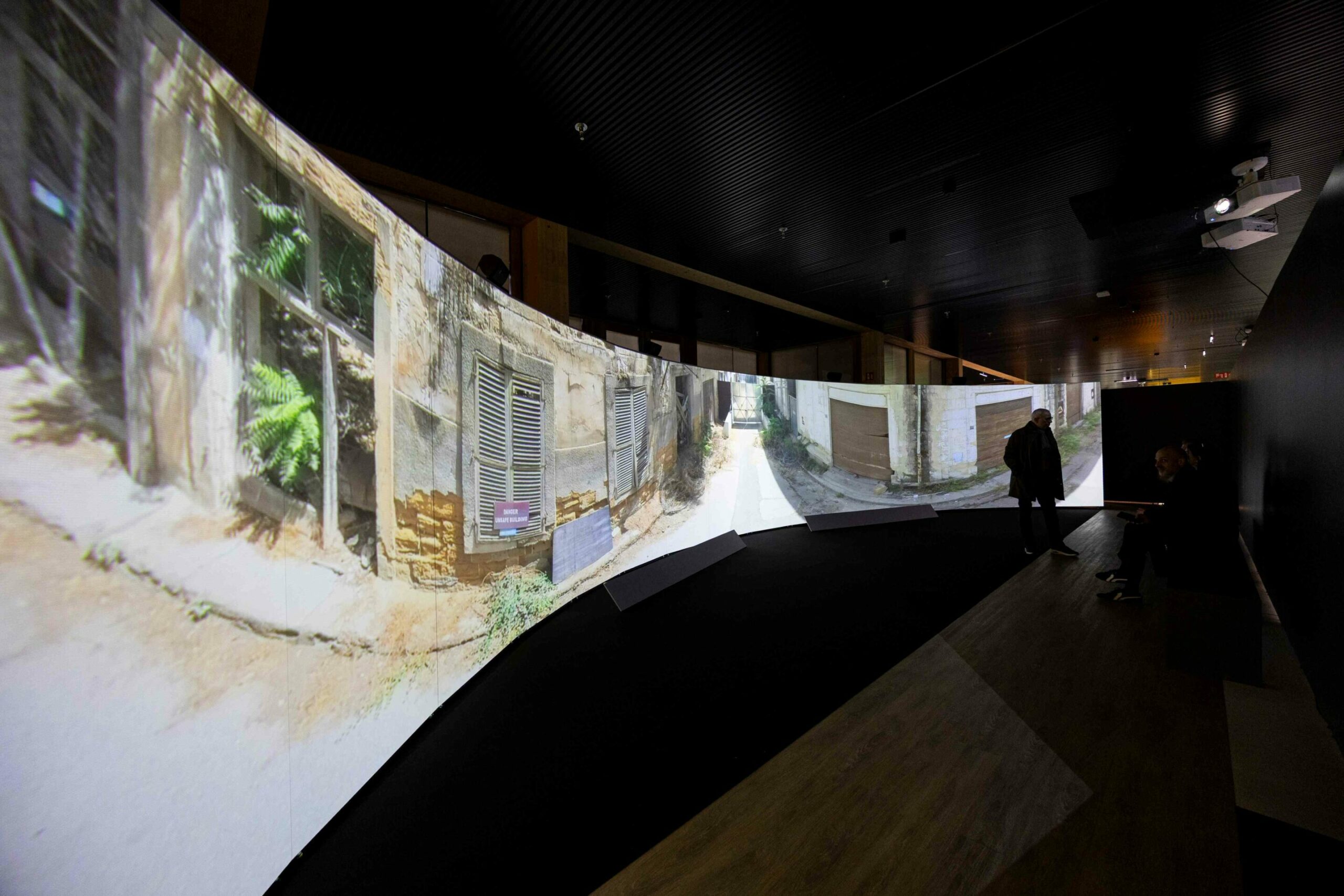
The exhibition includes several fascinating items and installations. There is a collection of paintings of wildflowers in Cyprus, an interactive exploration of the history of power hierarchies in Cyprus through its coins, a film recording from 1963 of a reception hosted by the first (Turkish-Cypriot) Vice President of Cyprus, a documentary of Famagusta before it became a ghost town in 1974, and a 3D reconstruction of the abandoned Nicosia International Airport.
Asked which exhibits they find most interesting for visitors not familiar with Cyprus, the two curators chose the following three installations, which “offer a nuanced understanding of the Cypriot condition and the island’s layered history”:
CΥPRUS INSULA - The difficult years, a 27 minutes long audiovisual installation which captures the essence of key moments in Cyprus’s recent difficult history, centring on both the archival records and the human aspect of the island’s struggles.
1962 – Α photographic record of Cyprus from the early 1960s. The photos capture its landscapes, geology, built environment, natural resources, monuments, people, and aspects of its intangible cultural heritage in a manner largely detached from any attempt at romanticisation.
Cyprus Futurama II, 2026, an artwork on paper by Nurtane Karagil. She maps a vision of Cyprus’s anthropogeography, blending elements from its past, present and future while reassigning them with new semiotics and agency. Cyprus is envisioned as a space where human and non-human entities take action to redefine their relationships with both the country and each-other.
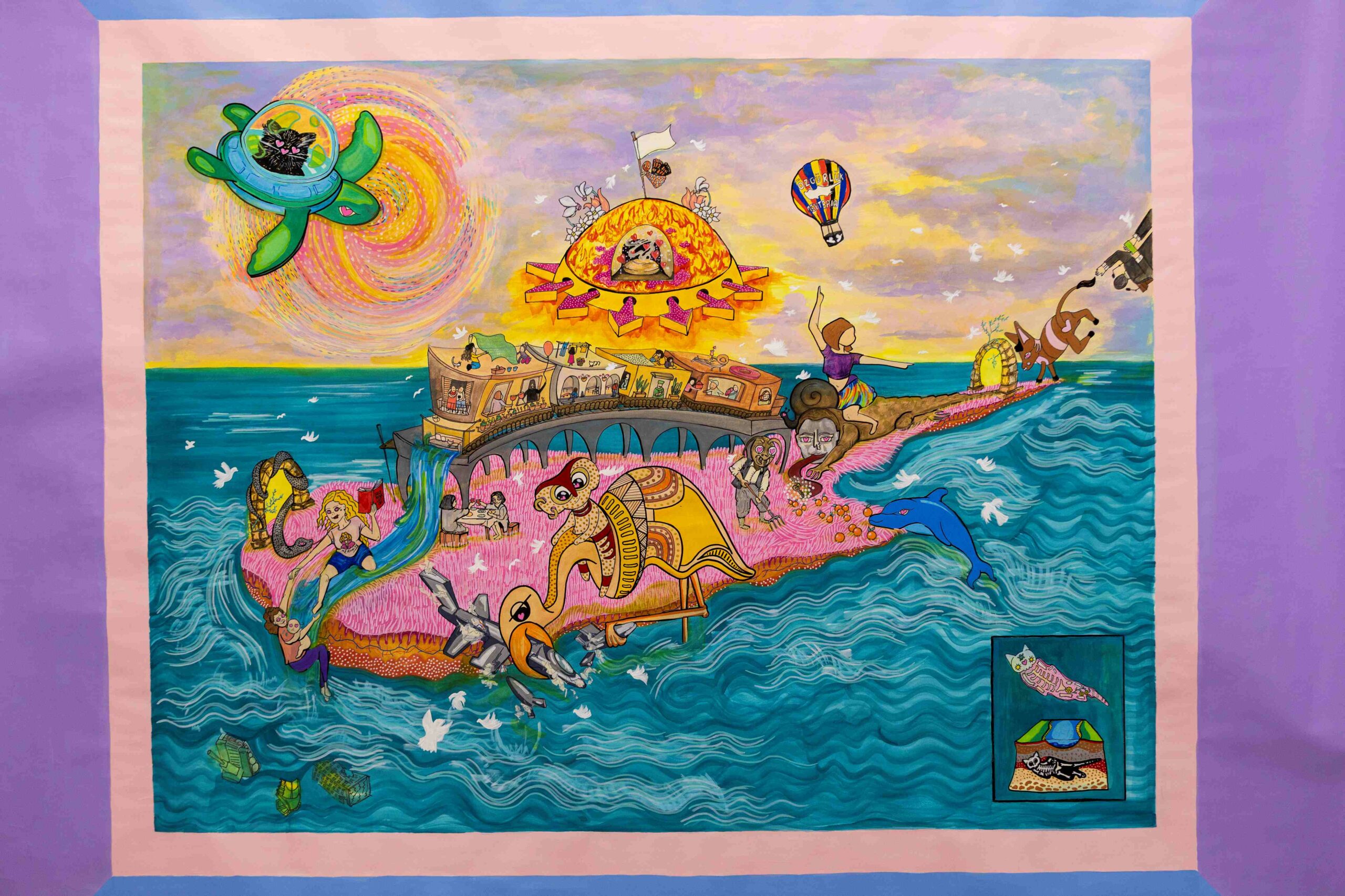
Cyprus Futurama II, 2026, artwork on paper by Nurtane Karagil, credit: Nicolas Economou
The exhibition expresses different elements of Cypriot identity and mentality. Can ‘Cypriotness” be defined in words? “Cypriotness is an amalgamation of diverse elements and intersecting identities, shaped by a long and multifaceted history,” the curators replied. “It’s difficult to fully articulate in words and is perhaps better understood through encounters with Cypriots and the island itself.”
“This is what the exhibition aims to achieve: a meaningful engagement with different aspects that have, over time, informed and shaped Cypriot identity. The term ‘Cypriotness’ is used here as an invitation to think about the island of Cyprus and its people as a dynamic anthropogeography – defined not only by external influences, but also by its own agency and its enduring drive for cultural continuity.”
The division of Cyprus cast a shadow over the opening of the Cyprus EU Presidency and continues to do so in the exhibition. “For the EU, a comprehensive, fair and lasting settlement for Cyprus remains an absolute priority,” said Commission President von der Leyen at the opening ceremony in January.
“That is why I appointed former Commissioner Johannes Hahn as EU Envoy for Cyprus. And it is why we will do all we can to ensure that the UN-led process succeeds, so that 2026 can bring renewed momentum towards a reunified Cyprus.” However, Hahn who was appointed in May last year, has resigned citing other commitments, a Commission spokesperson told The Brussels Times.
Cypriot President Nikos Christodoulides said last week, in the context of the European Council in Brussels, that he considered it important that the “EU will send a message at the level of the 27, from the President of the European Commission regarding the EU’s interest in the efforts to resume talks and resolve the Cyprus issue, always on the basis of the agreed framework”.
You can visit the exhibition ‘Cyprus Insula - History, Memory, Reality' at the Gare Maritime at Tour & Taxis, Brussels until the end of May 2026.
