
Just a few hundred metres from the bustle of Avenue Louise, in a quiet side street in Ixelles, a discreet courtyard hides an unexpected initiative.
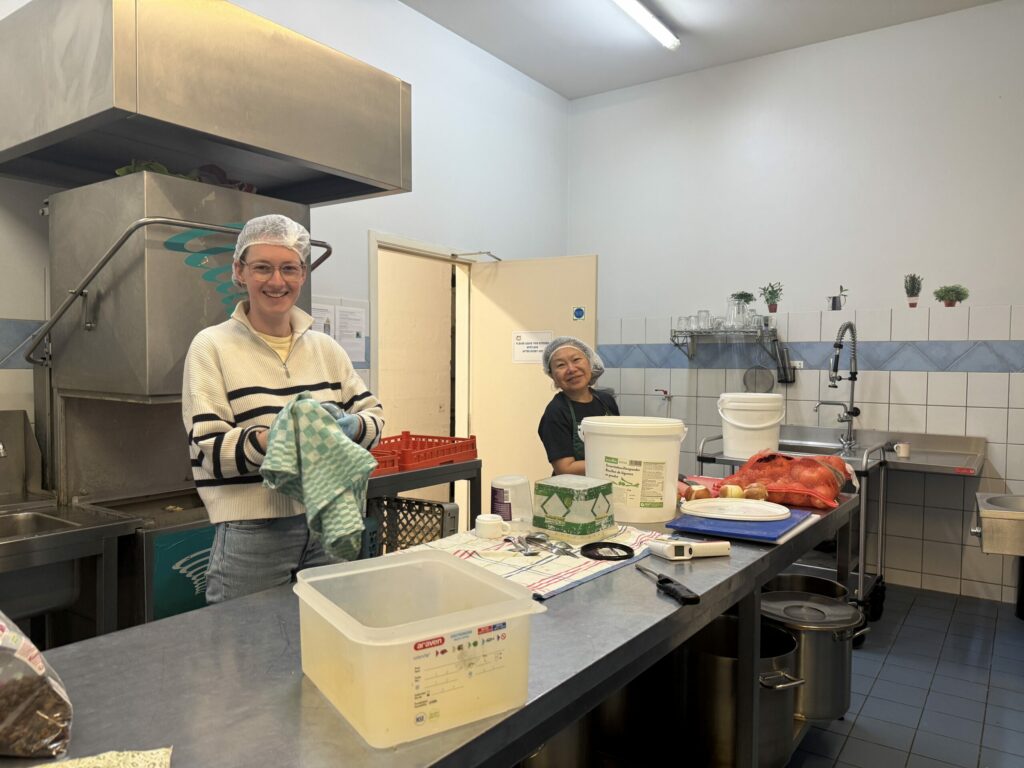
Behind the doors of the Anglican church on Rue Capitaine Crespel, a basement kitchen hums with activity. This is where the charity Community Kitchen prepares thousands of meals every week for people in need across Brussels.
A project born during Covid
The initiative was launched in 2019 by Gayl Russell, a British member of the church. At the time, as the pandemic was beginning to unfold, she noticed a gap in local solidarity efforts.
“She felt that our church was doing a lot for distant countries – very generously – but nothing for Brussels itself,” Hilary, a 70-year-old Anglo-Belgian volunteer told The Brussels Times.
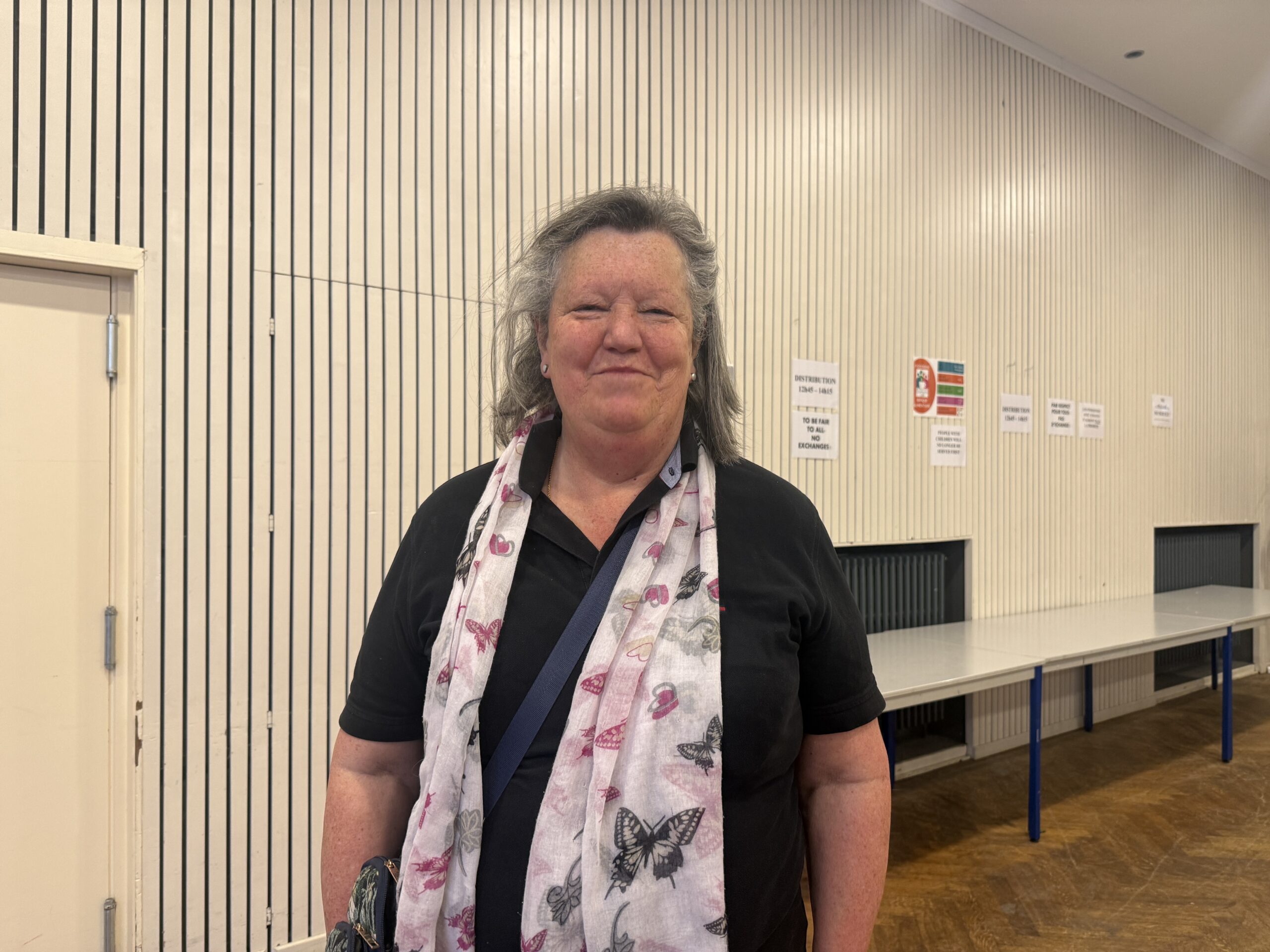
Hilary has been a volunteer since the beginning of the initiative. Credit: The Brussels Times/Léa Huppe
With access to a spacious kitchen in the church, Russell began cooking meals once or twice a week with a handful of volunteers. At first, they prepared around 100 to 200 meals, which were distributed directly on the streets to homeless people.
Scaling up through partnerships
What started as a small grassroots effort has since grown into a large-scale operation. Today, Community Kitchen produces around 5,000 meals per week.
A turning point came with the creation of the Humanitarian Hub in Brussels, a centre where food distribution is coordinated by the Red Cross in collaboration with smaller associations.
“We now prepare about 80% of the meals distributed there,” explained Aline, operations manager. “We cook every day, portion the food into trays, and it’s collected and distributed on-site.”
The organisation has also partnered with a centre for asylum seekers, where meals are tailored to residents’ dietary needs. Unlike the free distributions, these meals are part of a paid contract, helping to sustain the rest of the project.
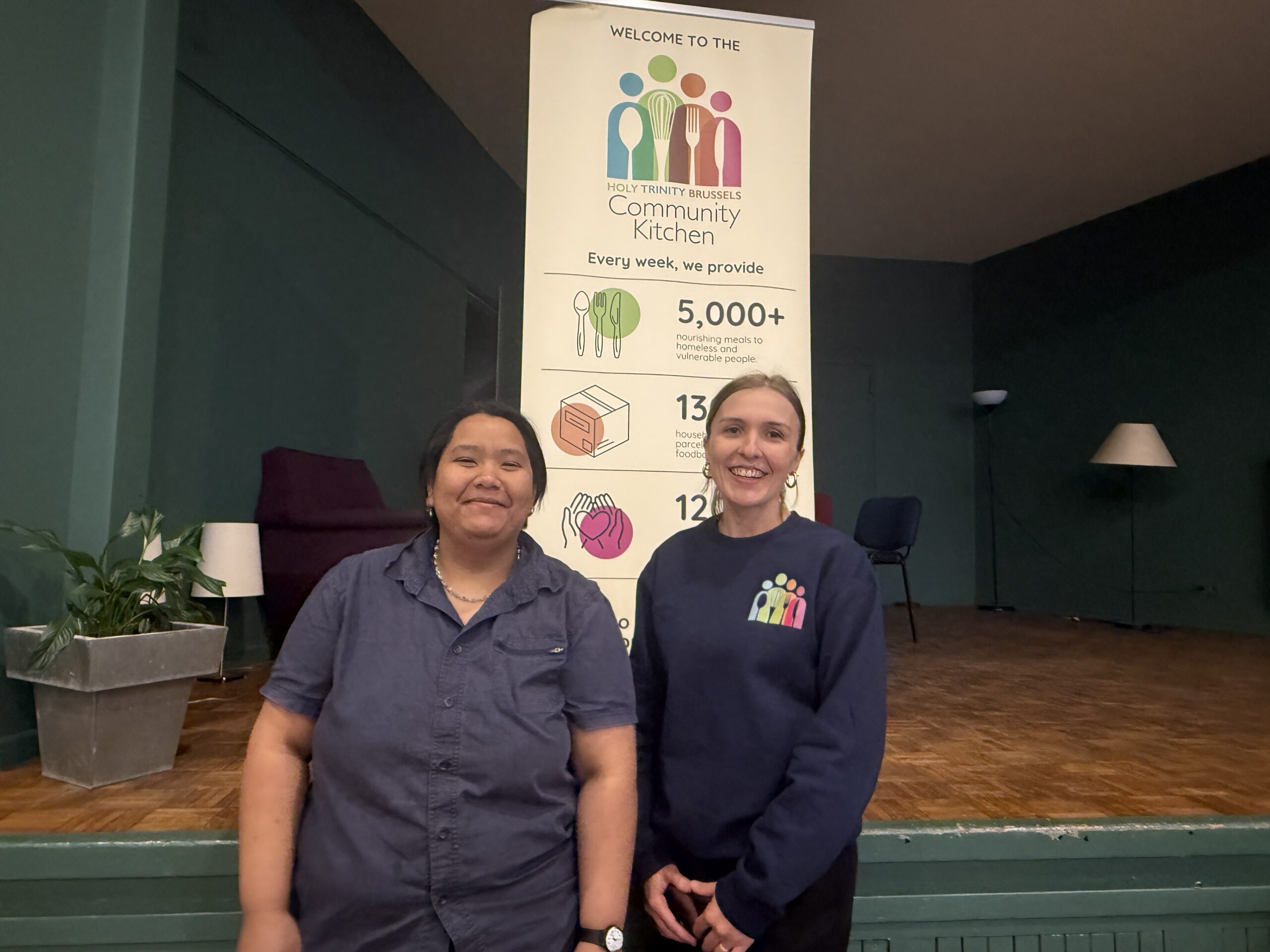
Akkara, the head chef and Aline, the operations manager at Community Kitchen. Credit: The Brussels Times/Léa Huppe
5,000 meals per week
The scale of production requires careful organisation. Meals are vegetarian to accommodate different dietary restrictions and ensure food safety, especially given the large quantities involved.
“We aim to make nutritious meals, with vegetables and legumes like lentils to always include protein,” says Aline. Ingredients are mostly purchased in bulk, but the team also relies on recovered unsold produce from the early morning market, collected several times a week.
A community of volunteers
Despite the volume of food prepared every day, the work remains rooted in a strong volunteer base. Around 100 volunteers take part each week, coordinated through the platform Serve the City. The system allows people to sign up flexibly for shifts, depending on their availability.
“It’s very easy to use. You just check the app and see where help is needed,” says Hilary. “I’m retired, so I come when I see they’re short of people.”
Volunteers come from a wide range of backgrounds: newcomers to Brussels, students, job seekers, and working professionals. Some are even beneficiaries of the meals themselves. “It’s a way to give back,” Aline notes. “Not just receive, but also contribute.”
Tasks are accessible to everyone, from helping in the kitchen under the supervision of chefs to portioning meals into trays.
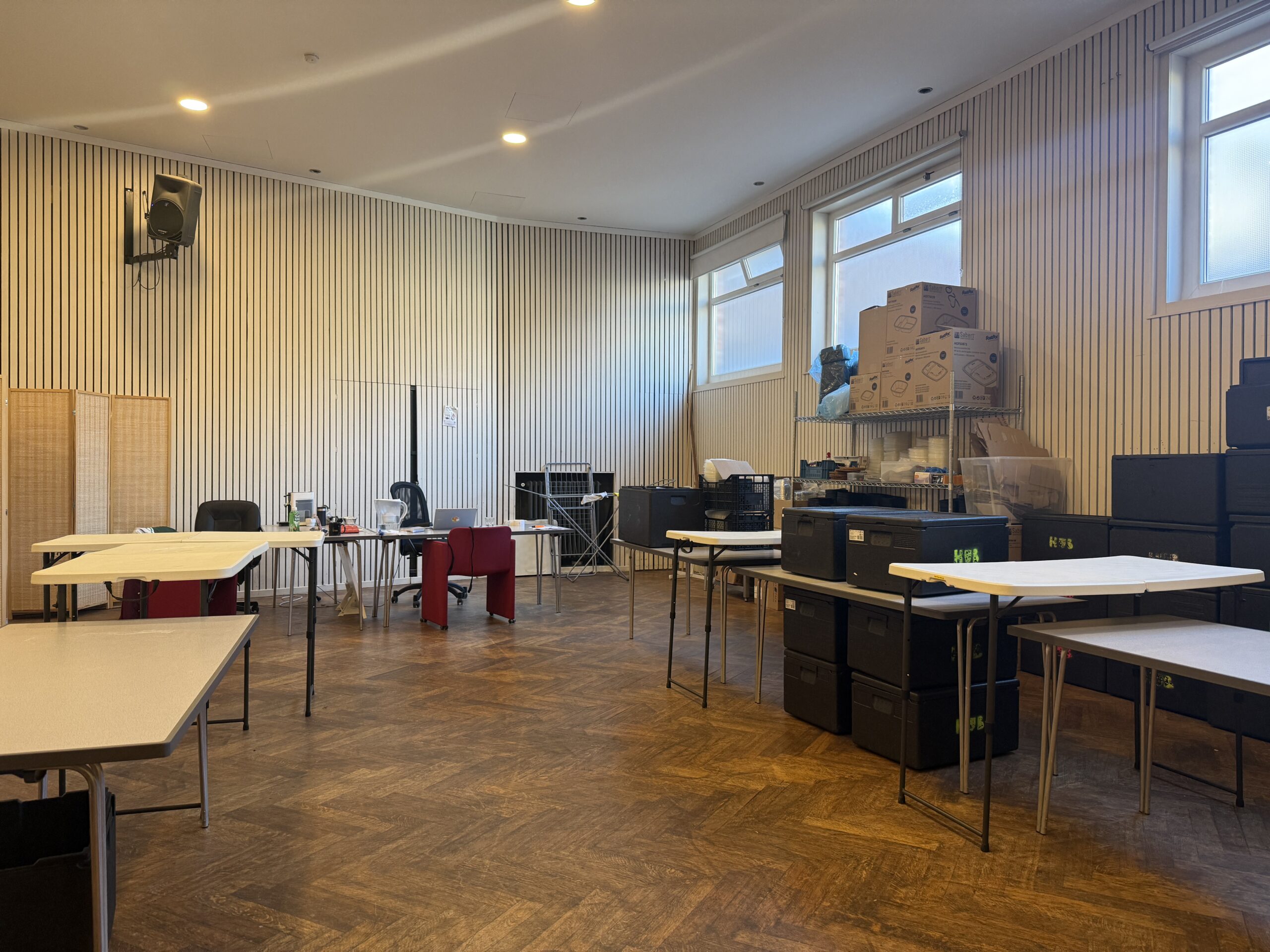
The Community Kitchen is located in the basement of a church. Credit: The Brussels Times/Léa Huppe
“You feel useful”
Beyond the logistics, volunteers highlight the human aspect of the project. “You meet people from all backgrounds, all nationalities,” says Hilary. “Since I’m retired, I wouldn’t meet many people otherwise. Here, you feel useful.”
The atmosphere, she adds, is “very kind and welcoming”, with different roles to suit everyone’s preferences - whether in the kitchen, at the distribution centres, or behind the scenes.
A fragile balance
Since its beginning, Community Kitchen relied entirely on donations - from individuals, church members and occasional grants. Today, part of its activity is financed through partnerships, but the financial situation remains uncertain. “Even a €5 donation helps. It already funds more than one meal,” says Aline.
As the organisation continues to grow, its needs remain constant: more volunteers, more resources, and continued support.
Hidden behind the calm façade of a church courtyard, Community Kitchen has become a vital link in Brussels’ solidarity network.
