
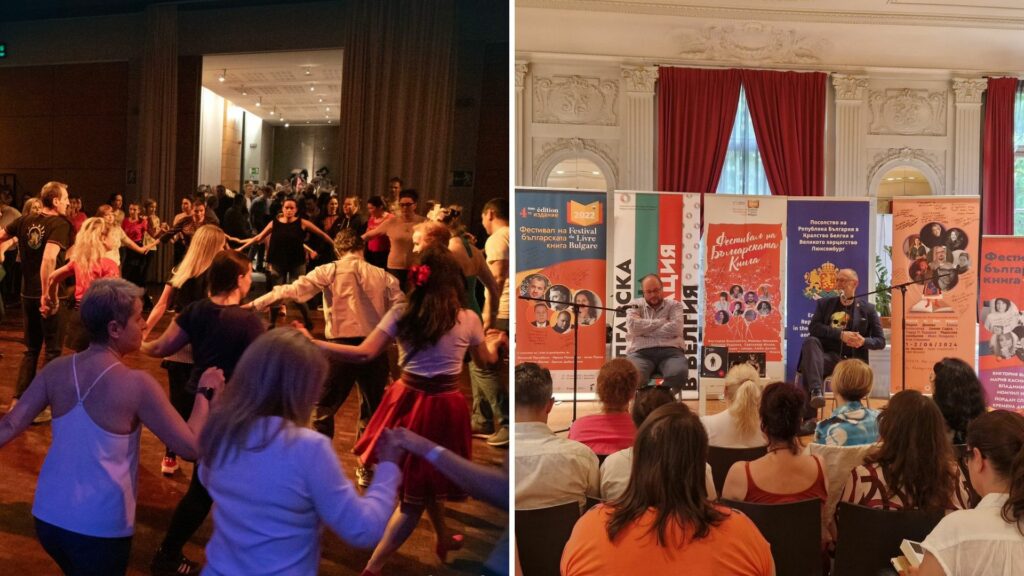
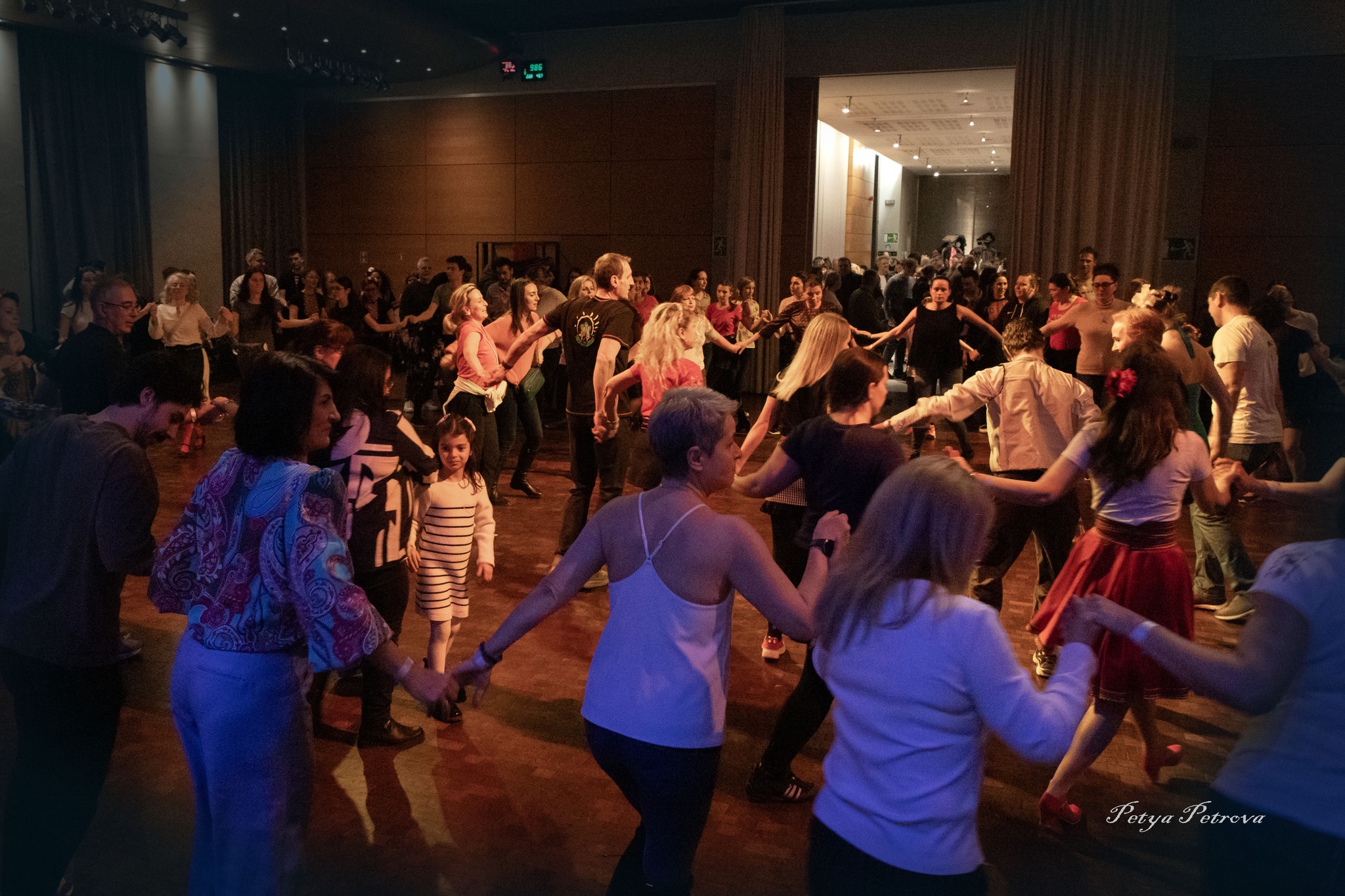
Every week, Mariya Tzvetkova enters the dancing hall at the European Economic and Social Committee to teach her weekly Bulgarian traditional dance (horo) classes. Being the instructor, she shows people of all ages and backgrounds how to perform each step and movement correctly.
"It's such a nice thing to do. When I start dancing, my headache goes away because I stare at a screen all day," Tzvetkova told the Brussels Times. She has been living in Brussels since 2007 and works as a translator at the European Commission.
The initiative started almost by accident. Ahead of a Christmas party at work, Tzvetkova’s manager asked her to teach her colleagues a traditional dance to perform during the event. "We were rehearsing during the lunch breaks, but after the event passed, the participants wanted to learn something else and keep dancing it," she said.
What started as a workplace activity grew into a community of Bulgarian dance enthusiasts. People invited friends, and the group expanded through word of mouth.
Credit: Bulgarian dance club/Petra Petrova via Facebook
Today, Tzvetkova channels this enthusiasm through her club, which has around 100 regular members, and through organising the Big Horo (Grande soirée des danses bulgares) twice a year. While many members are Bulgarian, there are also participants from other nationalities who are interested in learning traditional Bulgarian dances.
The event is an evening of traditional Bulgarian folk music and dance that attracts Bulgarians not only from Brussels and nearby cities but also from across the Benelux region.
One of the people in this community is Krasimir Lazarov, for whom every rehearsal is "a wonderful experience". He shared that through the club, he found a community united by a shared love for Bulgaria and its traditions.
The dancing club is one of the many activities that bring people from the Bulgarian community together.
A community beyond the dance hall
According to figures by the National Bank of Belgium, around 50,000 Bulgarians live in Belgium, with the majority concentrated in Brussels and Flanders. For many, community initiatives such as dance clubs, cultural activities and Bulgarian schools provide a way to stay connected to their home country while living abroad.
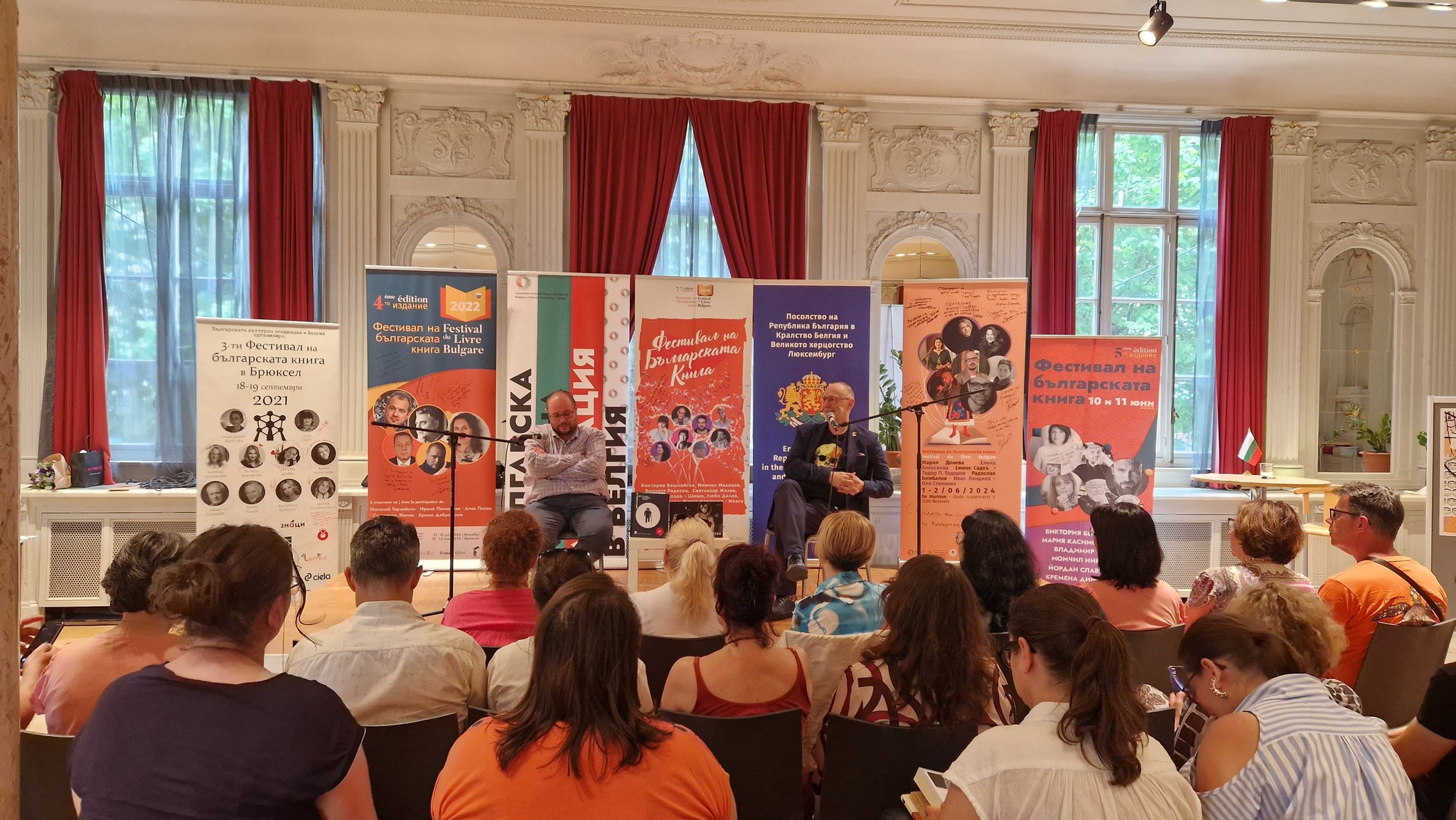
One such event is the Bulgarian Book Festival, organised by the Bulgarian Cultural Association. "We go there every year to buy books. It’s like a ritual for us," said Maya Doneva, another Bulgarian national who spoke with the Brussels Times.
For Doneva, maintaining a connection to Bulgaria extends beyond attending events: her youngest child also attends Sunday Bulgarian school to learn to read and write in Bulgarian. "I believe it is important for a person to know their roots in a healthy way," she said.
Beyond cultural events and language education, Bulgarians in Brussels have also created informal professional networks. "We began the initiative to meet up once a month for a coffee and to discuss the latest about culture," Gergana Stoyneva said.
Credit: Bulgarian Cultural Association/Facebook
Stoyneva has been living in Brussels for eight years and recognises the importance of her children knowing Bulgarian. With five more Bulgarian families at the school her children attend, this also helps with communication and interaction with fellow Bulgarians in Belgium.
"I have the feeling that the Bulgarians here are more willing to help each other," she noted, underscoring how they exchange practical information.
"We share children’s books and information about doctors. For example, I always share if I find a doctor who speaks Bulgarian, and you don’t have to wait several months to get an appointment."
There are many events happening in the Belgian capital as well, such as theatre plays and concerts, said Doneva. "People need to feel like a part of a community." These activities help Bulgarians maintain ties to their culture, but many also say Brussels has become a place they are happy to call home.
A place of diversity and many opportunities
Despite being far from home, many Bulgarians say they are comfortable and well-integrated in the Belgian capital. Often described as diverse and offering many opportunities, the city has attracted many Bulgarians over the years. "Brussels gives you a chance to experience multiculturalism, experience different things, and provides opportunities for growth," said Doneva.
Similarly, Lazarov sees Brussels as a place that can give one many perspectives, from a professional as well as a personal perspective. "My family also has the chance to see what life in Western Europe looks like," he said.
Echoing this sentiment, Teodor Kordev expressed his positive feelings. "I like the life and the opportunities that the city offers," he explained. Kordev moved to Brussels less than a year ago after his wife was selected for a job at the European School in Brussels.
Although relatively new to the city, Kordev said he has been adapting well to life in the Belgian capital. The first few months, he said, involved navigating unfamiliar administrative procedures such as registering at the commune and purchasing a car. Despite those challenges, he says he quickly grew to appreciate the city’s dynamic atmosphere.
