
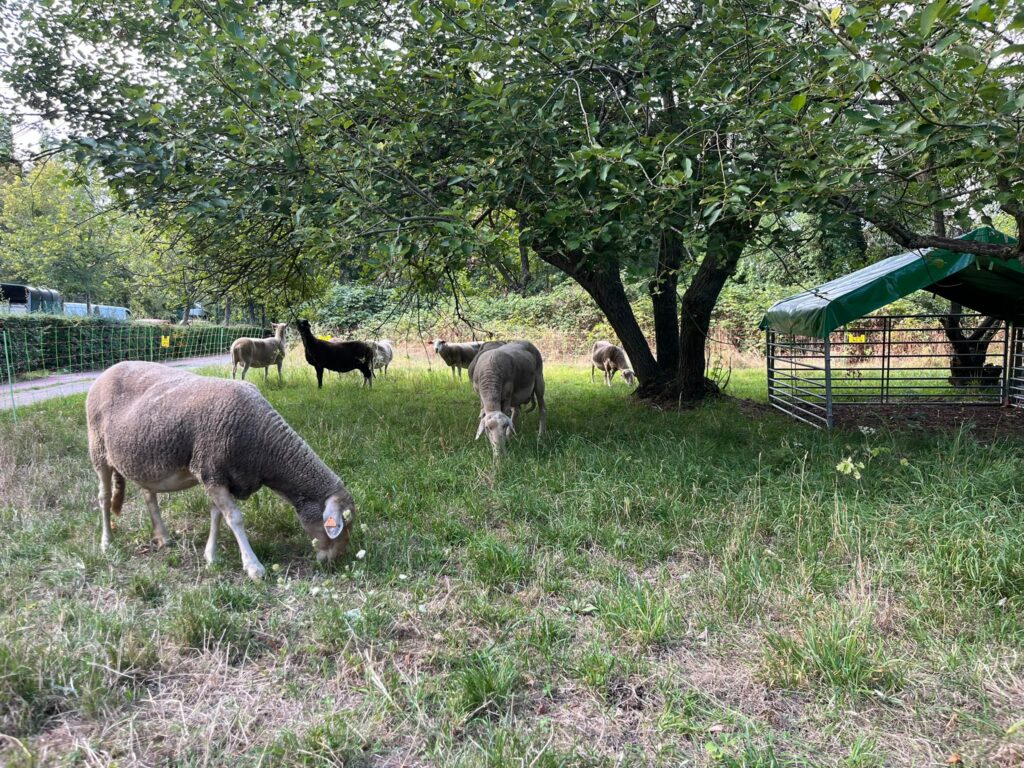
Following last year’s success, the Brussels municipality of Ixelles is continuing its project to use sheep instead of lawnmowers to cut the grass at the Cimetière d'Ixelles.
The eco-grazing project will have two new features: a larger sheep flock and two grazing periods over the course of the year instead of one, in spring and autumn.
After the previous success, the sheep are now back at the Plaine aux Corneilles. Afterwards, they will move to the cemetery on 5 September, where they will remain until 23 November.
"This year, we wanted to go one step further. If eco-grazing is to deliver real ecological benefits, it cannot be a one-off initiative," said Valérie Libert, councillor for Climate and the Environment (MR & Anders avec vous).
Ixelles aims to follow the natural growth cycle of the vegetation and further reduce the use of lawnmowers.
"We need to follow the natural growth cycle of the vegetation and allow the sheep to genuinely replace machinery wherever possible. That is why we have opted for two grazing periods this year," she said.
A growing flock
The initiative was led by Gautier Calomne, Ixelles' first councillor responsible for the Cemetery, as well as Animal Welfare councillor Nathalie Gilson, councillor for Climate and the Environment Valérie Libert and (MR & Anders avec vous).
In spring, the sheep from the Chant des Cailles cooperative grazed at Plaine aux Corneilles in Ixelles from 12 May to 16 June. They were originally due to stay until 26 May, but their stay was extended as there was still plenty of vegetation left to graze.
A wool-themed activity also gave children an opportunity to discover the project in a fun and engaging way.
While there were five sheep last year, eight are taking part in the Ixelles eco-grazing project this year: Lactose, Rayban, Pils, Domino, Katimini, Maria, Juliette, Puyu.
They all have one thing in common: they are "retired" ewes that are no longer used for milk production. Eco-grazing gives them a second lease of life.
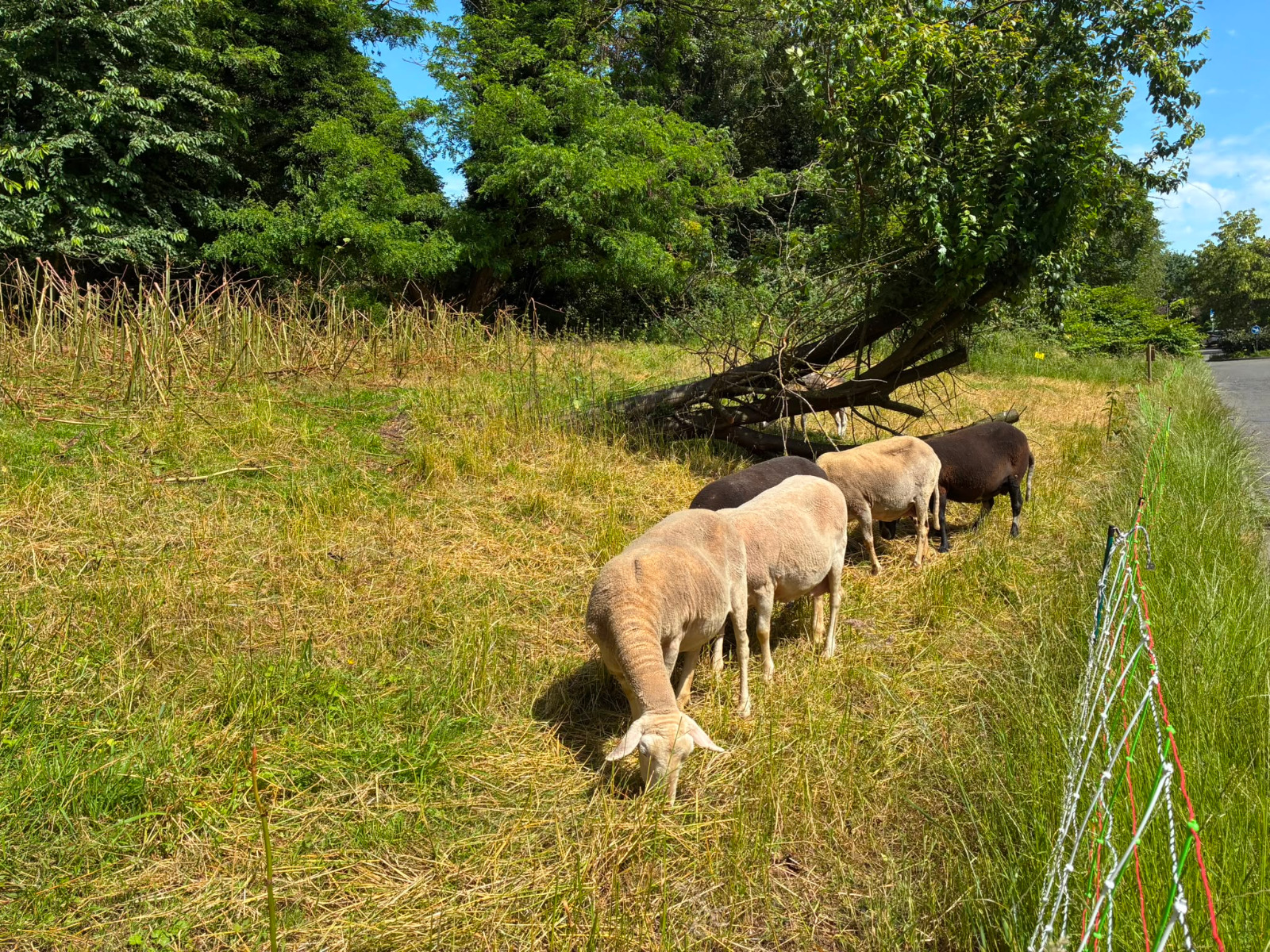
Ixelles' sheep. Credit: Commune d'Ixelles
Rather than being sent to slaughter, they continue to play a role in the ecological maintenance of green spaces, while enjoying a peaceful retirement surrounded by greenery, an approach supported by the Gilson.
The sheep have been feasting on Japanese knotweed, an invasive non-native plant. After they had passed through, the result was striking: the stems had been completely stripped of their leaves.
This is particularly beneficial for biodiversity. By exerting natural pressure on this invasive species, eco-grazing helps to limit its further spread and leaves more room for native vegetation.
On Saturday 5 September, the sheep will leave the Plaine aux Corneilles for a large festive transhumance to Cimetière d'Ixelles, where they will remain until 23 November.
Everyone is invited to accompany the flock on this unusual journey through Ixelles and take part in the activities organised for the occasion.
"Cimetière d'Ixelles is a vast green space in our municipality," said Calomne. "The sheep allow us to maintain certain areas quietly and ecologically, without disturbing the peaceful atmosphere of the cemetery, while also supporting biodiversity."
