
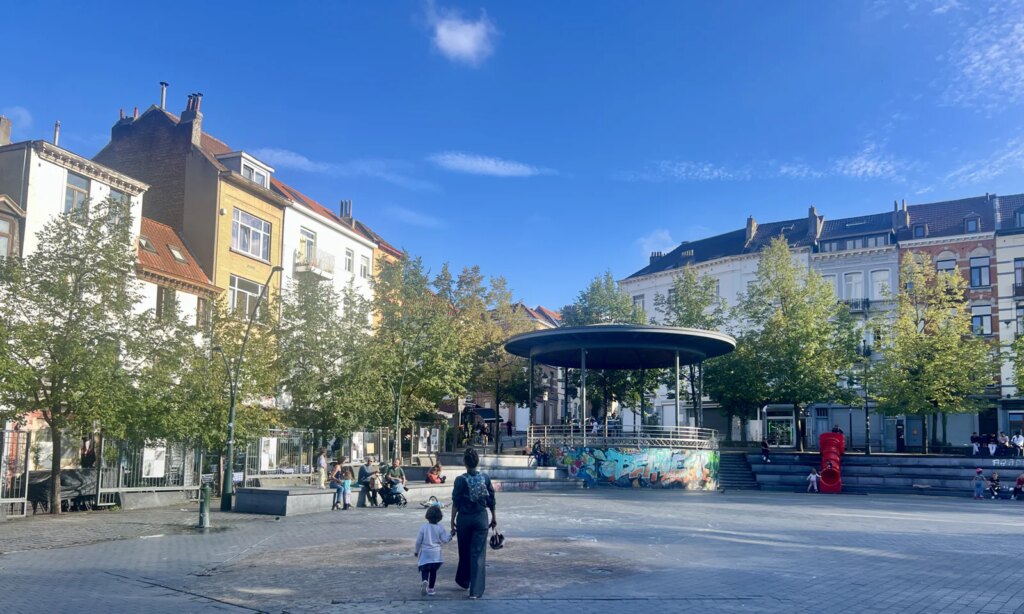
In the Brussels municipality of Saint-Gilles, the Place de Bethléem will get a major redesign that will include more space for pedestrians, children, outdoor seating and neighborhood activities.
The once-popular local square recently became a hotspot for internationally organised drug networks. While officials acknowledged that the redesign cannot – and is not meant to – solve the drug problem on its own, they believe that a public space actively used by residents, businesses, children and community groups can help strengthen social cohesion.
"A redesign is not just about aesthetics or greening – it’s also a matter of safety," said Audrey Henry, the Brussels State Secretary responsible for Urban Planning (MR).
"By making public spaces more attractive and of higher quality, we want to ensure that local residents can once again fully reclaim those spaces. The more Brussels residents use their neighborhood and spend time there, the stronger natural social control becomes," she said.
A safer space
Plans for the redesign include 28 new trees, a new play area, additional benches, restaurant and café seating areas and a multifunctional space for activities such as pétanque and informal play. Additionally, Chaussée de Forest will be reconstructed as a "garden street".
Other things like drinking fountains and bicycle parking spaces are also planned.
The project is also aiming to limit flooding and pressure on the sewer system during heavy rainfall while providing more shade and cooling during heatwaves. To achieve this, more permeable and semi-permeable surfaces will be used, and hard paving will be reduced when possible. Reusable existing materials and street furniture will also be used.
"We are not abandoning these neighborhoods," said Ans Persoons, Brussels State Secretary for Urban Renewal (Vooruit). "We are investing extra energy and resources to give them back to the residents."
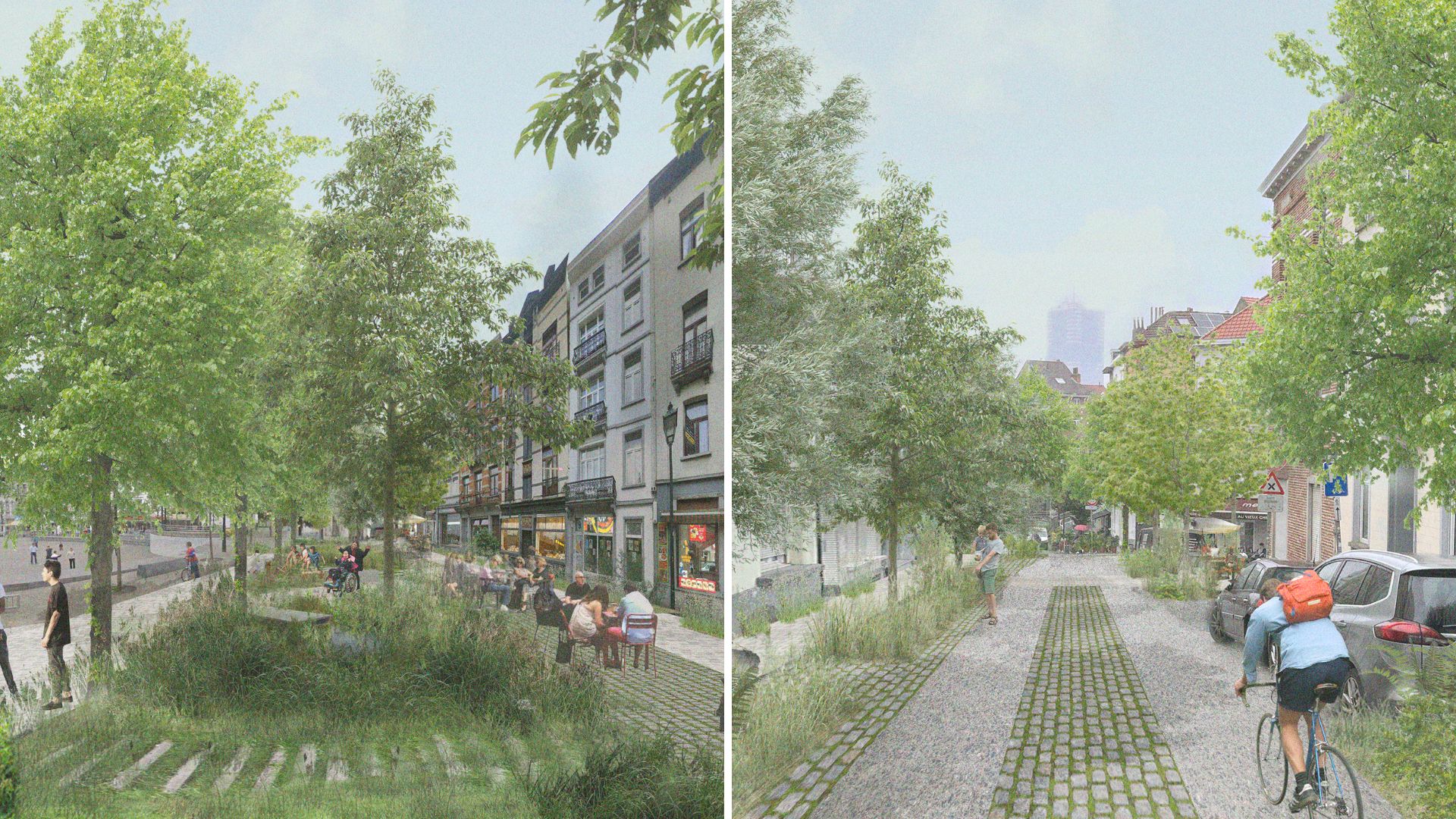
Credit: les Marneurs
Residents will have the opportunity to help decide how the square is used. Co-design workshops, programming events and a collective planting day are all planned. These events are designed to ensure the local community has a direct role in shaping the renewed square and to encourage residents who currently avoid the area to return so it can become a staple of their neighborhood again.
“A vibrant, inviting public space that is used and supported by its residents is also a safer space,” explained Henry.
The project, which recently received an urban planning permit, is part of the Sustainable Neighborhood Contract South joint initiative by Saint-Gilles and the Brussels-Capital Region.
