

The European Schools of Brussels are being accused of breaking Belgium’s labour law, as they systematically use short-term employment contracts lasting only ten months instead of permanent contracts – in spite of a court ruling declaring the system illegal earlier this year.
Unlike teachers, supervisors (”surveillants”) are responsible for keeping an eye on pupils in school during recess and lunch periods. Instead of full-time contracts, they are only being offered short ten-month contracts every school year.
“This system leaves workers without an employment contract during the summer months and forces them to rely on unemployment benefits,” Tom Holvoet, union secretary of the Christian trade union ACV Puls, told The Brussels Times.
As a result, every school year, these employees are left awaiting confirmation as to whether the school wishes to continue employing them or whether they will lose their jobs without any compensation whatsoever.
No fixed contracts
According to Lieke Nijhof, who is the European School of Uccle's (EEB1) staff representative and also acts as the spokesperson for the European Schools in Belgium in relation to the Office of the General-Secretary, this has been going on for a long time.
“There are people at our school who have been in this situation for 30 years. And they aren’t on a permanent contract; every year, they simply receive a contract running from September to July,” she told The Brussels Times.
In addition to job insecurity, the arrangement also makes these supervisors vulnerable to less favourable employment conditions (those who refuse to accept certain changes effectively lose their job as no new contract would be signed) and has a detrimental impact on workers' pension entitlements.
“In practice, this system serves only the employer's interests while exposing employees to a wide range of adverse consequences,” Holvoet said.
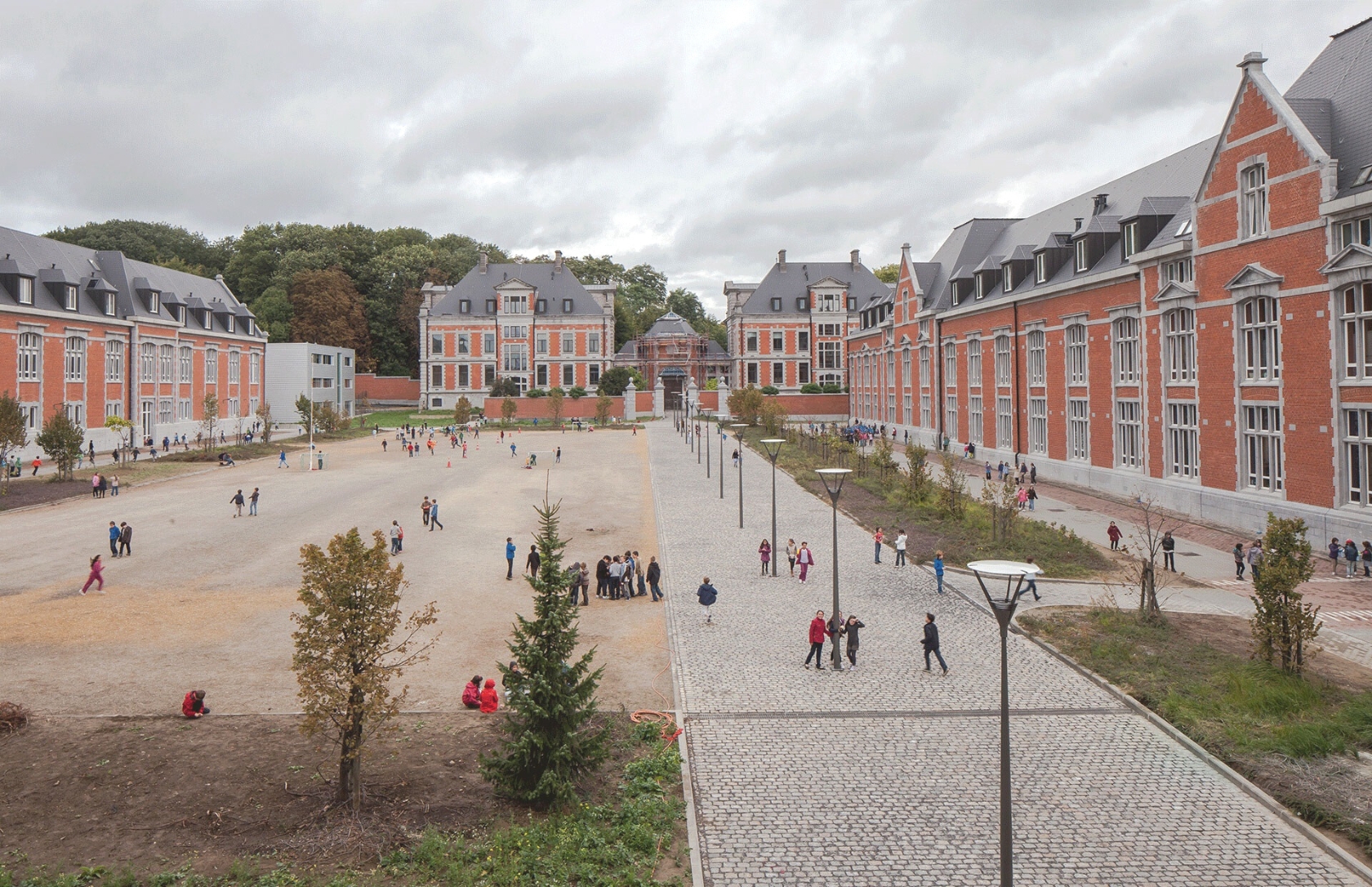
Illustrative image of the fourth European School of Brussels, in Laeken.
As their complaints were not taken into account, several supervisors at the EEB1 took their employer to court, which ruled in their favour.
In April 2026, the Brussels Labour Court ruled against the school for its systematic use of successive fixed-term employment contracts to employ supervisors. The other European Schools in Brussels apply the same system.
The Court found that these employees, who are subject to Belgian labour law, were “unlawfully employed through consecutive contracts.”
However, several months after the Court’s decision, at the start of the new academic year, the supervisors concerned were once again presented with short fixed-term contracts instead of full-time ones.
“The schools are therefore continuing a system that has already been found unlawful by the Labour Court,” Holvoet said. "A court ruling is not a non-binding recommendation that can simply be discussed internally at leisure. A judicial decision must be implemented and respected."
'Wholly inadequate'
ACV Puls has already brought this matter to the attention of the Office of the Secretary-General of the European Schools in September.
Following repeated requests for clarification, the trade union was informed that the issue would be discussed within the European Schools' internal social dialogue framework – a “whole inadequate” response, according to Holvoet.
"The issue is not whether social dialogue should take place. The issue is that the European Schools continue to apply a system that has been condemned by the courts,” he said. “Employers must comply with both the law and judicial decisions."
The union is calling upon the European Schools to put an immediate end to the practice of successive short-term contracts, and to bring the employment conditions of the workers concerned into compliance with Belgian labour law.
"An institution that educates young people to become responsible European citizens should itself set the example,” Holvoet said. “Respect for the rule of law begins with respecting judicial decisions."
The Brussels Times contacted the office of the Secretary-General of the European Schools, Andreas Beckmann, for comment but did not receive a response by the time of publication.
