

Last year in Brussels, there were 889 accidents involving trams, a decline of 25% in two years according to new figures released by STIB-MIVB this week.
The decline is due to the operator's efforts to improve driver training, infrastructure, and public awareness campaigns. These awareness campaigns include reminding drivers that trams always have priority over other types of road traffic in the Belgian highway code.
"It is good news that the number of accidents has fallen by a quarter in two years but our work is not yet done," noted Brussels Minister for Mobility Elke Van den Brandt (Groen), "that is why, as part of every redevelopment project, we are allocating more space to public transport, pedestrians and cyclists alike, starting with the most dangerous junctions."
In total, there were 1,196 accidents involving trams in 2023 and 1,171 in 2024. According to STIB, in the 2010s accidents were regularly higher than 1,500 a year.
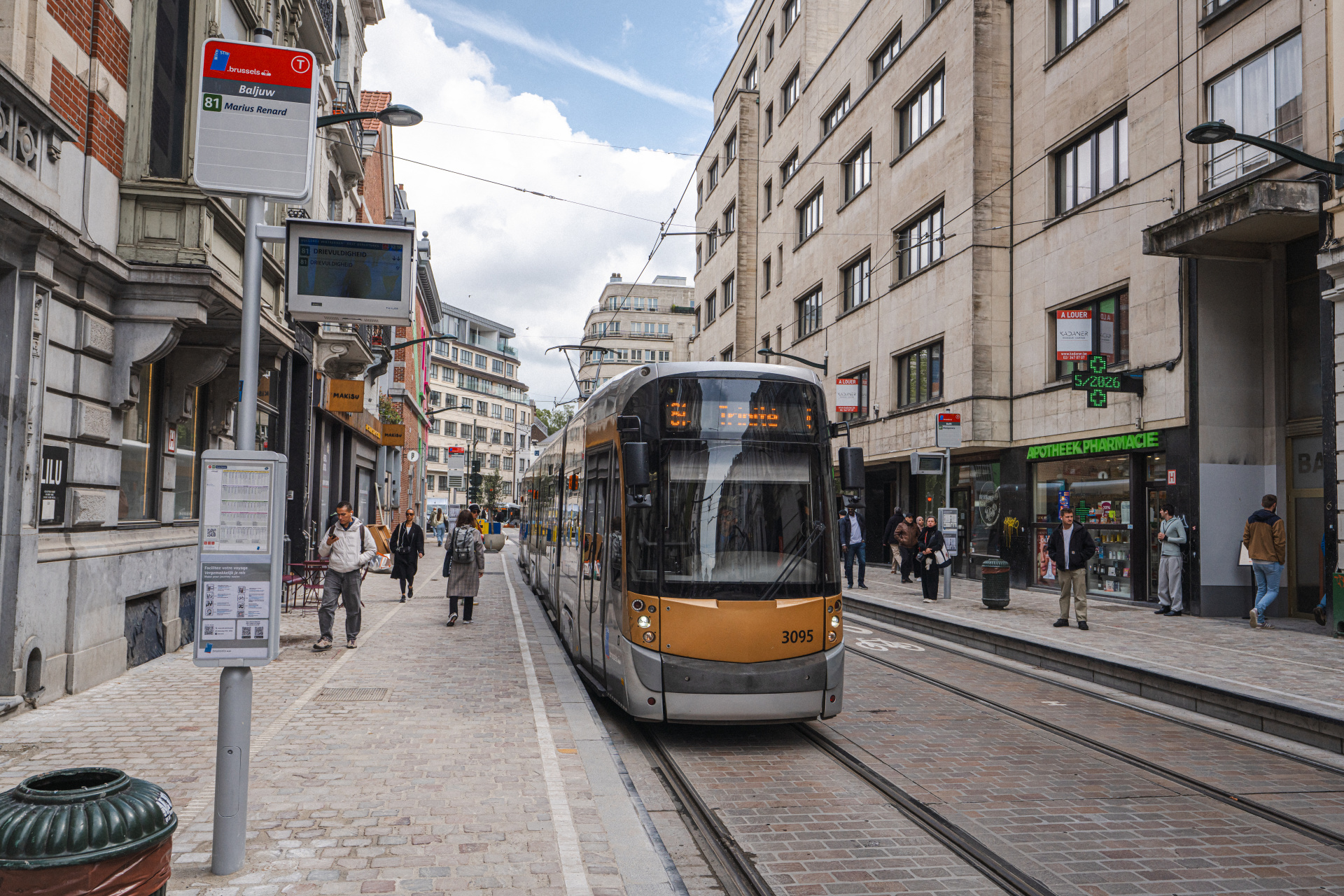
Credit: STIB-MIVB
"Our aim is to continue this trend by investing in training, prevention and the safety of our infrastructure. Vigilance on the part of all road users remains essential, particularly as we head into autumn," explained Brieuc de Meeûs, CEO of STIB.
The decline comes alongside stable growth in the use of the network. STIB's tram fleet grew by 12 between 2015 and 2025, and the number of kilometres covered increased by 143,126.
STIB notes that with one accident for every 17,000 kilometres travelled, "a tram travels half the distance around the equator without incident."
Meanwhile, the transport operator has launched an online passenger satisfaction survey to better understand transport users' perceptions and priorities in Brussels.
