
While every relationship has its challenges, big or small, there’s an extra layer of complexity that often goes unnoticed for some: having different mother tongues, family traditions or cultural expectations can make love even harder to navigate.
A new study from Odisee University of Applied Sciences called 'Liefde in kleur' ("Love in colour") found that more than 82% of couples in Brussels are bicultural, meaning at least one of the partners is not Belgian of nationality one generation back – a stark contrast to the rest of Belgium, where only 36% of couples are bicultural.
Vicky and Lucas are one of these Brussels couples. They both grew up in Belgium, but have parents coming from Greece, Italy and Spain. Ghazai and Thomas, meanwhile, grew up in France but now live in Belgium, and have Iranian and Argentinian family backgrounds. Both couples recognised the diversity revealed by the study.
"I know no couples that consist of two Belgians," Ghazai told The Brussels Times, while Lucas said everyone he knows has at least one other culture in their family.
And their experiences are far from isolated.
'Majority-minority'
Kim Lecoyer, researcher at Odisee University of Applied Sciences and co-author of ‘Liefde in kleur’, told The Brussels Times that the diversity of relationships in Brussels is a reflection of a much broader transformation of the city; Brussels is becoming increasingly superdiverse.
"We found an increasing number of countries of origin for the people living in a big city like Brussels. But there is also more and more diversity within this diversity," she said.
In other words, Brussels is not simply home to people from many countries, but its residents also have more varied family history, languages and cultural backgrounds that often overlap and won’t fit into a simple national identity.
Brussels is also what researchers call a "majority-minority" city, where there is no longer one clear majority group, but the majority is made up of many minorities.
The new research demonstrates how this diversity is reflected in the most personal part of people’s lives, their relationships and families, according to Lecoyer.
In 1992, couples where both partners were Belgian still made up a majority of relationships in Brussels, but three decades later, they now make up less than one in five.
[Flourish data visualisation - embed.]
The development reflects more than just an increase in relationships between people of different backgrounds. Couples who share the same non-Belgian origin have also become more common: the proportion of couples where both partners have the same non-EU origin rose from 16.6% in 1992 to 36.3% in 2023.
The figures show that it is not only the composition of relationships that is evolving, but that the population of Brussels is also changing. With no less than 180 nationalities within the city, it comes as no surprise that relationships are formed between different cultures.
"These are just like any other couple. They want the same things that everyone wants: love, connection, a happy family life," Lecoyer said.
Bicultural couples also face the same everyday disagreements over communication, parenting decisions, household responsibilities and finances, but depending on their backgrounds and circumstances, they may have more expectations to navigate.
Seen from the outside
Lecoyer identified three levels where challenges can arise: within the relationship itself, within the family, and within society.
On the relationship level, bicultural couples might have different languages, communication styles or traditions as an extra layer of difficulty while navigating "regular" issues. This can create more tensions than you’d see in a non-bicultural relationship.
Family-wise, one partner's family might expect a couple to marry before living together, while the other sees no reason to wait to sign the lease. Disagreements can also happen about what languages children should speak or what, if any, religion should be followed.
However, the third level, often has the greatest impact: society itself.
For some couples, being in a bicultural relationship means having to explain yourself and facing the reality that some people have prejudices, according to Lecoyer.
"They have this feeling that they are being viewed through a different lens, that their relationship is somehow viewed as unusual, sometimes even problematic," she said.
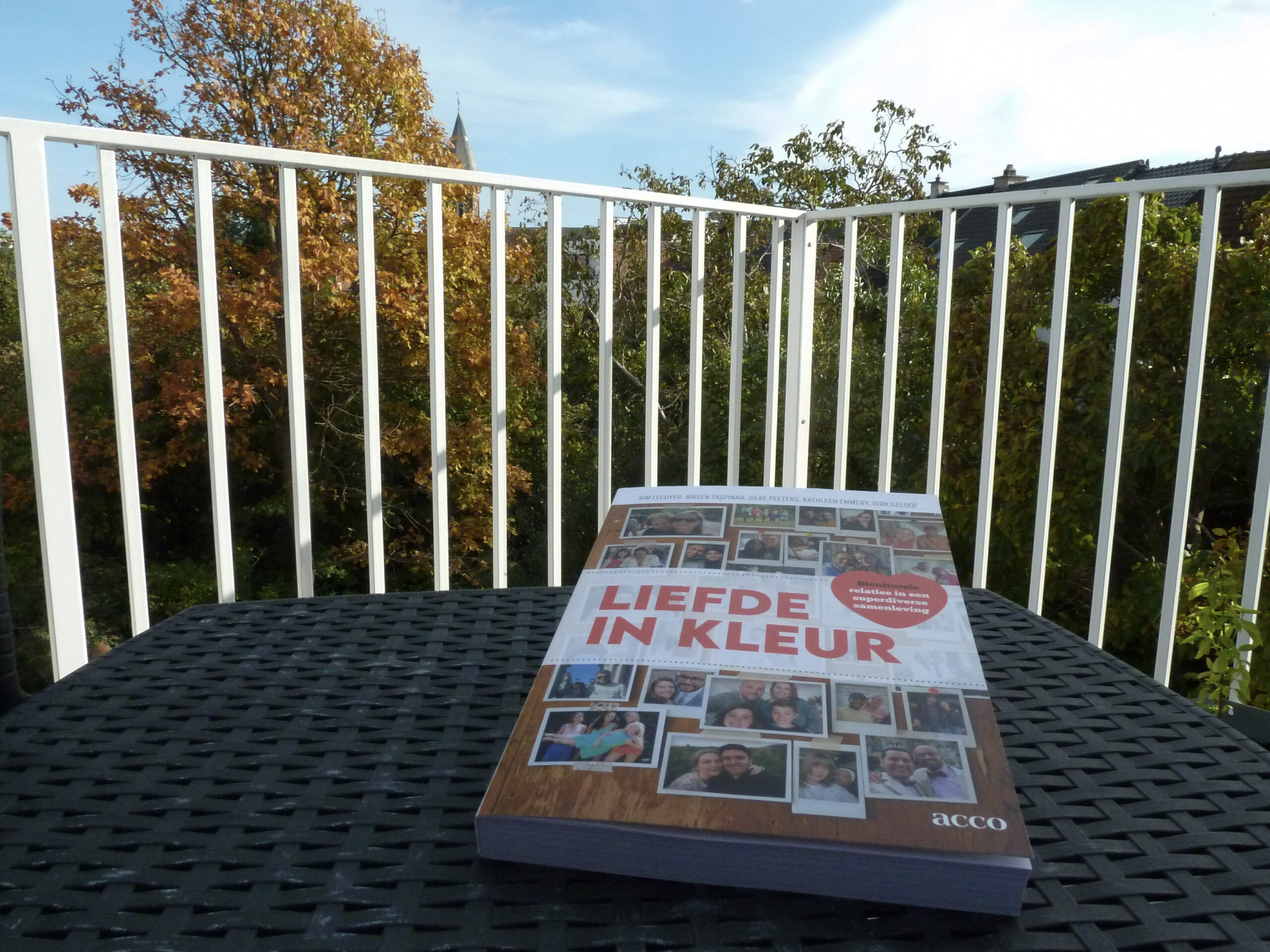
Credit: Catharina Waterstradt
Yet this is not how Vicky and Lucas experience their relationship. Having both grown up in Belgium, they don’t feel particularly different from other couples around them. They both recognised, however, that their parents faced this type of pressure more than they do.
Despite their family backgrounds, Ghazai and Thomas both grew up in France, and they don’t feel very culturally different from each other. But they added that not everyone in Brussels has the same experience as them, stressing that race and social background can shape how people are treated, even in a city as diverse as Brussels.
For both couples, having different family backgrounds is simply part of their everyday life. But while cultural diversity may feel ordinary to many Brussels residents, Lecoyer argued that there’s still a long way to go, especially in the field of family policies and support services.
"Many policies are still formulated as if the reality of our families was not as diverse as it is. Family policy is still very white," Lecoyer said.
Among other things, she pointed to a lack of experience working with bicultural families, which can leave professionals in support services such as the CAW (Centrum Algemeen Welzijn) not feeling confident in their ability to help. She calls for more professionals from diverse backgrounds and more flexibility for the system to be multilingual.
