
One third of healthcare facilities in the Brussels-Capital Region are exposed to nitrogen dioxide (NO₂) concentrations 50% higher than the WHO recommendation, according to data from UCLouvain, shared by Les chercheurs d’air.
Of the 48 healthcare facilities (hospitals, clinics and care homes) analysed by UCLouvain’s SIRANE software, all are exposed to annual average NO₂ concentrations that exceed the World Health Organisation’s recommendation (10 µg/m³), while 16 (33%) have concentrations exceeding 15 µg/m³.
“It would be a scandal to find cyanide in paracetamol. So why do we accept breathing in nitrogen dioxide at concentrations that are hazardous to health in the vicinity of our hospitals? We go there to be treated, not to be poisoned,” said Renaud Leemans, Campaigns Coordinator at Les chercheurs d’air.
The facilities include the Clinique Saint-Jean, the Saint-Pierre University Hospital and the Brugmann University Hospital. Importantly, according to the WHO, “exceeding the 10 μg/m³ threshold is associated with significant risks to public health.”
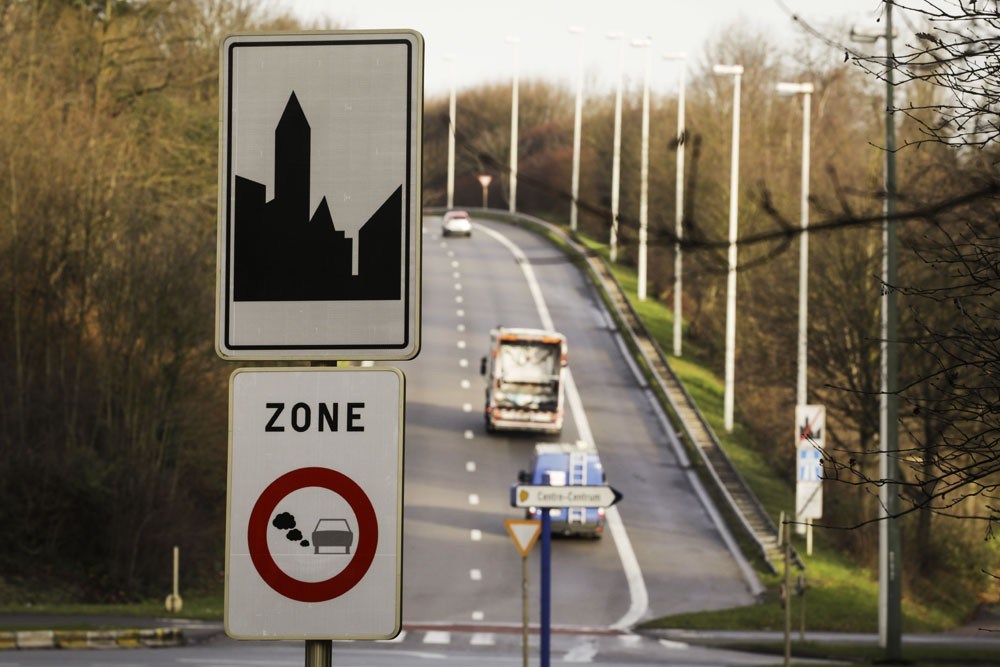
“Reducing road traffic pollution, particularly through the Low-Emission Zone, is essential to better protect patients, healthcare staff and visitors,” Leemans said.
LEZ pass
As air pollution can cause or exacerbate numerous health problems, its presence is highly problematic around healthcare facilities – places where vulnerable people are supposed to be recovering.
For instance, patients suffering from chronic conditions, particularly cardiovascular and respiratory diseases, may find their symptoms worsen as a result of air pollutants.
Older people are also more sensitive to this pollution, mainly due to a decline in the effectiveness of their immune systems and prolonged exposure to pollutants throughout their lives.
The organisation stressed that Brussels’ Low Emission Zone (LEZ) is the most effective tool for improving air quality at a regional level. However, the plans to introduce the “LEZ pass” would significantly weaken it. Among other things, the pass would allow certain diesel vehicles to continue operating in the Region until 2034, whereas the current timetable stipulates their removal from the LEZ by 2030.
According to the Council of State, this would result in a “likely significant decline” in the level of health protection for the people of Brussels.
Introducing a Zero-Emission Zone for lorries and vans in the city centre (Pentagone/Vijfhoek) would also positively impact emissions. Within Brussels, these vehicles account for only 16% of the kilometres travelled by road traffic, but are responsible for 39% of NO₂ emissions from this sector.
