
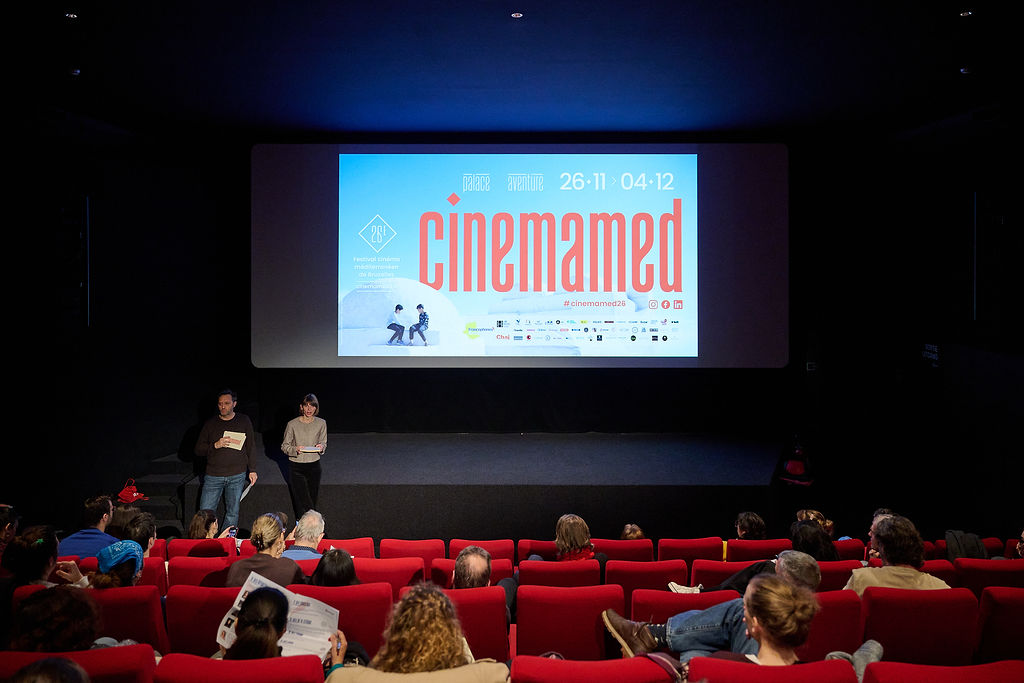
The upcoming Cinemamed film festival in Brussels features more than 80 films from 21 countries – but none from Israel, prompting claims of a deliberate boycott.
The organisers deny that any decision was made to ban Israeli film-makers from the line-up. They insist that “very few” movies from Israel were submitted and none met the festival's selection criteria.
The festival is showing six films under the banner of “fenêtre sur la Palestine” ("window on Palestine"). The programme states that “Cinemamed wishes to highlight artistic collaboration and solidarity with Palestine” and that the selection was made “in collaboration with Wallonie-Bruxelles International and the Palestine Film Institute.”
Wallonie-Bruxelles International is a public agency that it promotes French-speaking Belgian culture, education, research, and cooperation abroad and manages international relations for Wallonia, the Wallonia-Brussels Federation and the French Community Commission (COCOF) in Brussels.
Now in its 26th year, the festival runs for nine days, from 26 November to 4 December, with a programme including 14 ‘avant-première’ preview releases being shown for the first time in Belgium.
Asked if the festival had imposed a blanket ban on made-in-Israel films, Cinemamed spokesperson Olivier Biron confirmed that no Israeli productions or co-productions feature in this year's selection, but stressed this was not the result of a boycott.
“The very few [Israeli] films submitted for consideration were not selected by the programming committee, as they did not meet the festival’s selection criteria and editorial direction,” he explained.
He highlighted that the line-up included “Papagayo”, a Spanish-Belgian co-production by Omar Al Abdul Razzak which tells the story of a Jewish-Israeli illustrator and a Spanish filmmaker of Syrian Muslim descent, who struggle to overcome their political and cultural differences due to the war between Israel and Hamas.
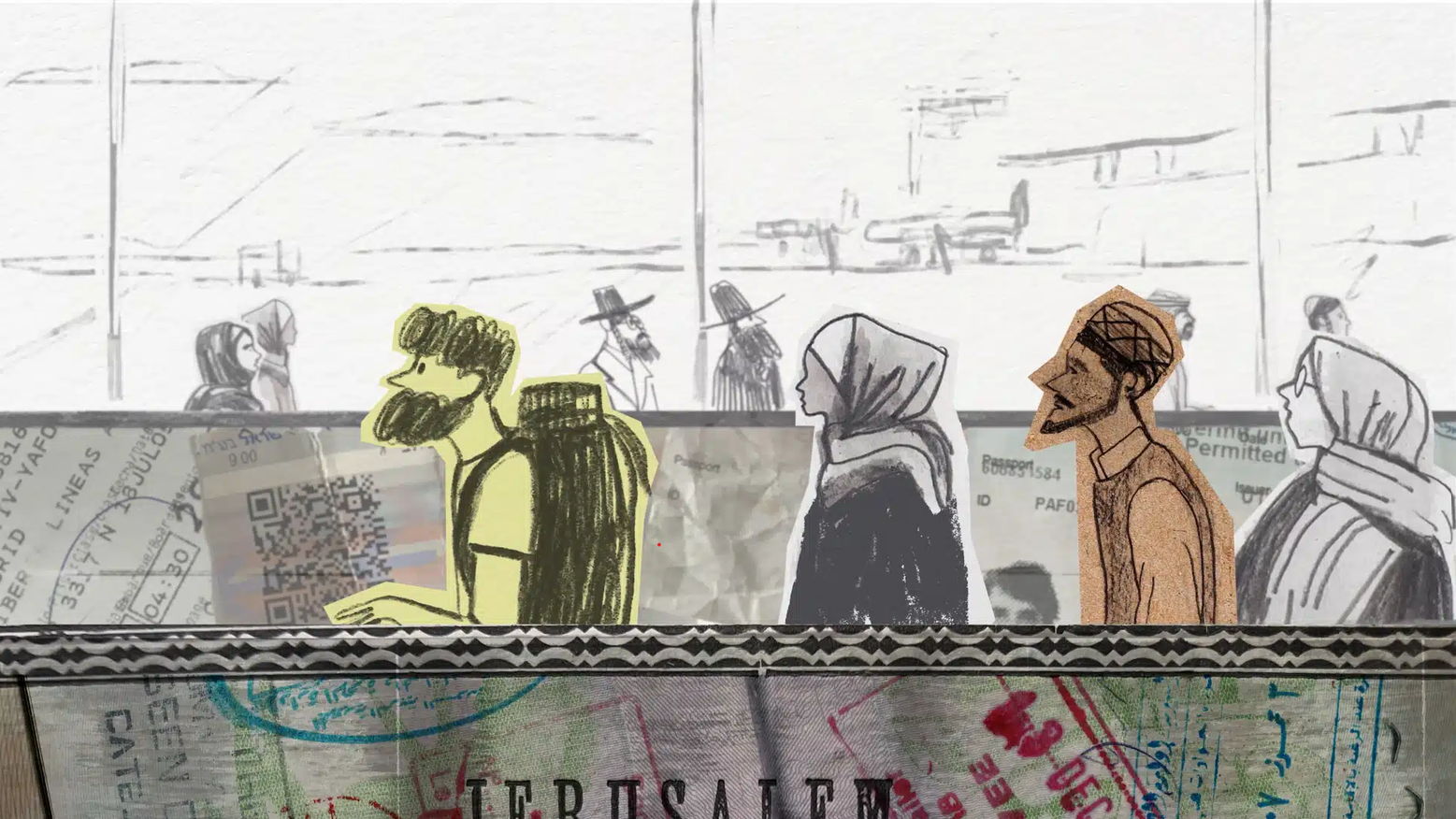
Still from Papagayo by Omar Al Abdul Razzak
Pressed for detail about the rules for inclusion in the line-up, Biron stated that the committee assess film submissions based on numerous criteria that "must be considered as a whole."
These include artistic quality; originality and distinctive character; exclusivity; ability to encourage reflection and intercultural dialogue; contribution to the diversity of genres, cultures and perspectives; and relevance to contemporary issues, including youth, migration, human rights, power dynamics, identities and coexistence.
“Since its creation, Cinemamed's programming and initiatives have also reflected our commitment to defending human rights. The festival is firmly rooted in the present and remains attentive to the cultural, social, economic and geopolitical realities of the Mediterranean region. This includes the situation in Gaza, just as it includes other current situations impacting the Mediterranean region,” he continued.
The programme also depends on the films up for selection. “Very few films by Israeli filmmakers were available this year, as can also be seen in the programmes of numerous film festivals around the world. Additionally, films must not have been screened recently in Brussels, and the final programme is also subject to negotiations with rights holders,” he added.
Sources in Brussels who questioned the absence of Israeli films in the line-up expressed disappointment that “Our Loves” by Avi Nesher had not made the Cinemamed bill.
Featuring some of Israel’s biggest stars such as Lena Fraifeld and Hisham Suleiman, the critically acclaimed picture tells the story of five Israeli men and women in the lead up to the Hamas-led attacks on 7 October 2023 and how they rebuild their lives.
However, it is not known if “Our Loves” was a contender for Cinemamed.
“We do not disclose information about individual films submitted for consideration, nor do we comment on specific selection decisions,” said Biron.
The suggestion that Israeli film-makers might have been deliberately excluded comes against the backdrop of a long-running public boycott of Israel by more than 300 museums, arts and cultural organisations in Belgium and the Netherlands.
Nearly 800 artists signed a declaration in October 2026, cutting ties with Israeli institutions over the war in Gaza and the occupation of the West Bank, stating that the cultural sector could no longer remain silent in the face of “war crimes, crimes against humanity and genocide recognized by all competent authorities.”
The statement recalled that cultural boycotts had contributed to the end of apartheid in South Africa.
In July this year, the Belgian federal government launched an import ban on goods originating from Israeli settlements in the occupied Palestinian territories. This was followed in September by the Council of Ministers approving a draft royal decree to implement the restriction.
Laurens Soenen, a spokesperson for Foreign Minister Maxime Prévot, declined to speculate on the apparent exclusion of Israeli films in Belgian festivals. “Culture is a regional competence,” he said.
Cinemamed is backed by the French Community Commission (COCOF).
Selin Salün, a spokesperson for Ahmed Laaouej, Minister-President of COCOF with responsibility for culture, said the editorial freedom of cultural operators “must be respected”.
“Each institution and festival is free to define its own artistic direction and programming choices, provided these align with democratic values and fundamental rights," she said.
"In the case of Cinemamed, the programming is shaped by a set of artistic and editorial criteria, as well as by practical considerations such as the availability of works and negotiations with rights holders," Salün added. "Consequently, the absence of certain films cannot be interpreted in a single, definitive way.”
Aurélie Losseau, head of programming for the festival, spoke to The Brussels Times earlier, following the announcement of the line-up. “We are excited about the bill. The Cinemamed festival is increasingly high-quality and compelling, attracting a more diverse audience, including people who don’t typically go to the cinema,” she said.
