

The "war for talent" remains a source of concern for employers in Belgium: almost four out of ten fear that they will lose their best employees this year.
According to an annual survey by HR expert Acerta Consult into labour shortages, the competition between companies to attract and retain the best employees continues. Finding suitable employees (50%) and retaining them (41%) remain the biggest HR challenges this year, according to the companies.
"Although everyone has unique talents, it is understandable that employees with the most striking and/or current skills and achievements often have the best chances in the labour market," said Hannelore Van Meldert, talent expert at Acerta Consult. "And employers know that too, hence their fear of losing those forces."
Part of the company
The need for change (11%), a bad relationship with the manager (10.1%), and too low a salary (8.3%) are the main reasons why the best talent would leave. This fear is noticeably stronger in large companies than in small and medium enterprises (SMEs).
"The fact that smaller companies are less concerned about this may be because their employees feel part of the whole and of the corporate culture more quickly," Van Meldert said.
"Additionally, they are more broadly deployable, which also gives them more or faster development opportunities. These are elements that companies can focus on extra this year in the war for talent," she added.
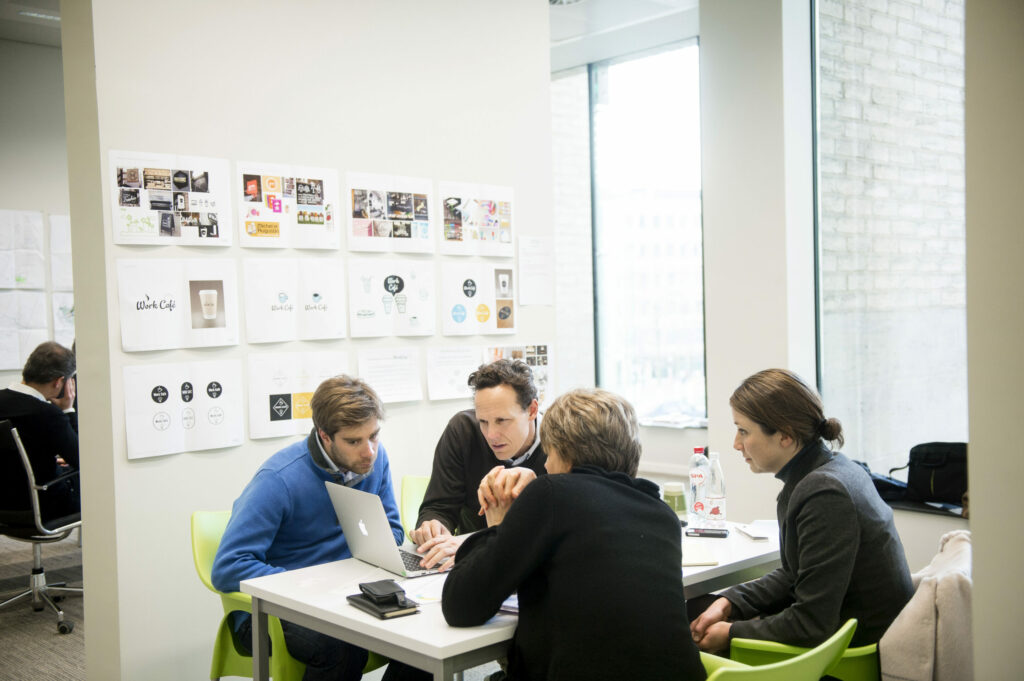
Illustration image of people in an office. Credit: Belga/ Jonas Hamers
Counterintuitively, most employers (78%) do not expect a decrease in the workforce, and a third (36%) even expect to have more people on board in 2025 than in 2024.
Still, nearly one in five employers (18.4%) believe a slight decrease in the workforce is possible, and another 3.5% expect a sharp decrease. Again, the figures show greater optimism among smaller companies than among larger companies.
"The tight labour market remains a reality. Yet this shortage of talent does not really erode the overall confidence of employers in the retention of their employees," said Van Meldert. "Attracting the right employees and retaining them are, without a doubt, the most important challenges for companies this year."
All other challenges, such as the mental well-being of employees (28.7%), their development (28.2%), the work-life balance (21.5%) and encouraging internal mobility within the organisation (7.5%) contribute to this and follow at a great(er) distance.
"Interestingly, Flemish employers consider attracting and retaining the right employees to be a greater challenge than their Walloon colleagues. This could partly be explained by the higher vacancy rate in Flanders (4.67%) than in the south of the country (3.55%)," she added.
Young people want to work more
For Acerta, one of the solutions to tackle the labour shortage is to get more people into work – as the new Federal 'Arizona' Government aims to do. Another part of the solution is to involve part of the active population more.
And there is an appetite for this, especially among young people: 22.3% of 18 to 35-year-olds indicate that they plan to work more this year. That is an increase of almost half compared to 2024, when 15% had that in mind. The majority of younger employees (64.7%) do not want to work more or less, while 13.1% want to take it a bit easier.
"Young people want to work more because they want to maintain their purchasing power. Families with children are confronted with the rising cost of living due to, among other things, the increase in energy prices in recent years," Van Meldert said. "People with a position in senior management also want to work more this year, according to our research."
Additionally, there are also people who want to work less. Their motivations are clear: the desire for ‘more free time’ (80%), ‘more time with the family’ (75%) and ‘less stress’ (71%).
