
In 2018, a group of Belgian brewers signed a voluntary agreement with the Flemish Government, committing themselves to work together to use water more sustainably.
The 16 breweries that eventually took part in the Flemish Green Deal for Breweries – which officially ended in 2023 – included large regional operations such as Haacht, Van Steenberge and Cornelissen, family dynasties like Duvel Moortgat, Huyghe and Van Honsebrouck and globally-known brands such as AB Inbev, Alken Maes, Rodenbach and the Trappists of Westmalle.
A 2024 report on the Flemish Green Deal for Breweries gave the full results: the participating breweries had collectively saved 2.29 million cubic metres of water, the equivalent of 915 Olympic-sized swimming pools. They had also cut their use of deep groundwater by 1.19 million cubic metres, helping preserve aquifers under stress from over-extraction.
The changes the brewers made to achieve these gains weren’t flashy, but they were smart. Breweries invested in clean-in-place (CIP) system optimisation, rainwater harvesting and reverse osmosis filtration. Some reused water for cleaning or cooling, while others tackled inefficiencies in bottling lines and fermentation. A few even went further, automating water source switching or using recovered process water wherever hygiene allowed.
Perhaps most importantly, the Flemish Green Deal for Breweries also built a culture of learning and transparency when it came to sustainability. The breweries shared data and swapped strategies in regular roundtables. They worked closely with government agencies, including the Flemish Environment Agency, the Environment Department and the Flemish Water Knowledge Centre. The agreement was co-signed by the Belgian Brewers and the food industry federation Fevia Vlaanderen. The project showed that sustainability didn’t have to be just a marketing add-on. It could save energy, cut long-term costs, enhance relationships and help create “cleaner” Belgian beer.
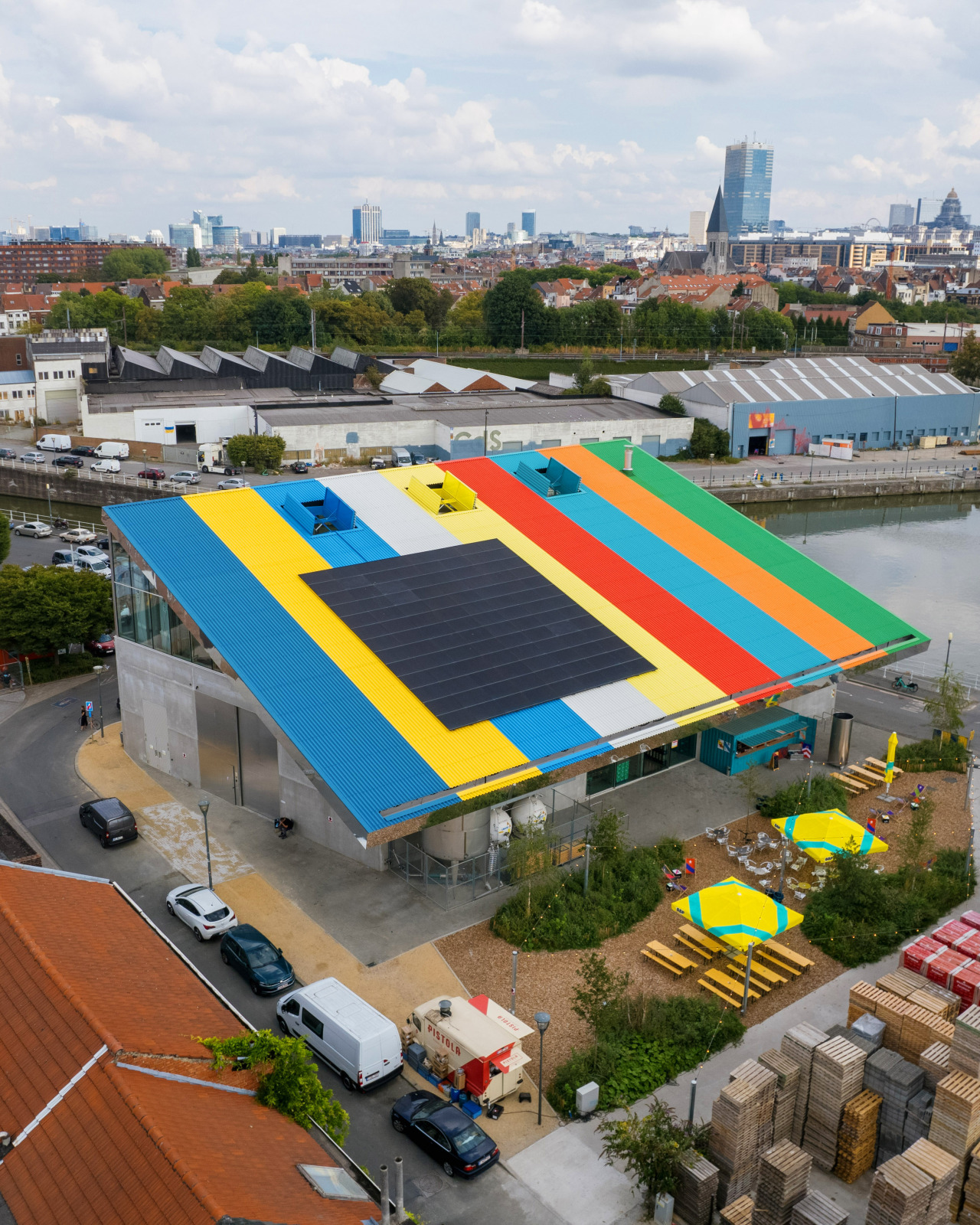
Solar panel on Brussels Beer Project's roof
Brewing beer is a resource-intensive act. It consumes vast amounts of water, burns through energy and produces waste in every batch. In an age defined by climate instability, resource scarcity and shifting consumer values, even Belgium’s most iconic breweries can no longer afford to ignore the environmental cost of their craft. The question is no longer if Belgian beer must become more sustainable, but how. And whether the industry can do so without compromising the authenticity and character that makes it special.
While approaches to sustainable practice vary by brewery size, philosophy and geography, several core strategies to reduce environmental impact have emerged across the beer industry in Belgium in recent years.
Saving water
Water conservation, as shown in the Flemish Green Deal for Breweries, is a key one. Water is one of the main ingredients of beer, but also one of its most wasted. Some breweries now recycle water between cleaning and brewing processes, while others are investing in advanced treatment systems to reduce discharge and re-use wastewater.
The Omer Vander Ghinste brewery in Bellegem, as well as being one of the participants in the Flemish Green Deal for Breweries, has further leaned into water conservation by setting up a partnership with water technology experts Veolia Water Technologies, undertaking a major expansion of its wastewater treatment plant.
With advanced membrane filtration and anaerobic digestion systems, Vander Ghinste’s brewery systems recover 70% of their water for reuse in cleaning, cooling and bottle washing. Simultaneously, the brewery captures high-quality biogas from its wastewater and uses it to heat operations on-site, creating a closed-loop energy cycle.
Together, these innovations save the equivalent of the annual water consumption of 3000 Belgian residents and prevent the emission of 548 tonnes of CO₂ each year. In a 2024 press release, Veolia called the Vander Ghinste brewery a "bio-factory". Vander Ghinste says that it’s just “future proofing.”
Renewable energy
Energy efficiency practices are another component of Belgian beer’s path to sustainability. Solar panels have become a common sight on brewery roofs. Others use biogas produced from fermentation by-products to help power their operations. Heat recovery systems, which capture and reuse energy from the brewing process, are also gaining popularity. These measures not only reduce emissions but also cut long-term costs.
AB InBev, the largest brewer in the world, has made significant investments in renewable energy. At their Stella Artois Brewery in Leuven, they’ve installed 2,117 solar panels covering 3,800m² and producing 576,000 kWh annually – enough to power approximately 150 households. At their Jupiler Brewery in Jupille, they added 2,111 solar panels in 2021, supplementing the existing 6,000 panels to enhance renewable energy production. And at their Hoegaarden Brewery, they installed 2,100 solar panels in 2019, contributing to the company's goal of 100% renewable electricity by the end of this year.
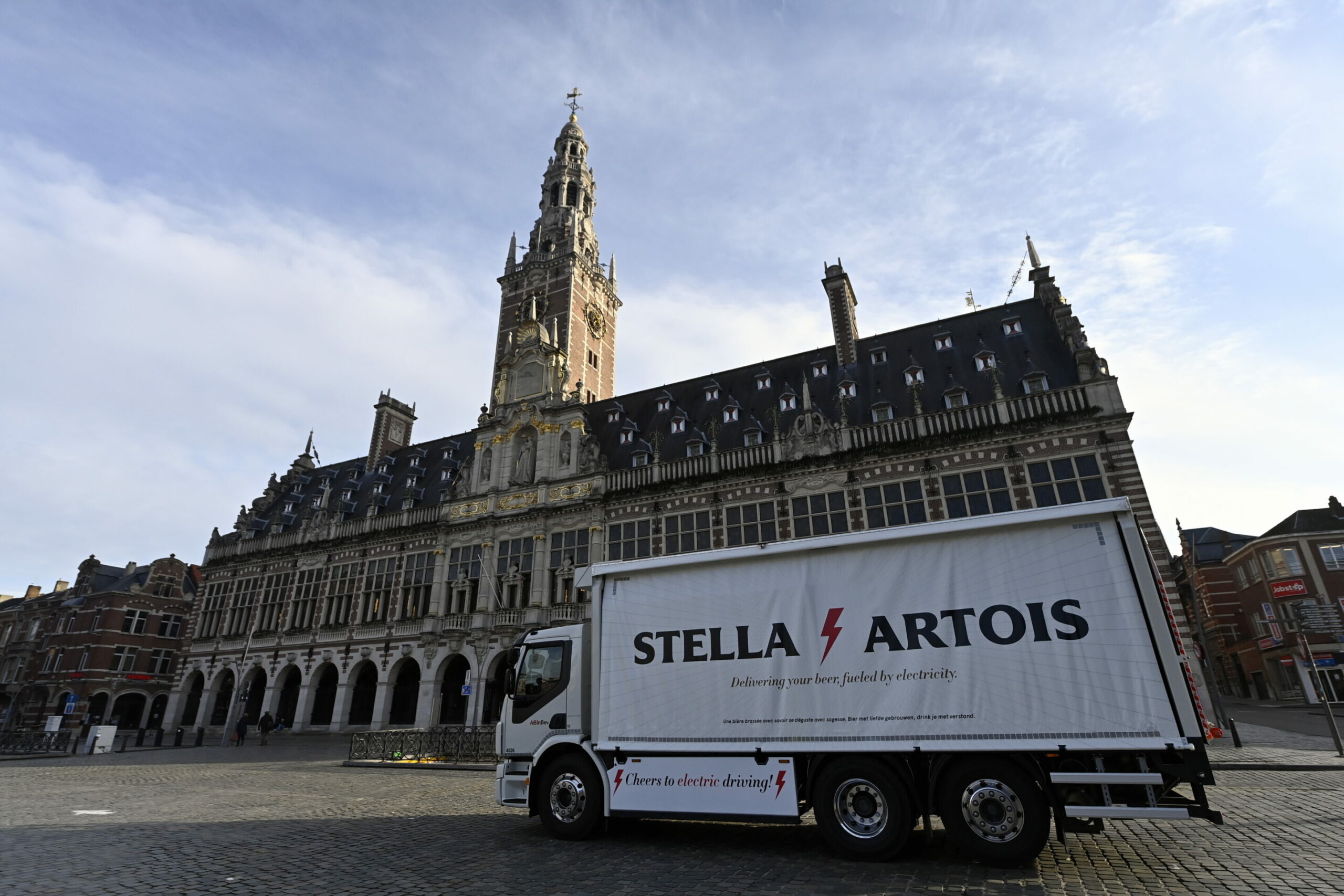
The first Belgian e-truck delivering AB Inbev beer in Leuven, Tuesday 08 December 2020. Credit: Belga
Independent breweries are also investing in energy efficiency. Brouwerij Huyghe has installed solar panels (recently, an investment of €700,000), as well as a combined heat and power (CHP) system that uses biogas from anaerobic water purification. These changes have resulted in the brewery being on target to produce approximately 90% of its required energy by itself and in a green manner. In addition, they’ve also invested €600,000 in new sustainable cooling units and €250,000 in compressed air units to further reduce energy consumption.
When Brasserie de la Senne built a new production facility on the Tour & Taxi site in Brussels, it covered the entire roof of its building with photovoltaic panels – 1,219 Canadian Solar panels (371,695 peak watts) and six SMA inverters on a PVC roof. Because of this, a large part of the electricity required to power their operations is now renewable.
Circular economy
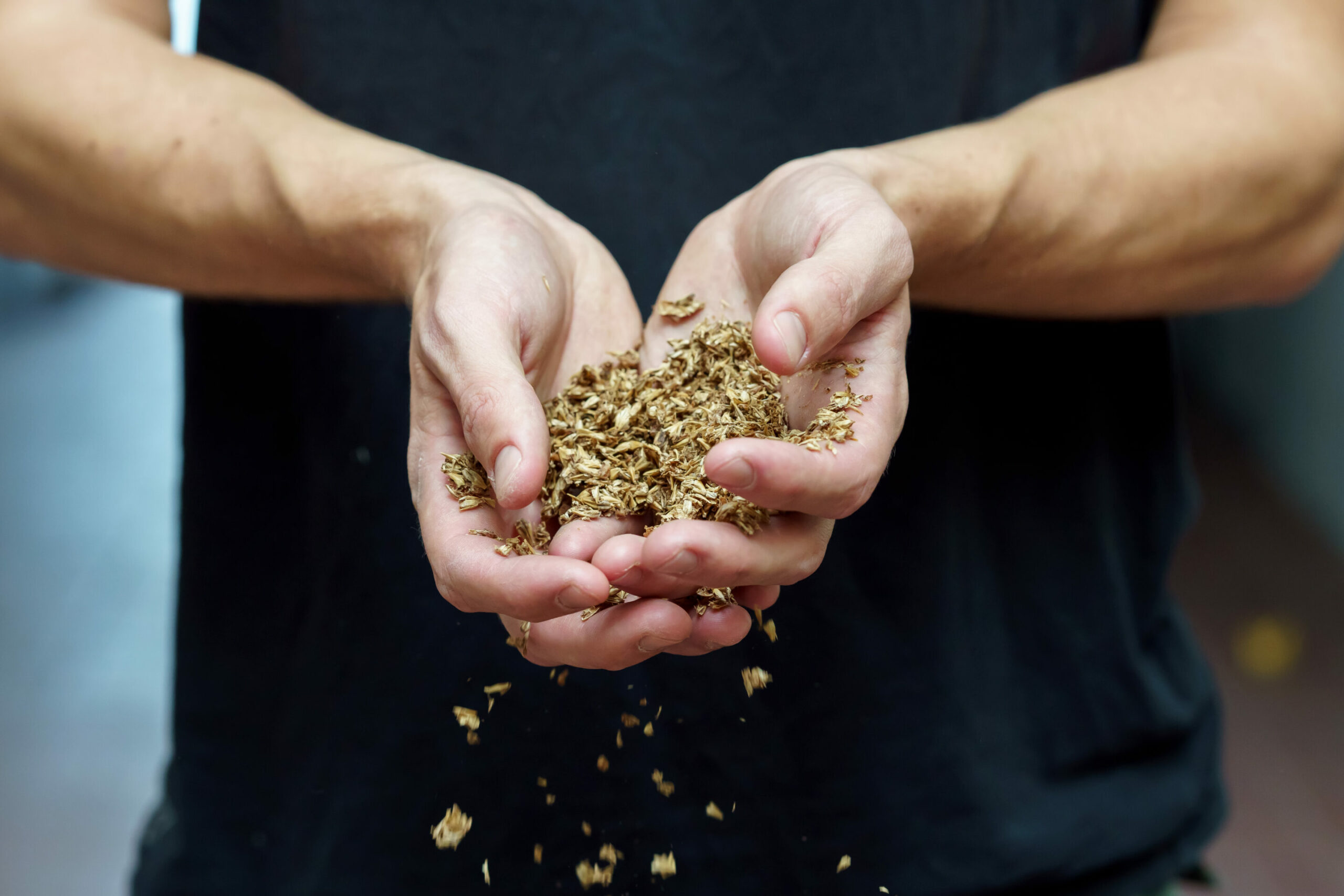
There has also been a concerted attempt to embrace the circular economy. Spent grain – the leftover malt from brewing – is increasingly repurposed as animal feed, compost or even baking ingredients. Some breweries partner with local farmers to ensure these by-products never go to waste. From hop growers in Poperinge to organic grain farms in Wallonia, sourcing locally has environmental benefits. And a growing number of brewers are turning to organic ingredients, both to reduce chemical use and to market their beers to eco-conscious consumers.
Brasserie Brunehaut, located in Rongy-Brunehaut in Wallonia’s Hainaut province became the European Union's first B Corp-certified brewery when it finished a two-year certification process in February 2021. All Brunehaut beers are organic, they source ingredients as locally as possible, and they pay their farmers at accepted fair-trade levels. Brunehaut’s partners and suppliers – Sturm, Houblonde, La Miche, etc – are companies that share their circular economy principles. Brunehaut claims to be the first brewer in the world to distribute recyclable export kegs (and their 350 rooftop solar panels produce 75% of their required brewing electricity).
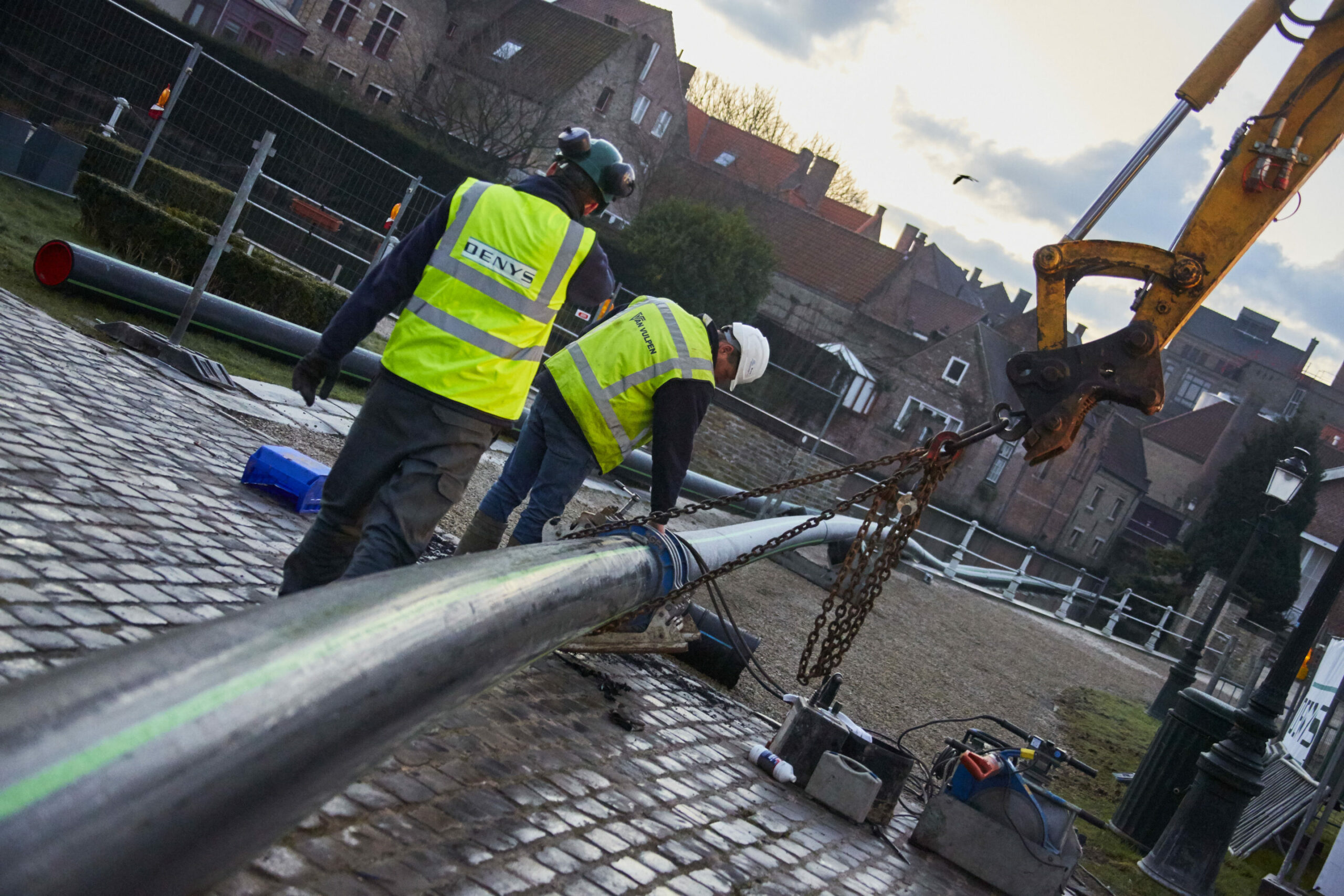
Laying the Bruges ‘beer pipeline’ for De Halve Maan
In 2016, De Halve Maan constructed a complex underground beer pipeline between its brewery in the historic centre of Bruges to a more sustainable bottling plant at the edge of the city. It was the world’s first underground beer pipeline and stretches to a total length of 3.3km. Not only has the pipeline resulted in greener bottling, but it has slashed Halve Maan’s CO₂ emissions by reducing the amount of heavy traffic to and from the brewery in the city centre. “Since its launch, we’ve been able to reduce our ecological footprint drastically,” says owner Xavier Vanneste.
Brussels Beer Project embraces this circular economy by reusing 2.3 tonnes of unsold bread to brew its Babylone beer, cutting food waste and the need for malted barley. Additionally, the spent grains from brewing are repurposed to make bread, creating a closed-loop system that minimises waste and promotes sustainability. It’s not the only circular economy beer they produce. Yeti Bang is made using apples from Brussels’ gardens while Low CO₂ Pale Ale is produced with unmalted barley and wheat, with hops re-used from Delta IPA dry-hopping.
In their 2024 Impact Report, Brussels Beer Project set out their sustainability activities, which showed 25% of their malt comes from Pure Local, a project led by a Belgian regenerative agriculture programme. They have completely shifted to reusable stainless steel kegs from one-way plastic kegs as they become a plastic-free company. Some 91% of their bottles are reusable. They’ve even switched some of their fleet to electric or hybrid cars. “It’s a fun, hard and imperfect journey,” concludes BBP’s report. “The only one that makes sense.”
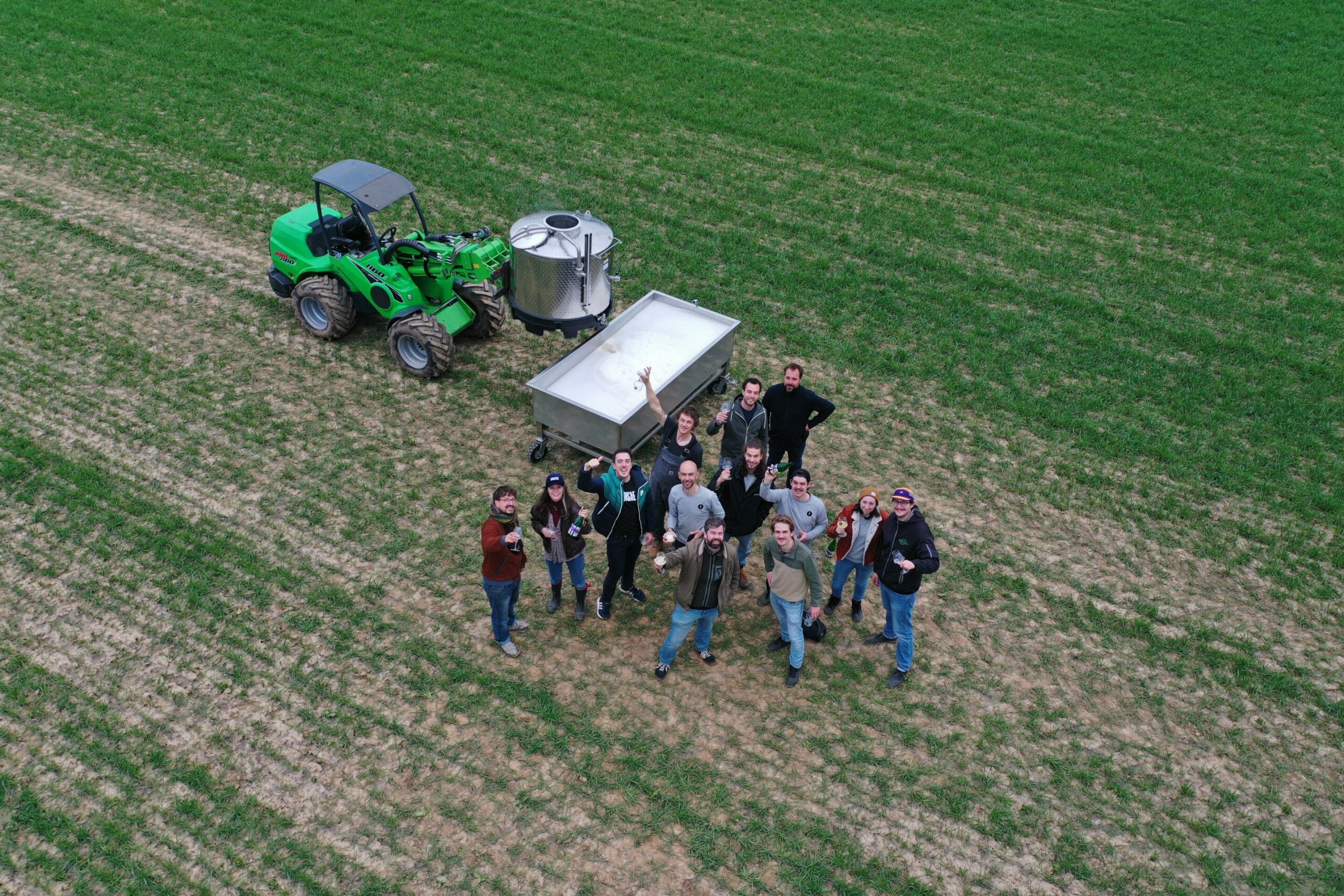
The Brussels Beer Project team in the fields.
There are, of course, certain styles of beer where there seems to be an in-built ethos of sustainability. Producers of lambic beers, for example – the most “natural” of Belgium’s beer styles – have been open to working with local farmers, using organic ingredients and embracing the circular economy for years.
The 3 Fonteinen lambic brewery has spent years rebuilding a local grain economy in the Pajottenland region in which they’re located. Frustrated by the post-war disappearance of traditional Brabant cereals, the brewery teamed up with farmers and agro-ecologists to grow heirloom wheat and barley on nearly 100 acres of regional farmland. Together, they formed the Cereal Collective; a long-term, fair-trade network that not only ensures brewers get high-quality grain, but also that farmers earn a viable income. More than 25 barley and 50 wheat varieties are now being revived – carefully matched to soil, climate and brewing needs – all with sustainability, biodiversity and local tradition in mind.
Since 1999, the Cantillon brewery has exclusively used certified organic ingredients in its brewing process. It refuses to use artificial refrigeration, relying instead on natural cooling processes that minimise energy consumption. And at Oud Beersel, cherries don’t just end up in their fruit beer. In 2022, it partnered with Belgian Beer Jams to turn orchard harvests and brewing byproducts into locally crafted, sustainable, cherry-apple and rhubarb jams.
Packaging innovations
Glass bottles remain a mainstay of Belgian beer, but packaging has come under scrutiny by those fighting for increased sustainability. Breweries are investing in lighter bottles, recyclable materials and return systems. Some are experimenting with reusable kegs and sustainable labelling to reduce overall waste.
A key piece of legislation currently making waves across Europe is the Packaging and Packaging Waste Regulation (PPWR), a sweeping EU measure which came into force last year, aimed at cutting packaging waste, boosting recyclability and accelerating reuse systems.
For brewers, the stakes are high. Beer is one of the few alcoholic beverages already sold widely in reusable formats, particularly in Belgium, where returnable glass bottles and kegs are the norm. Compared to the heavier glass bottles used for wine and spirits, beer’s packaging often has a lower carbon footprint, especially when integrated into circular deposit systems.
Unsurprisingly, brewers are keen to position themselves as the greener alcohol producers, touting their closed-loop logistics and lightweight packaging. But the regulation could affect multi-pack formats and impose stricter labelling and tracking requirements, adding complexity for smaller beer producers.
There are already several breweries investing heavily in more sustainable packaging initiatives. In collaboration with Carrefour Belgium and DW Reusables, the De Hoorn brewery (located in Steenhuffel and a part of the Royal Swinkels group of breweries) introduced a returnable, shelf-ready mini-crate for its Cornet brand. The aim was to reduce single-use packaging waste by implementing a deposit system that encourages consumers to return the crates for reuse. The crates are made from 100% post-consumer recycled plastic, aligning with circular economy principles.
Martens Brewery, located in Bocholt, partnered with manufacturer KHS Group to implement the Nature MultiPack system for its Karlskrone beer. This new packaging replaces traditional shrink wrap with small adhesive dots, eliminating the need for plastic film. The PET bottles used are made entirely from recycled materials, significantly reducing plastic waste and energy consumption during production.
Challenges
While momentum is building, the path to sustainability in Belgian brewing is far from straightforward. Breweries face a range of challenges – some practical, some philosophical – as they attempt to modernise operations without compromising the soul of what they do.
Perhaps the biggest is cold, hard cash. Many of the most impactful sustainability upgrades – like water purification systems, heat recovery installations, or solar energy infrastructure – require significant capital investment. For small, independent brewers, these expenses can be prohibitive, requiring long-term financial planning in a market of increasingly tight margins – and there are very few government subsidies to incentivise these investments.
Another major challenge is infrastructure and scale. Older breweries, especially those operating in historic buildings or dense urban settings, may lack the space or flexibility to install modern sustainability systems. For producers such as Brouwerij Roman, with one of the oldest brewery buildings in Belgium, or De Dolle Brouwers, with an archaic property that requires ladders to traverse, it’s more challenging to make the changes required to become greener. Scaling sustainability is often easier for new-build or expanding operations than for those working within the constraints of heritage infrastructure.

Cantillon brewery. Credit: Belga
There’s also just the inherent tension built in when balancing tradition with sustainable innovations. Belgium’s brewing reputation is built on centuries of tradition – spontaneous fermentation, open cooling, slow maturation. Some of these practices are inherently less energy efficient. Modernising them risks altering the flavour profile or traditional processes of beers such as lambic, oud bruin, witbier, or abbey-style ales. Passionate brewers are understandably cautious about adopting changes that could affect the flavour or character of the thing their father and grandfather passed down to them.
Ingredient volatility also makes it difficult. Climate change is a part of this challenge. Shifts in temperature and rainfall are already affecting barley and hop harvests, both in Belgium and abroad. Organic and local sourcing – while more sustainable – can also be less predictable and more expensive than large-scale industrial supply chains.
And then there’s consumer awareness and price sensitivity. While eco-consciousness is rising, not all consumers are willing to pay more for sustainably brewed beer. Convincing drinkers that a greener beer is worth a premium can be tough in competitive markets, especially when imported beers are often cheaper.
Looking ahead
Despite these barriers, Belgian brewers are increasingly recognising that inaction isn’t an option. The path to a more sustainable beer culture in Belgium is still taking shape, but signs of a greener future are already emerging.
Forward-thinking breweries are beginning to adopt circular economy principles. That means designing systems where every output – spent grain, wastewater, CO₂ – becomes a potential input elsewhere. From closed-loop water systems to collaborations with local bakeries and farmers, the goal is to ensure nothing is wasted.
We can expect to see further investment in technologies that reduce energy and water use, such as carbon recapture, AI-driven brewing systems for efficiency and eco-friendly refrigeration. New equipment is allowing brewers to experiment with lower-temperature fermentation and shorter boil times without compromising flavour.
Global disruptions and environmental concerns are nudging more brewers to source closer to home. This supports biodiversity, reduces transport emissions and bolsters local farming communities.
Partnerships between breweries, tech providers, researchers and policymakers are becoming more common. Initiatives like the Flemish Green Deal for Breweries create shared goals and incentives, helping breweries of all sizes move forward together.
Perhaps the most powerful force for change lies with drinkers themselves. As more consumers demand transparency, ethical sourcing and reduced environmental impact, sustainability will become not merely a point of difference, but an expectation. Education, labelling and storytelling will play a big role in closing the gap between brewery efforts and consumer understanding.
If Belgian brewers choose to see these developments as an opportunity rather than a threat to their tradition, sustainability might just be a major part of ensuring that tradition endures.
