
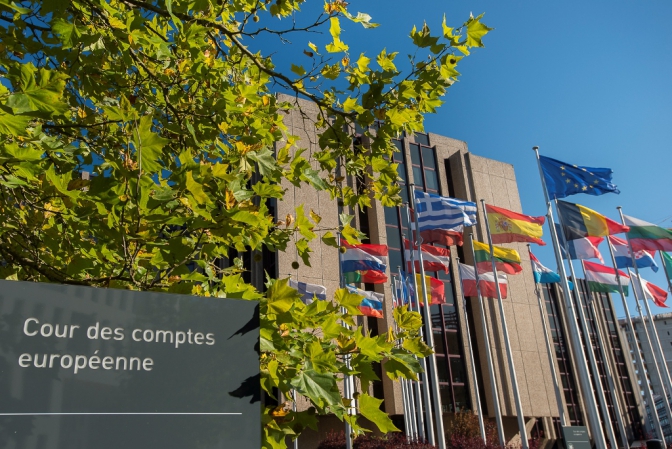
Despite the importance of the single internal market for the EU economy, the European Commission has not done enough to abolish the barriers for cross-border trade in services, according to an audit report published before Easter by the European Court of Auditors (ECA).
The free movement of services is one of the four freedoms in the internal market and a key priority for the EU. The figures, however, show that there still are long-standing barriers. In its reply to the audit report, the Commission shared the main observation in the report: the single market for services remains far from complete and many barriers continue to persist.
Currently, the services sector accounts for around 70% of both gross domestic product (GDP) and employment in the EU. At the same time, they account for only 20% of trade between EU Member States. Around 60% of the barriers to the single market for services that were identified in 2002 still persist 20 years later, although the Services Directive (2006/123/EC) entered into force in 2006.
"Businesses in the EU continue to face an uphill struggle in providing services in a cross-border capacity," said Hans Lindblad, the Swedish ECA Member leading the audit. "The Commission’s efforts to do away with barriers are still insufficient."
"The free movement of services is key to promoting economic integration, unlocking the EU’s competitiveness, boosting growth and prosperity," he added. "It affects prices that people pay for services daily."
The Services Directive covers nearly half of all services in terms of the EU’s GDP. Among services not covered by the directive are financial, transport and health care services. Cross-border trade intensity varies widely by sector, from only 0.4% of turnover in the wholesale/retail sector and 0.8% in construction to 15% in computer services and 31.8% in advertising and market research.
The audit focused on the Commission’s measures to remove barriers to services, but he added that Member States also bear responsibility. They create barriers and fragment the single market by a lack of transposition, incorrect, divergent or burdensome implementation of EU law despite their joint ownership with the Commission.
Barriers depend not only on incomplete or incorrect implementation of the Services Directive but also on the implementation of other EU legislation, such as the directive on temporary posting of workers, the directive on the recognition of professional qualifications from EU Member States and third countries, and national procurement legislation.
The audit covered the period between 2015 and 2025 with the main focus on actions undertaken by the Commission since 2020 with regard to the Services Directive. The auditors also analysed the national barriers and their root causes by collecting data from all Member States and visiting a sample of six countries (Germany, Estonia, France, Italy, Lithuania, and Hungary).
Weak enforcement of rules
Barriers at the national level represent an important part of the problem. The report gives some examples from the visited countries. In Italy, there is a known barrier regarding beach concessions. In Germany, the auditors noticed extensive limitations regarding the posting of workers from other countries.
Overall, the auditors found that the enforcement of rules in the single market for services was weak. The Commission relied mainly on infringement procedures. However, it did not focus on cases with significant impact and did not always act promptly when countries failed to comply with the Services Directive.
The other tools in the Commission’s toolbox of measures were also largely ineffective, according to ECA. So-called Points of Single Contact did not always ensure access to electronic procedures and information required by the directive. SOLVIT, a free-of-charge problem-solving service coordinated by the Commission and provided by national administrations, was rarely used for usual business services.
The Single Market Enforcement Task Force, a forum where the Commission and Member States work together to eliminate the biggest single market barriers, has achieved only limited results in removing them. Since its creation in 2020, the forum has launched 11 projects, of which only two concerned services.
The European Semester is a complementary tool. It is an annual cycle which may provide country-specific recommendations to the Member States to encourage regulatory reform in the service sectors. However, this tool has been used to a decreasing extent since Covid-19. In the sample of Member States, none of the recommendations had so far led to substantial reforms in key service sectors.
Moreover, the processing of complaints from businesses against countries that had allegedly violated EU rules was flawed: resolving complaints was sometimes a lengthy process and disadvantaged small companies. The ECA also criticised the Commission for its lack of clear goals, performance indicators and strategic ambition in removing the barriers.
Consensus on recommendations
During the audit (on 21 May 2025), the Commission launched a new single market strategy. In the audit report, the ECA assessed the strategy and concluded that the situation had not changed much since the launch of the strategy because it relies on tools that are unlikely to be effective.
The Commission says that the new strategy will make the single market "simple, seamless and strong" by addressing, as a first priority, the ten most harmful single market barriers – the so-called "Terrible Ten" (see first chapter of the strategy). It promised to provide an update on progress made with the strategy’s implementation in its annual single market and competitiveness report.
The auditors recommended several ways for the Commission to become more effective at ensuring a functioning single market for services, but left proposals for updates of the legislation to the co-legislators.
In its reply, the Commission welcomed the audit and fully or partially accepted all recommendations besides one on supporting smaller companies in taking legal action in national courts against barriers. According to the Commission, the replies to the audit recommendations are firmly grounded in the framework and objectives of the strategy.
"The 2025 Single Market Strategy already represents a clear shift toward a more targeted and evidence-based approach, including a strong focus on services," a Commission spokesperson told The Brussels Times. "The focus is now on implementation and transparency. Delivery requires joint ownership. Member States must remove national barriers."
"Unlocking the full potential of services is not optional. It's necessary. The Commission will continue to support, monitor, enforce and propose targeted solutions wherever they are needed, turning the strategy into action. What matters is delivering concrete results on the ground. We'll report regularly to the Parliament and Council."
