
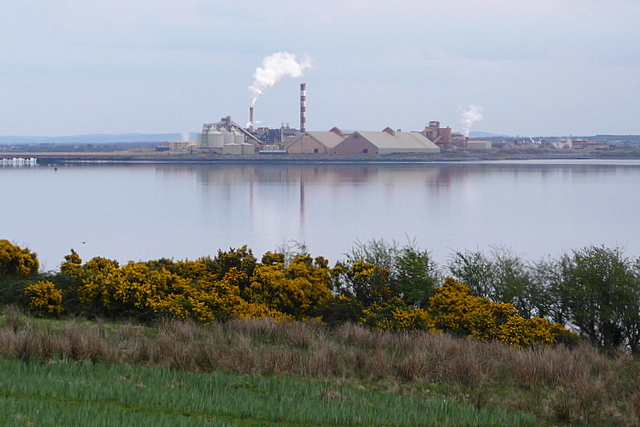
Over a month and a half has passed since the Irish government submitted its investigation report to the European Commission on the export from the Aughinish Alumina plant in Limerick to Russia but the Commission has still not published any conclusions.
The issue was raised already at the official opening of the Irish EU Presidency in beginning of July. The alumina plant, Europe’s largest alumina refinery, is owned by the Russian aluminum giant Rusal. Its founder and top shareholder is an oligarch who is sanctioned by the EU for his alleged involvement in companies working with the Russian defense sector.
As previously reported, Ireland finalized the investigation in late July directly after the adoption of the 21 sanctions package against Russia. The full report has not been published because of its content of confidential data.
“The matter is now with the European Commission for its consideration,” said the Minister for Enterprise, Tourism and Employment, Peter Burke, in a statement. He concluded that no definitive evidence linking the export to Russian weapons manufacturers had been while qualifying that it could not be ruled out.
At the time, the Commission announced that it needed time to analyse the report. Asked if the Commission by now has finalised it analysis, a Commission spokesperson replied on Monday that it still is examining the report and analysing the role played by Aughinish Alumina export flows, “notably with respect to supplying Russia's military efforts”.
The spokesperson quoted the Irish Prime Minister (Taoiseach), who “has said, the review does not find an evidential basis for a finding that relevant sanctions / EU restrictive measures have been contravened, nor did the analysis find evidence that products were being supplied to Russian arms manufacturers”.
“While the Commission monitors the implementation and enforcement of EU sanctions across all Member States, Member States are, first and foremost, responsible for the implementation of sanctions and investigation of potential breaches,” the spokesperson told The Brussels Times.
The Commission says that it will continue its close engagement with the Irish authorities on the appropriate follow-up. Alumina, which is a raw material for the production of aluminium, is currently not subject to EU export restrictive measures (sanctions).
According to the Commission, the measures in place reflect a “careful balance between the EU’s determination to impact Russia’s ability to finance its war of aggression while limiting, to the extent possible, negative impacts on Member States and industry”.
A dilemma for the EU
The issue was also raised at the press conference after the informal meeting of the EU Foreign Affairs Ministers (also known as Gymnich) in Wicklow, Ireland, last week. Kaja Kallas, High Representative for EU’s Foreign Affairs and Security Policy, said in her press remarks that EU must “forcefully crack down sanctions circumvention”.
“Ukraine has identified more than 5,500 Western and Asian components in Russian weapons. After four years of war, this is inexcusable. Those components should not be there. Together with the Commission, we are working on the new proposals to tighten sanctions enforcement.”
Asked what the EU is going to do about the alumina and aluminium facilities owned by Russian company Rusal in Ireland and Sweden, she hinted that some Member States are opposing sanctions. “Really, companies are operating access to services that the Russians have that also helps them, but in the end, it is always the question whether there is appetite to agree by all the Member States.”
“Right now, we are working with these 1,600 listings that are very specifically targeting the Russian military complex, so that they could not produce the missiles that are killing Ukrainians every day,” Kallas added.
The founder and main or majority shareholder of Rusal is an oligarch who is sanctioned by the EU. His appeal against being included in the sanctions list was dismissed in July by the EU court. An investigation carried out by the Organized Crime and Corruption Reporting Project (OCCRP) and published last March found that the Irish facility sends more than half of its alumina exports to Russian smelters.
Contrary to the Aughinish Alumina plant in Ireland, the aluminium plant Kubal in Sundsvall, Sweden, is not exporting to Russia and all its production is intended for the EU market. Furthermore, the Swedish company has recently been subject of police raids for alleged financial wrongdoings and violation of sanctions (transfer of revenues to Russia). There are even talks about nationalizing the company.
An article in The New York Times last week about the role of the Aughinish Alumina plant in the local economy wrote that some 52 % of Aughinish alumina goes to Russia and 34 percent to France, Sweden and the Netherlands combined.
The investigative report last March estimated that Russia’s aerospace and defense sector absorbs 20% to 30% of Russia's total domestic aluminum supply. While it cannot be proven that a certain batch of alumina from the Irish plant has been used for the manufacturing of Russian weapons, nor can it be disproven.
It is logical to assume that a similar proportion of all alumina, including from Aughinish, enters smelters in Russia and is destined to support military production. The Commission faces a dilemma: banning the export of alumina could hurt the economy of an EU country, not banning it supports Russia’s war of aggression against Ukraine.
