
The European Parliament’s Employment and Social Affairs Committee (EMPL) made some progress in a recent vote on the draft Performance Framework regulation which regulates the tracking of expenditure and monitoring of performance in the new Multinational Financial Framework (MFF) for 2028 – 2034.
In a vote in beginning of September, the MEPs adopted a new opinion on the European Commission’s proposal for a regulation, changing in substance a previous opinion from last March. The opinion was largely supported by the MEPs from the EPP, S&D, Renew, The Left and Greens/EFA party groups.
The Performance Framework Regulation sets a common list of standardised performance indicators in its annex – output and result indicators – directly linked to a shortlist of intervention fields. Social policies are vaguely mentioned but not specified. The purpose is to streamline monitoring and reduce administrative burden by slashing the previous thousands of indicators.
However, as the draft text currently reads, the EU will spend billions and still have almost no way of knowing if the marginalised and discriminated Roma minority in the EU will benefit from the spending. Antigypsyism is not even named anywhere in the text. Only four indicators of the around 900 common indictors in the annex to the regulation are related to Roma integration.
They do not even measure progress or result – only output in terms of numbers of participants in EU supported projects. In an opinion (09/2026) this year, the European Court of Auditors (ECA) wrote that the proposed performance framework is not sufficiently well designed to allow for the assessment and assurance of performance.
As an example of weaknesses, ECA mentioned access to education for Roma communities (annex III in its opinion). “Output focuses on participation without linking it to the type of education, content or duration. The result indicator measures participation in education or training but does not capture learning outcomes (e.g. completed exams, certificate, diploma).”
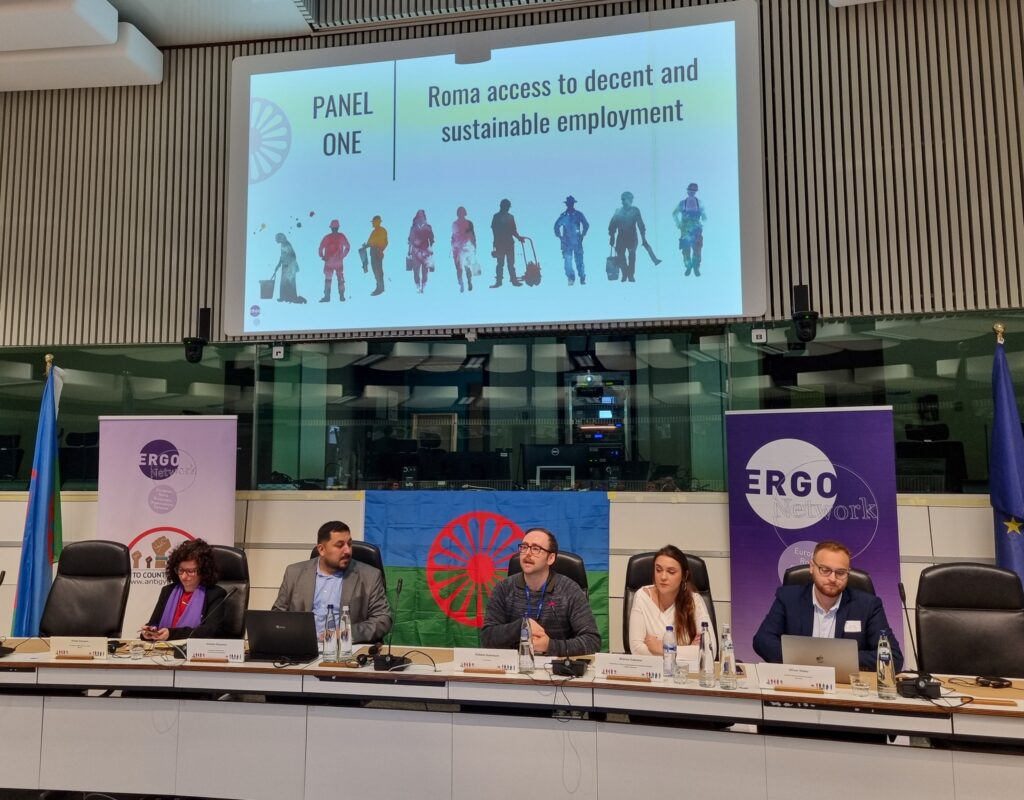
“We recognise that there has been progress,” Carmen Tanasie, policy and project officer at the network of European Roma Grassroots Organisations (ERGO) told The Brussels Times.” For us, it was very important that Roma did not disappear from the next EU budget. The requirement for EU Member States to show that they have a national or regional Roma inclusion framework is an important step.”
“There are specific references to Roma in education, employment, skills and social inclusion, and this gives us something concrete to work with and monitor.”
According to the EMPL opinion, which was published after a delay, Member States will be required to monitor the number of participants not only by gender and age but also by disadvantage of background. The number of civil organisations and end recipients from marginalised communities, such as Roma people, are also explicitly mentioned.
“But we are talking about only a few indicators,” she cautioned. “This is a start, not a complete system. There are still major gaps, especially when we look at housing, education and health. Housing is a very clear example. We know how serious housing exclusion and segregation are for Roma communities. Significant EU money will go into housing and infrastructure. Yet Roma are almost invisible there.”
The collection of ethnic data is often considered as sensitive but it is legally possible to collect such data for specific Roma indicators. The Fundamental Rights Agency already gathers data through voluntary, anonymous self-identification. The same method is used in several national censuses and recommended by the Council of Europe.
Nobody is required to disclose their ethnicity; what is asked is that the resulting aggregate data is used to evaluate whether a programme worked. The gaps between the Roma minority and the majority population are demonstrably high but risk flying under the radar if they are not measured.
The final word is not said yet. The EMPL opinion is one of many opinions. Votes by the Committee on Budgets (BUDG) and the Committee on Budgetary Control (CONT) are scheduled in November, followed by a final plenary vote in December. After that, negotiations with the Council, which already has issued its opinion, can start.
