
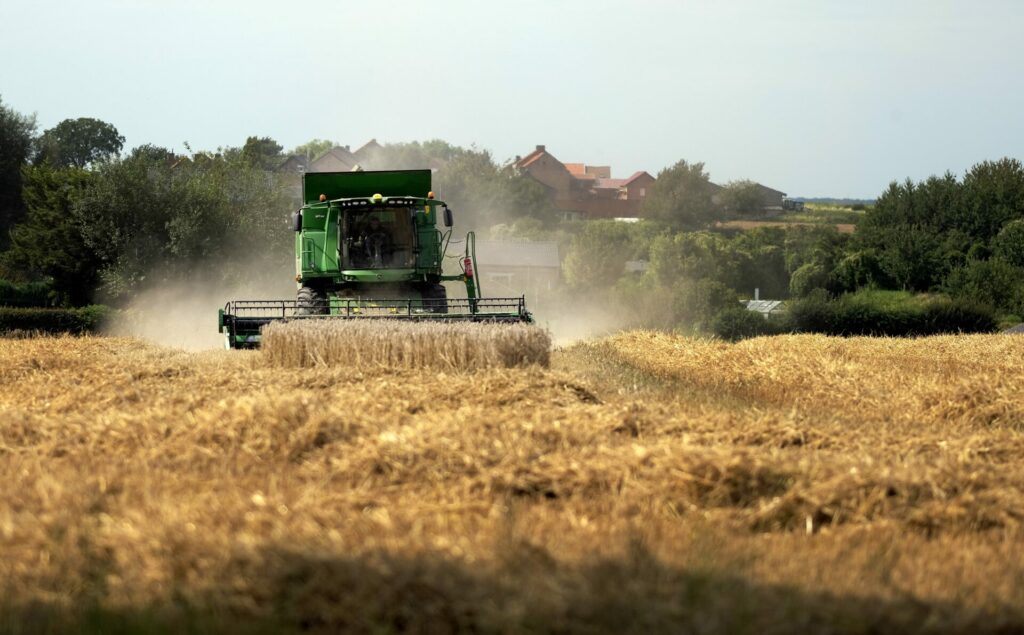
The agricultural area used for cereal crops and grain maize increased by a massive 36% last year, largely driven by the surging price of grain as a result of Russia’s invasion of Ukraine, Statbel, Belgium’s statistics office, reported on Tuesday.
Belgian growers have upped production to benefit from higher prices and to ensure domestic supply. Last year saw some supermarkets forced to ration products containing grains and oils due to the huge drop in Ukrainian exports caused by direct war damage and Russia’s blockade of Black Sea exports.
Yet many farmers have struggled with rapidly increasing inflation and the cost of fertilisers – 41.3% of Belgium’s agricultural land consists of grassland whilst cereals (wheat, rye, oats, barley, millet, maize, etc) occupied 23.7% of agricultural land last year. In terms of space, 19,251 more hectares were dedicated to these crops last year than the year before.
Eco-crops
EU “eco-schemes” under the new Common Agricultural Policy are also making their mark on the composition of Belgian agricultural land. This provides financial incentives for planting protein crops (legumes, legumes/cereals mix), “deep-rooting cut crops” (rapeseed, white mustard, fodder radish, hemp, marigolds), and fauna-friendly crops.
As a result, there has been a significant increase in “fallow land” in Belgium – land kept in good environmental condition which is left unharvested for ecology purposes. Fauna-friendly crops have increased by 13.5% in Flanders and by 24% in Wallonia.
The war in Ukraine has also seen a drop in the global availability of seed oils, resulting in Wallonia significantly increasing oilseed crops – up a staggering 84%. “This is entirely due to the increase of sunflower seeds and soybeans,” Statbel remarked.
Statisticians also noted a change in how fruits are grown: although the amount of land dedicated to outdoor strawberries fell 10.2%, there was a 9.5% increase in those grown in greenhouses. The area of orchards also grew slightly.
Land dedicated to berries also increased by 11.2%, driven largely by a 20.7% rise in vineyards.
War and flu
While the war in Ukraine has led to some major changes in the habits of Belgian farms, poultry breeders have also had to contend with a European bird flu epidemic. “The number of laying hens for table eggs was down 3.7% due to avian influenza, high feed costs, and presumably also high energy prices,” statisticians estimate.
Various animal populations also shrank. The Belgian cattle population fell by just over 1% in October 2022 compared to the previous year. Falling meat prices and high feed costs have seen the number of beef cows fall by 2.6%. The pig population also shrank by 4.8%.
At the end of 2022, the value of the Belgian agricultural sector fell to all-time lows, with a total GDP of just €379 million. Farmers have struggled to compete with rising input costs and competition with agricultural goods from other EU Member States and overseas countries.
