
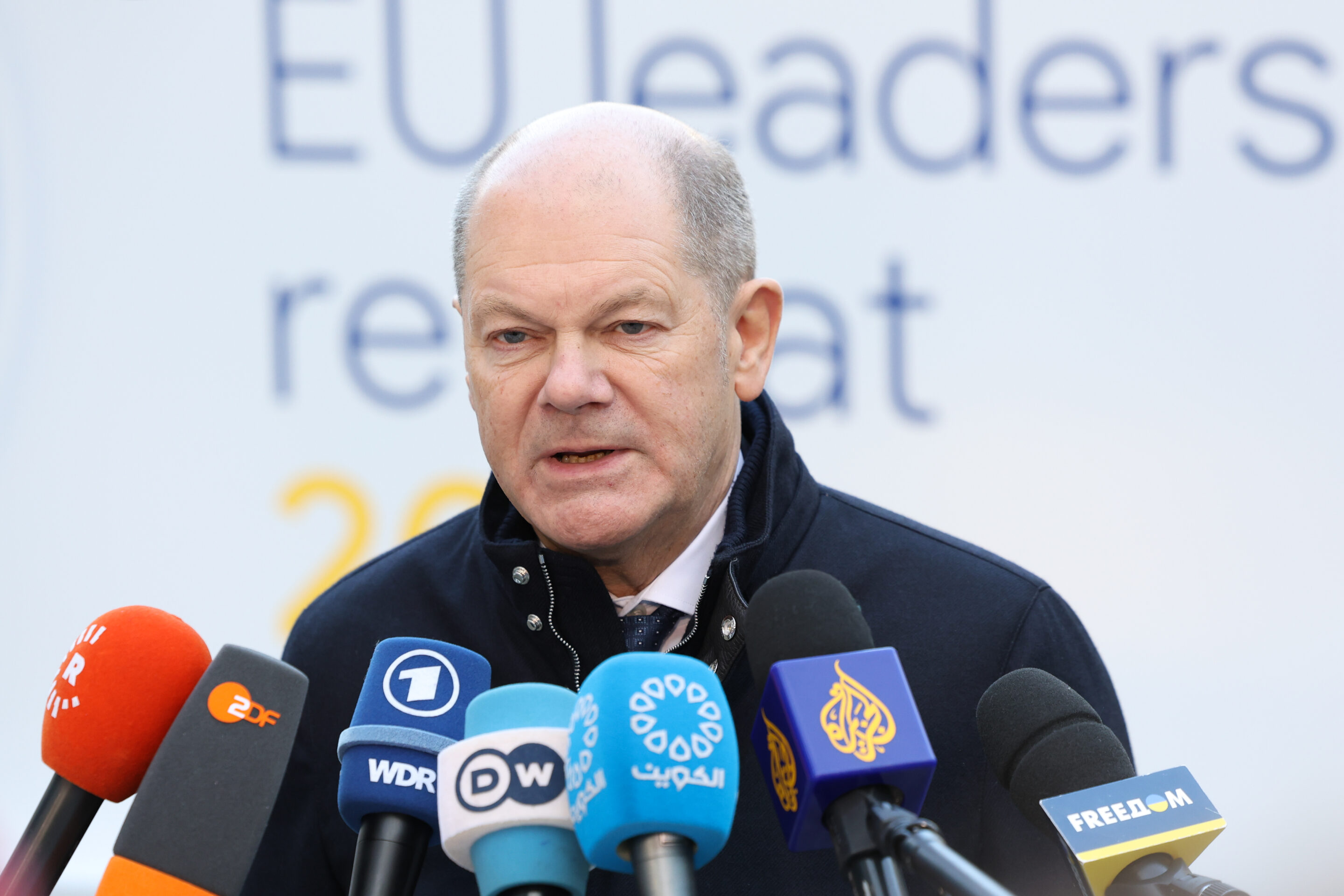
Germans head to the polls this weekend for federal elections that will be crucial for the future climate and energy policies of the Bundesrepublik.
Chancellor Olaf Scholz’s uneasy coalition of socialists, liberals and greens has been on life support for months and this weekend’s vote will be a reset of sorts for Germany.
The conservative CDU party is projected to win, barring a massive polling error, but what is less clear is who they will govern with. A number of combinations are possible, each with their own idiosyncrasies and shortcomings.
Whoever ends up partnering the CDU will have to take on the burden of solving a number of energy and climate problems that Berlin still has yet to address.
Topping the to-do list is providing Germany will enough clean power and energy to keep the lights on, keep the country’s powerful industries in business and phase out coal power plants by 2038.
No easy feat and the speed at which wind and solar power are being built, coupled with the ongoing decommissioning of Germany’s nuclear power stations, mean that the next government will likely embark on a gas plant building spree.
Friedrich Merz, the likely next chancellor, has vowed to build 50 gas plants but it is unclear when that will happen and who will pay for it. The idea is to build plants that can be converted at a later date to run on clean-burning hydrogen but again the details are not clear.
The issue of money is also an important one. In 2023, a ruling by a top German court concluded that the government was wrong to allocate €60 billion in unspent pandemic financing to a climate fund.
Much of that cash had been promised to a number of clean energy programmes and the funding shortfall is still yet to be fully addressed.
Standing in the way is Germany’s infamous debt brake, which limits government borrowing to a fraction of annual GDP output. The CDU has been a strong advocate of sticking to the brake but its hand may be forced in the coming mandate.
Germans have slowly but surely come around to the idea of borrowing more to spend on climate, energy and infrastructure, instead of adhering to what many now see as an arbitrary borrowing limit.
The next government will also have to move quickly to prop up Germany’s various industries, many of whom have either suffered because of high energy prices or seen their business interests damaged by foreign competition.
Next week, the European Union will unveil its plans for a Clean Industrial Deal and Germany will have to decide whether it goes far enough for its taste.
The car industry in particular needs to rethink how it does business, especially given the threat posed by China’s growing automobile makers and their quick adoption of e-mobility.
Olaf Scholz’s government indicated its support for some kind of pan-EU subsidy scheme for electric car purchases, an idea which the European Commission is looking into. Whether the CDU will support such a venture will make for interesting watching.
As far as the EU is concerned as well, Germany often calls a lot of the shots in tandem with France, so the direction of travel vis a vis the Green Deal will be of fundamental importance.
Issues like cutting sustainability red tape, levying charges on imports, funding building renovations and phasing out the internal combustion engine will all come to fore during the next five years.
Germany’s support or opposition will be crucial to the future fortunes of those policies and measures.
Want more updates and analysis of what is happening in the world of energy and climate? Interested in finding a job in the sector or more information about public tenders? Sign up to our Energy Rundown newsletter here!
