
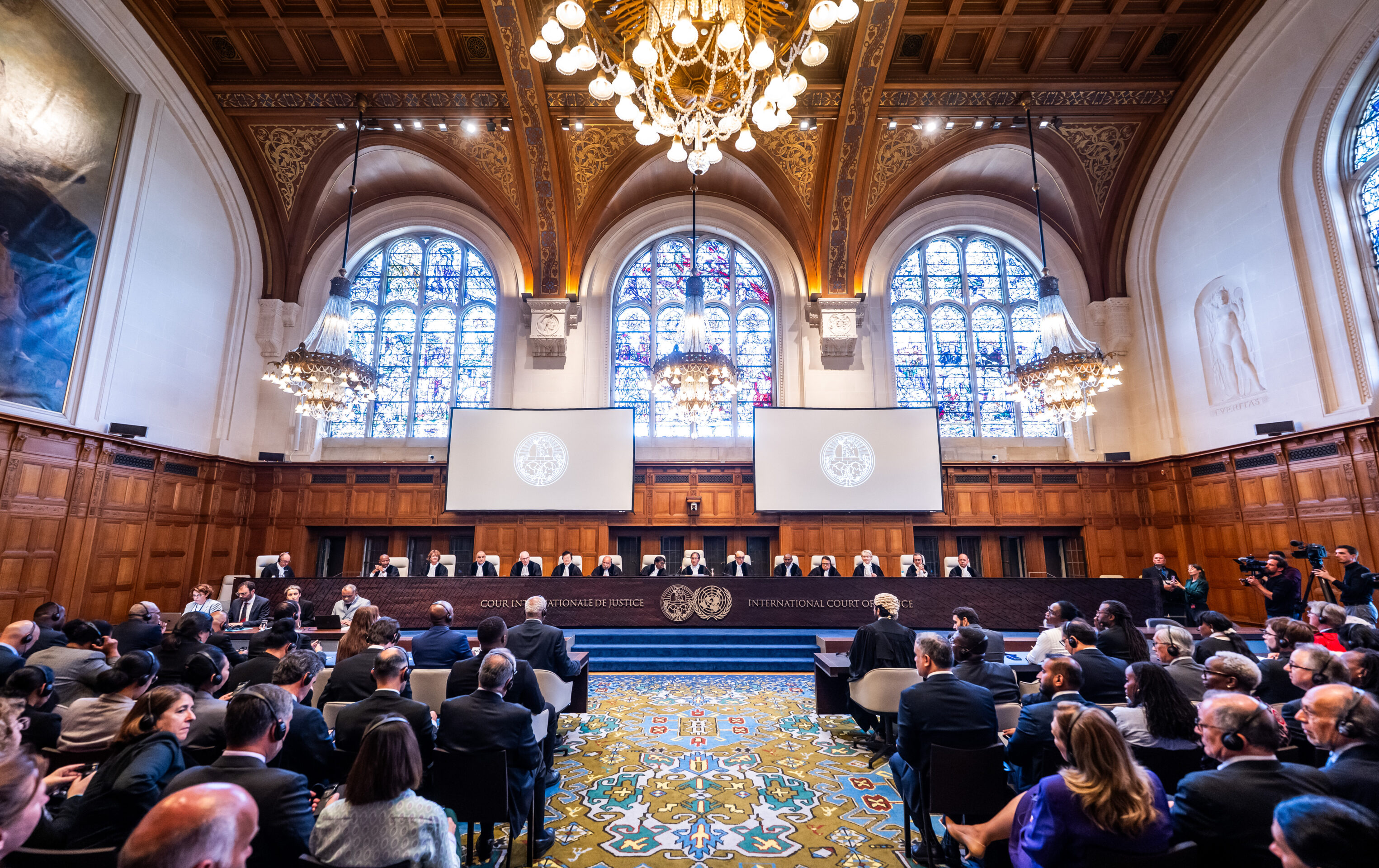
The world’s top court has delivered a damning verdict on society’s use of fossil fuels. What comes next could redefine the energy transition.
In the Netherlands this week, the United Nations’ top court revealed its long-awaited opinion on climate change obligations.
The International Court of Justice had been asked to look into the legal obligations of countries when it comes to fighting climate change and how they should be punished if they do not live up to those obligations.
After months of deliberation, the judges issued their verdict: countries are legally obliged to prevent climate change from getting worse and can be held accountable by anybody that has been impacted by that failure.
It is a momentous moment in the story of the energy transition, climate change and the planet’s shift towards a green, clean economy.
The strength of the language used by the court was in itself notable, as the opinion maintains that the burning of fossil fuels, their extraction, their subsidisation and the granting of permits to extract them all potentially breach international commitments.
It is yet another much-needed legal precedent that backs up a scientific fact that 99% of us all accept: burning coal, oil and gas releases CO2, which builds up in the atmosphere and warms the planet.
It also provides legal clarity for what unfortunately might be one of the most tangible and devastating outcomes of climate change: the loss of land or even entire countries due to sea level rise.
Pacific island nations were a driving force behind this entire process and they now have a certain degree of legal protection for if the worst were to happen and their countries were to disappear beneath the waves.
The ICJ judges maintain that countries would retain their nationhood even in that event, so citizens of countries like Vanuatu, Nauru and Tuvalu would not become stateless. Admittedly, this would be a small mercy when faced with a horrendous situation.
The opinion is not legally binding but the impact it will have on legal procedures around the world is expected to be massive.
Climate cases are being heard in almost every international jurisdiction and will likely be bolstered by what the ICJ has had to say on the matter.
A rich tapestry of prior case law, precedents and clarified legal obligations is gradually being built up and the ICJ opinion even cites some of it to make its point.
Last year, the United Kingdom’s supreme court ruled that energy companies need to account for the emissions that will be released by the burning of fossil fuel products when applying for licences.
A group of older Swiss women recently successfully argued that the Alpine Republic’s government had breached their human rights by not protecting them from climate change.
These are just two of the most notable cases that have wrapped up over the last 12 months and there are plenty more that will be cited in future court appearances, even the ones that returned a negative verdict for climate groups.
Ultimately, this legal process is slowly but surely clarifying whether burning fossil fuels is against internationally-binding commitments and what should be done to countries that are not doing all they can to stop using oil, coal and gas.
This court case will not turn off the taps overnight but it will now feature heavily in the energy transition, of that there is no doubt.
Want more updates and analysis of what is happening in the world of energy and climate? Interested in finding a job in the sector or more information about public tenders? Sign up to our Energy Rundown newsletter here!
