
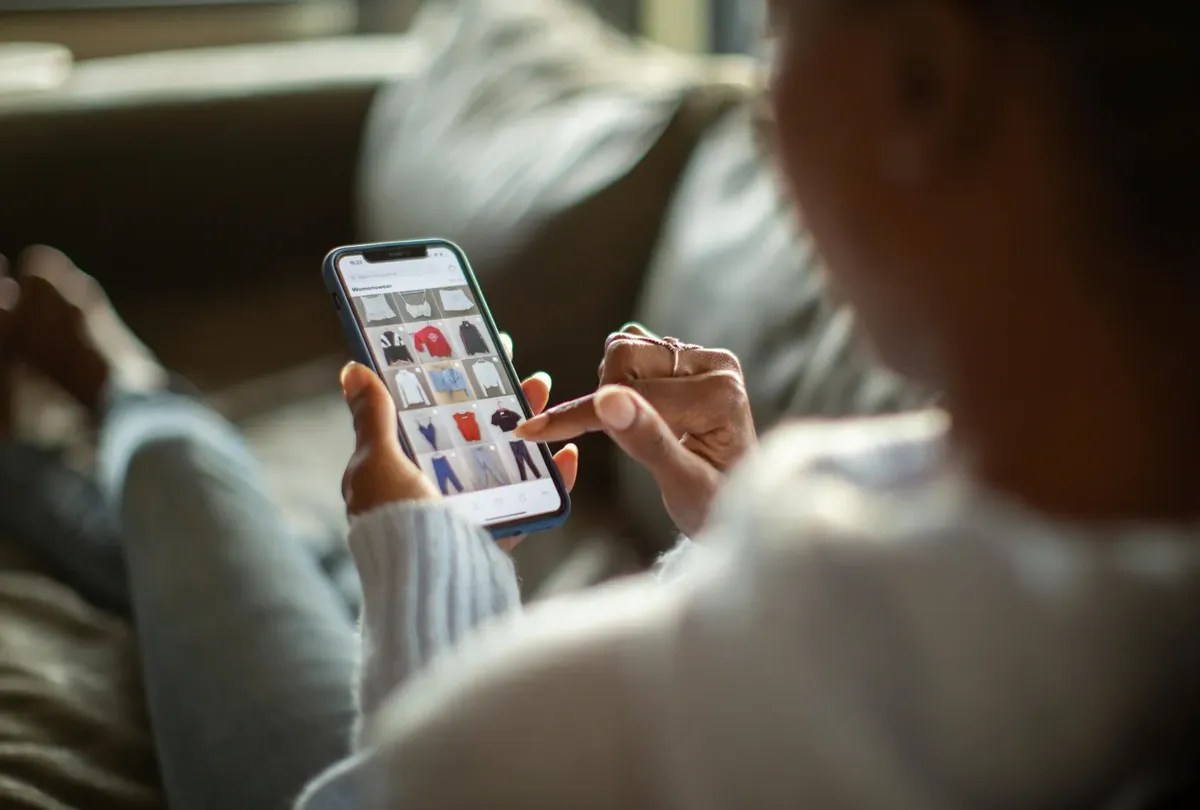
More and more Belgian consumers are getting into trouble because of ‘buy now, pay later’ apps, warns the government.
One in six has already had to deal with a debt collection agency, and among young people the figure is even higher than one in four.
“Poison? You could call it that,” says one mother about Klarna, one of the apps that allows consumers to buy something and pay for it later, when their finances are in better shape.
Her teenage son Kevyn bought hundreds of euros worth of clothes on apps before she accidentally discovered what was going on: her son had downloaded the Klarna app and signed up without much difficulty.
There was no age check: he could enter a fictitious age. The teenager paid the money back to his parents, but the temptation remains, he tells The Brussels Times. Even though the app has disappeared from his smartphone and he says he has learned his lesson.
Kevyn is not alone, it turns out: more and more Belgians are using ‘buy now, pay later’ services.
This is due to the popularity of apps such as Klarna. And it's not just apps. Major online retailers also offer a ‘buy now, pay later’ option.
Physical shops are following the trend: according to the FPS Economy, around half (48%) of retailers want to offer deferred payment. You can buy immediately and defer payment until 14 or 30 days after delivery, or pay in three instalments at no extra cost.
Convenient, but not without risk. A study by the Belgian Association for Research and Expertise for Consumer Organisations (BV-OECO) shows that deferred payment services can sometimes cause serious problems for users.
Of the 1,500 Belgians surveyed, one in six (17%) had already had to deal with a debt collection agency. Among young people aged 16 to 24, that figure rises to more than one in four (29%).
Testaankoop is also seeing the problem grow. The number of complaints mentioning Klarna has more than doubled at the consumer organisation: from 160 cases in 2023 to 375 last year.
“Klarna offers a form of credit and assumes that users are over 18. But young people who circumvent this and are not creditworthy end up dealing with debt collection agencies and debt claims. Parents often have to intervene to prevent things from getting worse,” Laura Clays, spokesperson for Testaankoop, told The Brussels Times.
“Regardless of the number of complaints, there are major risks involved. Encouraging impulsive buying, overconsumption, excessive debt... is a problem, even if consumers themselves do not notice it. It is important to warn people about this and to curb these practices before they become a real problem for many consumers. This mainly concerns people who are unable to estimate how much money they can spend. Those who can afford it will occasionally make an impulse purchase and regret it. That's no big deal.”
Young people are particularly susceptible to ‘buy now, pay later’ services. This is not only because they are generally in a weaker financial position, but also because technology companies are cleverly exploiting a dilemma that young minds in particular struggle with: do you opt for immediate gratification or do you wait until you have enough money in your bank account before you buy something?
“To deal with deferred payment safely, you need to be able to plan well, have a steady income and think long term. Young people still need to learn these skills,” Wietske Van Gils of Steunpunt Mens en Samenleving (SAM), an organisation that supports people in debt, tells The Brussels Times.
However, it is not only young people who make mistakes. Van Gils quotes from a 2023 report: “Debt mediators are noticing that families are struggling to resist social pressure to consume. They certainly don't want to deny their children anything. Recognised institutions consider the breakthrough of online shopping with the option of paying afterwards to be a worrying trend. Clients make purchases on the spur of the moment and don't think about tomorrow when it comes to payment. The organisations are seeing an increase in debts through post-payment services, especially among young people. Debts resulting from subscriptions to online games and online gambling are also on the rise.”
Legally, minors are not allowed to use deferred payment or credit, but in practice this does happen because providers do not always verify age. Klarna, for example, allows users to enter a fictitious age.
Minister of Consumer Protection Rob Beenders (Vooruit) is taking action. He is planning stricter regulations for buy now, pay later services.
“These services are not currently covered by consumer credit law, which means that consumers are not optimally protected. By bringing them under that law, these services will be required, among other things, to consult the blacklist at the Central Bank, assess creditworthiness and comply with stricter advertising rules, he clarifies to The Brussels Times.
“This will ensure that a credit check is carried out in advance, allowing the provider to refuse credit and point out the specific risks involved. The details are now being examined by our cabinet, taking into account the relevant directive that must be transposed this year and will apply next year.”
The minister also wants to look into how to prevent minors from using instalment services.
Apps fuel impulsive spending among the youth
“We are looking at what can be done within our cabinet to better protect minors. In principle, minors are prohibited from making payments via a “buy now, pay later” system, but providers do not check this sufficiently. “Many parents are unaware that a system such as Klarna exists. Awareness is also an important step in preventing abuse of ‘buy now, pay later’ services,” Beenders says.
Klarna said in a response to The Brussels Times: ’We believe interest-free buy now pay later is a much healthier, easier-to-manage form of credit, and the fact that our default rates are much lower than alternatives is evidence of this. We perform a credit decision before each purchase, which includes an external credit check, we charge no interest, and we provide our customers with a clear repayment schedule. Using Klarna if you are under 18 is prohibited, and providing false information during the sign-up or purchase process is fraud. With that said, we do not pursue debts if we are aware they were made by minors.”
