
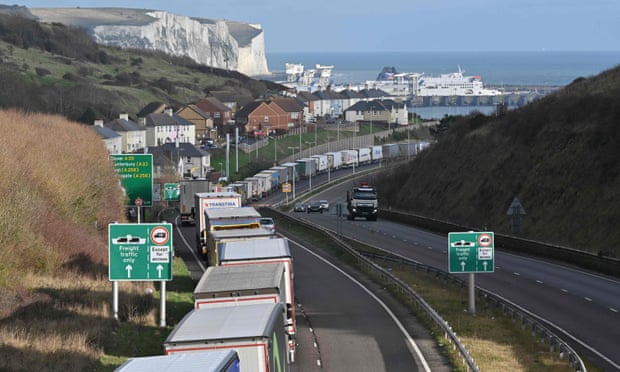
Over three years after leaving the European Union, the United Kingdom began inspecting animal and plant imports on Tuesday, the British Department for the Environment, Food and Rural Affairs (Defra) announced.
After being delayed five times in the past years, the introduction of physical checks on EU animal and plant imports coming into Britain is taking effect from Tuesday 30 April. However, due to a lack of clear information from the British Government, chaos at border controls is expected.
"These border checks are fundamental to protecting the UK's food supply chain, farmers and the natural environment against costly diseases reaching our shores," a Government spokesperson said in a press statement earlier this week.
The checks will take place at specially designated border control posts as part of the UK's 'Border Target Operating Model' (BTOM) – needed now that the UK has left the EU single market.
Risk groups
The first phase of the BTOM was introduced on 31 January 2024, which meant that the majority of meat, dairy and plant products require a health certificate before they can enter Britain. This second phase is the most significant, with trucks coming from the EU being held up for inspection at border control posts in ports around the country for the first time.
The government has divided all plant and products of animal origin into three risk groups: the low-risk products (largely processed food goods) will receive no checks and require no health certificates. The medium-risk categories (which include eggs, dairy, meat and cut flowers) and high-risk goods (plants for planting and live animals) will all need certificates and be subject to checks.
Per load, the fees for importers will range from £10 for low-risk goods up to £145 for high-risk ones.
Related News
- New 'Not for EU' food labels cause confusion in UK
- Northern Irish airports demand return of duty-free shopping amid Brexit limbo
- 'In good faith': EU and UK to formally adopt Windsor Framework on Friday
Experts and companies warn of longer delivery times, more bureaucracy and higher costs, saying that ultimately, consumers in the UK will pay for this.
Calculations by credit insurer Allianz Trade show that the new Brexit rules could cost British companies up to £2 billion (€2.34 billion), in addition to fuel inflation. Import costs would increase by 10% in the first year.
Due to a lack of infrastructure and personnel, the physical checks were already postponed several times. While they are finally taking effect today, many questions remain unanswered, Politico reports. Commercial port operators invested millions in building inspection infrastructure and are now concerned about how they will finance the inspections.
