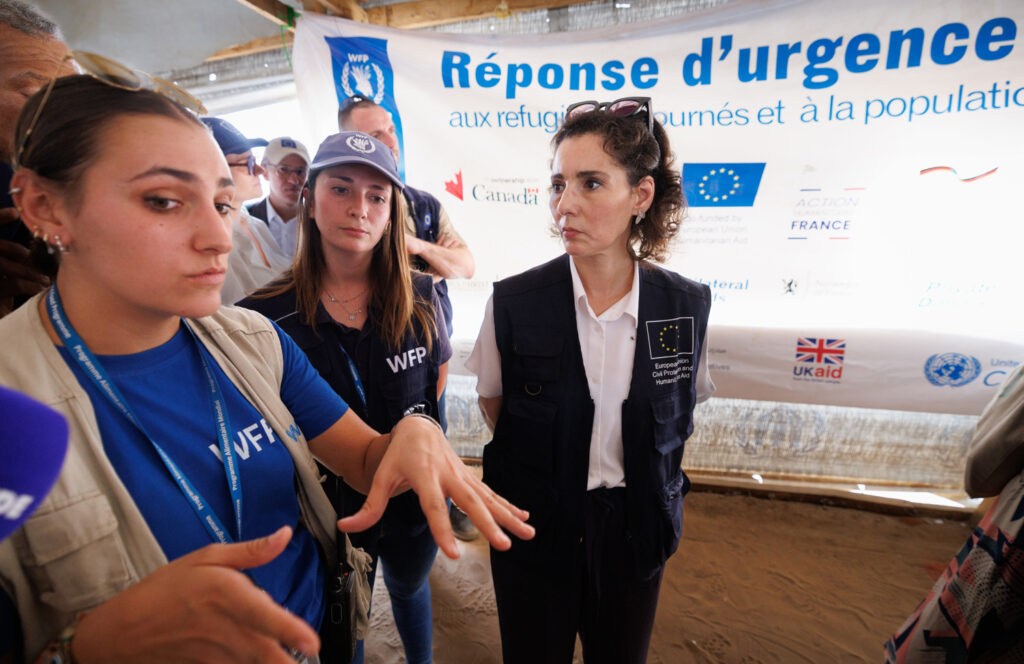
The European Union and its Member States, collectively known as ‘Team Europe,’ are poised to become the world’s largest humanitarian donor as the United States scales back its aid programmes, European Commissioner Hadja Lahbib announced on Tuesday at a humanitarian forum in Brussels.
The European Commission has unveiled an initial humanitarian commitment of over €2.3 billion for 2025. This is €350 million more than originally planned.
The US decision will cause suffering for millions, exacerbate humanitarian crises, and increase instability, said Ms. Lahbib, who is the Commissioner for Preparedness, Crisis Management and Equality. It also has a direct impact on Europe’s own security by heightening risks such as radicalisation, terrorism, displacement, illegal immigration, and human trafficking, she added.
The European Union is taking a different path, enhancing its humanitarian commitment, Ms Lahbib said.
This year, Europe increased its initial humanitarian aid budget to €1.9 billion and recently approved an additional €350 million. “As Team Europe, we are on the path to becoming the world’s primary humanitarian donor,” the Belgian Commission member noted.
However, the EU and its Member States cannot—and should not—compensate for this shortfall on their own, Ms. Lahbib stressed. She advocates strengthening humanitarian diplomacy to gain further support. In an interview with Le Soir this week, she mentioned India and China in this regard.
All EU Member States need to contribute 0.07% of their Gross National Income, she added.
Lahbib also proposed reform initiatives such as reducing shipping and transportation costs, promoting the circular economy, identifying overlaps between agencies, and increasing collaboration with local NGOs.
