
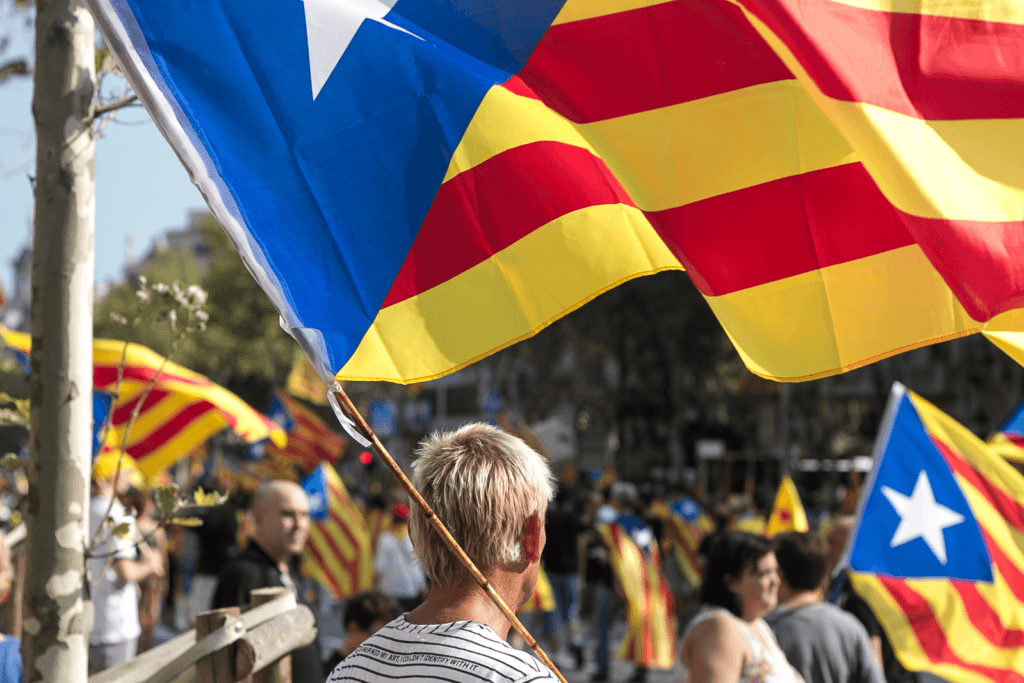
Spain has decided to delay the vote on its proposal to add Catalan, Basque and Galician to the bloc's list of 24 official languages, after failing to convince fellow Member States on Tuesday.
Spain submitted a request to put the issue of the country's three other minority languages – Catalan, Basque and Galician – back on the agenda of the European Council of Ministers on 9 May. Under the 1978 constitution, enacted after General Francisco Franco's dictatorship, the three languages gained co-official status alongside Castilian in their respective regions. Adding these three languages to the official EU list requires amending a European regulation from 1958, and a unanimous consensus among Member States is needed to do this.
The country previously tried and failed to officially recognise the three languages at the European level in 2023 – despite Madrid offering to pay in full for the additional expenses. This time round, the opposition was said to be less fierce and the proposal had the support of a number of countries, including Belgium, Portugal and Hungary, according to VRT NWS. The previous Belgian government led by Alexander De Croo (Open VLD) supported Spain, as does Flemish nationalist Bart De Wever's (N-VA) current coalition.
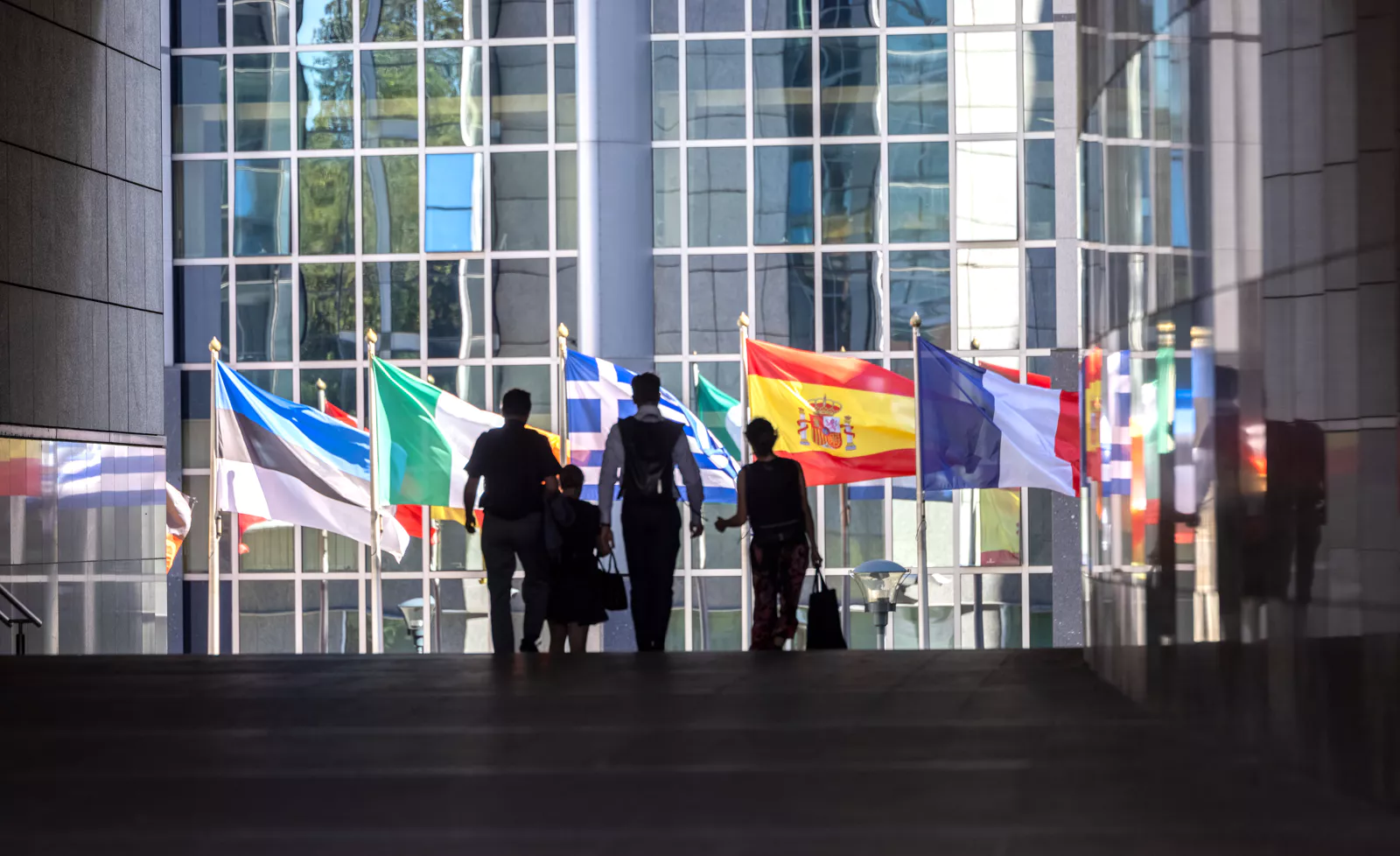
However, despite valiant efforts, Spain was not able to unanimously convince its fellow Member States of the need to recognise the three languages at Tuesday's General Affairs Council (GAC) in Brussels. The issue was scheduled to be put to a formal vote. Although many capitals claimed to "understand" Madrid's position and appreciated the Spanish government's efforts to set a precedent for other minority languages, as the debate progressed it became evident that the "legal and financial" doubts from at least ten EU countries were enough to prevent consensus.
Spain therefore decided to postpone the vote on the proposal. "There was a large number of countries that were willing to approve it, but a smaller number have asked us for more time and we have decided to give it to them. We will continue working and talking," said government spokesperson Pilar Alegría.
Credit: European Parliament
Member States' reluctance to vote on the proposal was clear from the off. Upon his arrival in the Belgian capital, Finnish Minister for European Affairs Joakim Strand said: "Linguistic diversity is important and we want to continue discussing it, but I hope we don't have to vote today because I don't think the issue is ready for a vote."
Denmark and Slovenia were the only countries to openly support the issue before it was discussed at midday, while others expressed their doubts. "I fully understand the Spanish position and I am aware that this is a really important issue for Spain," said Swedish Minister for European Affairs Jessica Rosencrantz. However, "Sweden and several other countries have raised questions during this process about the legal and cost assessment" that do not yet seem to have been resolved.
French Minister Delegate for Europe Benjamin Haddad acknowledged that the issue was "very important" and they wanted to find a solution, but that it must be done "with consensus and respect for European law and [legal] texts."
Meanwhile, both the Austrian Minister for Europe, Integration and Family Affairs Claudia Plakolm and the Croatian State Secretary Andreja Metelko-Zgombic expressed their concerns over the legal and financial implications – namely the costs incurred in translating all EU laws, proposals and decisions into those languages and the millions of euros in additional translation and interpretation fees and training.
Related News
- Europeans and their languages: Is multilingualism dying in the EU?
- Where can you learn French and Dutch as an adult in Brussels?
- Brulingua: Brussels' very own Duolingo?
The Baltic states of Estonia, Latvia and Lithuania strongly objected to the triple designation, VRT NWS reported. They fear that this could lead to the Russian-speaking minority in their countries using this as an opportunity to also call for Russian to be recognised as an official EU language.
Alegría nevertheless asserted that Spain would "push forward" on talks with other EU countries to "convince them as soon as possible." She expressed confidence in "achieving this objective and commitment as soon as possible," but avoided setting "a deadline or a timetable."
During an official visit to Brussels in February, Catalan President Salvador Illa told Euronews that the proposal concerned "respecting the identity of European citizens." He added that it is "not a political issue, or a political demand, but a fair measure from a linguistic point of view. There are 20 million citizens who speak these official languages."
Setback for Sánchez
Tuesday's decision represents a major setback for socialist Prime Minister Pedro Sánchez, who promised the Catalan separatist Junts party that he would get the languages officially recognised in 2023 in exchange for support to form a new minority government. The right-wing opposition Partido Popular reportedly tried to convince Member States governed by like-minded conservative parties to block the proposal.
Making an EU language "official" typically takes many years. The most recent example is Irish, which, despite a request to recognise the language in 2005, only became a fully-fledged EU language 15 years later in 2022.
