
The European Parliament’s Committee on Agriculture and Rural Development (AGRI) adopted on Tuesday its position on the Commission’s proposal for a regulation on the welfare of dogs and cats and their traceability in the EU.
As previously reported, the European Commission proposed in December 2023 a new regulation as regards the protection of dogs and cats. The need for new and stricter rules were long overdue considering the facts.
Around 44% of households in the EU have a pet animal. Trade in dogs and cats has grown considerably in recent years, with an annual value of €1.3 billion.
It was estimated that 60% of dog and cat owners buy their pet via the internet. Online advertising of pets has soared in recent years, making it difficult for both consumers and authorities to verify the true origin and welfare background of pets.
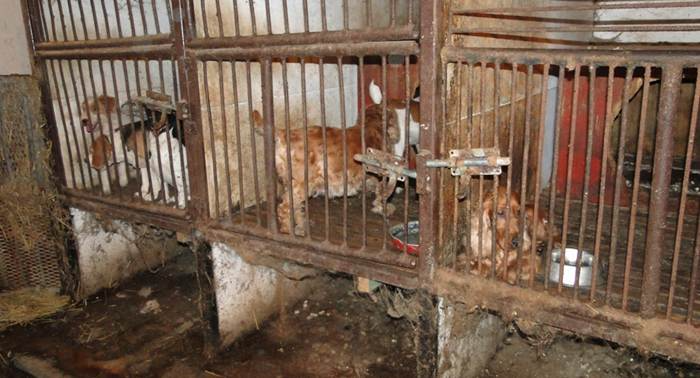
The new rules aim to establish a level playing field for the welfare of dogs and cats that are bred or kept in breeding establishments, in pet shops and in shelters.
Strict traceability requirements, together with automated checks for online sales, will help authorities control the breeding and trade of dogs and cats. Buyers will also be able to check their identification and registration.
In principle all dogs and cats will have to be microchipped and registered in a national database before they are placed for sale on the market. However, the absence of a commercial or professional element exempts individuals from this obligation.
Member States' databases will become interoperable. In addition, when dogs and cats are advertised online, a free automated system will be available to the prospective owner to verify the identification and registration of the dog or cat.
The AGRI Committee voted with 35 votes to 2 and 9 abstentions to accept a report submitted by its chair Veronika Vrecionová (ECR, CZ). “This proposal is a clear move against illegal breeding and the irresponsible importation of animals from outside the EU. At the same time, it fully respects ordinary owners and responsible breeders who should not be unduly burdened by regulations.”
The Belgian EU presidency finalised during its last week in June 2024 a Council negotiating mandate for the proposal that addressed some of the loopholes in the Commission proposal. However, according to the Parliament’s press release, the MEPs proposed that the new rules would not apply to private dog and cat owners.
While the requirements of the regulation should apply to all selling establishments, occasional and irregular donations of small numbers of dogs and cats by natural persons other than operators should be excluded from its scope. "Small breeders" are exempted from the basic welfare requirements in the regulation. Nor does the regulation cover dogs or cats intended for scientific purposes or for clinical trials.
Remaining loopholes
Animal welfare NGO FOUR PAWS commented that other loopholes still remain in the position adopted by the AGRI committee. The regulation does not apply to dogs on farms (agricultural holdings). The AGRI committee increased the threshold proposed by the Commission for “small breeders” regardless of type of dogs they keep, including hunting dogs.
The committee did not ensure that dogs and cats owned by farmers and “small” breeders have the same unrestricted access to clean, fresh water, sufficient food, safe and hygienic living conditions as other animals, says FOUR PAWS. It only went halfway in ensuring animal and seller traceability in online sales, the main route through which animals are illegally sold today.
According to FOUR PAWS, the current illegal trade of pets is flourishing. The majority of all on-line sales of pets are from unknown sources, with private sellers posing as breeders.
On the positive side, their proposal also covers dogs and cats from third countries. If imported for sale in the EU, the companion animals would have to be microchipped before their entry into the EU, and then registered in a national database. A previous version of the AGRI report wanted also a ban for placing dogs and cats on the market by pet shops, given their inability to provide a suitable environment for them.
Furthermore, puppies and kittens may not be separated from their mothers until they are at least eight weeks old unless there is a specific veterinary justification. MEPs also want a ban on the breeding of dogs or cats that have excessive traits leading to a high risk of detrimental effects on their welfare. It will be forbidden to use such animals in shows, exhibitions, or competitions.
When operators advertise the placing on the market of dogs and cats, at least the following warning shall be displayed, in clearly visible and bold characters: ‘’As an animal owner, you are obliged to ensure that its health and well-being needs are met at all times. Taking care of an animal requires financial resources. Abandonment of pets goes against responsible care.‘‘
Compulsory registration
Microchipping is a simple and unpainful procedure. It is also relatively cheap (average price € 25 – 30 in the EU). Private persons have an interest to have their pets microchipped since it would be easier to track and return them to their owners if they are lost and found. For the authorities, microchipping of all pets would enable them to track owners that have abandoned them.
The AGRI report states that the implantation of the microchip shall be performed by a veterinarian. Where the veterinarian considers that the implantation could significantly compromise the dog’s or cat’s health, the implantation may be temporarily delayed until the animal’s health concerns can be suitably addressed. It can even be removed in case of adverse reactions.
The report is now tabled for a vote in the Parliament’s plenary which is expected to take place in July. If adopted, talks with the Council can start during the Danish EU Presidency.
“We urge the European Parliament to correct course,” concluded Georgia Diamantopoulou, Head of FOUR PAWS’ European Policy Office. “The upcoming plenary vote is the last chance to do what the AGRI vote failed to do: close the loopholes, mandate identification and registration for all cats and dogs, apply basic welfare rules to every breeder, and guarantee full traceability in online sales.”
