
Booking international rail journeys that arrive on time and do not break the bank is a daunting prospect in Europe. But there is a chance that Brussels could at least make it a bit easier to buy a ticket.
The romantic idea of hopping on a train in Helsinki and travelling all the way to Lisbon is not one that is particularly viable currently.
Europe’s rail network is vast and there are lots of cross-border connections but lots of routes are not covered and booking tickets for those that are is often a minefield.
That is not to mention the cost, the relative lack of consumer protections and the low quality of a lot of services across the continent.
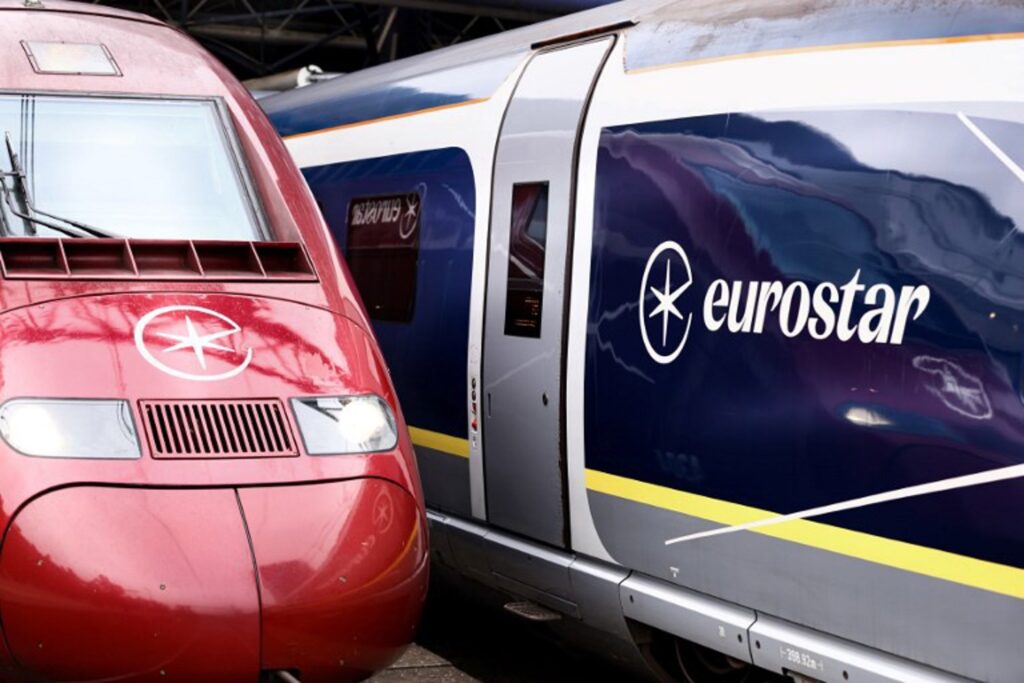
Rail companies also face their own set of problems: Eurostar announced this week that it wants to expand its network to include Frankfurt and Geneva. But it needs to buy new rolling stock and convince train stations to invest in new border check infrastructure.
No simple feat given global supply chain bottlenecks, the big upfront costs and all that geopolitical uncertainty that affects every aspect of our day-to-day lives.
Most of these issues have to be addressed by national governments as it is within their remit but there is still a lot of scope for European Union policymakers to make it easier for rail companies to expand and improve their services.
Later this year, the European Commission will present three new proposals that should benefit rail passengers, if those rules are implemented properly by national authorities. Always a big if…
They include a single digital booking and ticketing regulation, a multi-modal digital mobility services regulation and a revision of rail passenger rights.
All told, those rules will make it easier to book multi-leg journeys online without having to scour different websites for routes that link up. Non-rail portions of journeys will also be incorporated more readily.
Plus, if things go wrong – which Sod’s Law dictates they must – there will be better protections on offer and potential compensation if rail operators are at fault.
These are promising policy developments waiting to leave the station, but again it will be national authorities that dictate how effective they are. Improved air travel rights have been blocked for decades and rail travel can be even more contentious.
Another initiative coming up soon is a high-speed rail masterplan. It sounds grand and conjures up images of Kraftwerk’s Trans-European Express or Hercule Poirot solving crimes on the Orient Express, but unfortunately it is likely doomed to disappoint.
The Commission will be able to issue guidelines and make recommendations, plus some minor policy tweaks here and there, but the idea of obligating countries to build joined-up high speed links is really a fanciful one.
Rail will always be a fantastic idea on paper, which only rarely works perfectly in reality. Maybe small changes here and there will add up in the end. It is all the EU is capable of at the moment.
