
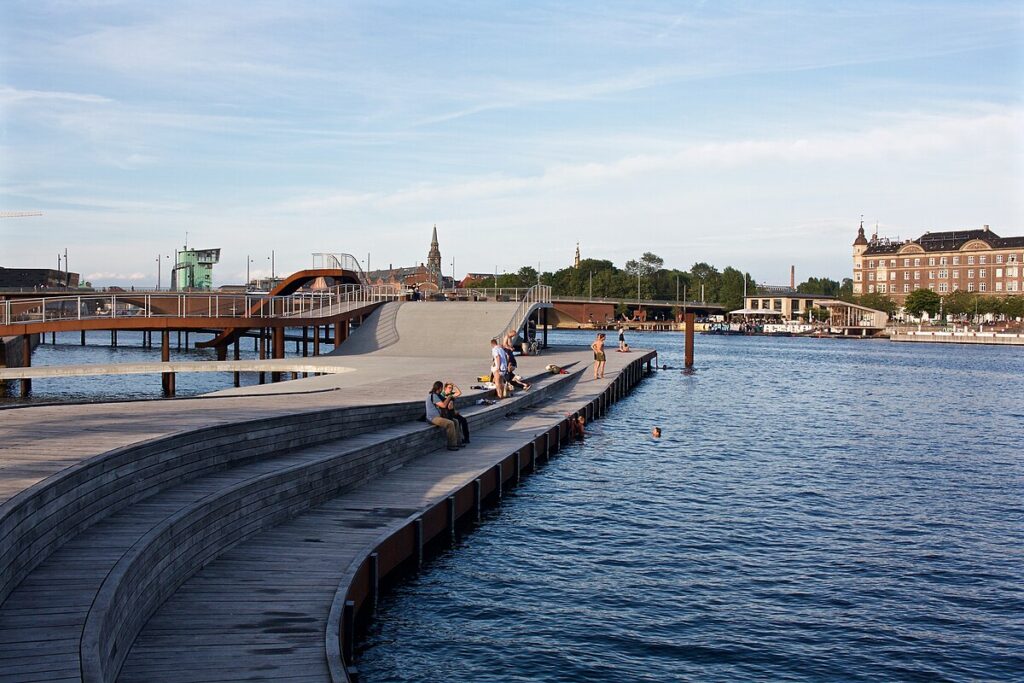
From Europe's coastal waters to its inland bathing sites, a large majority of Europe's waters are safe to swim in this bathing season, the European Commission announced on Friday in its latest European bathing water assessment.
The assessment found that over 85% of monitored locations met the EU’s most stringent ‘excellent' bathing water quality standards with 96% of all officially identified bathing waters in the EU met the minimum quality standards. The assessment was carried out in 2024 and not updated in 2025, a Commission spokesperson told The Brussels times, but confirms a trend since 2009.
The assessment inspects water suitability for bathing, focusing on monitoring bacteria which can cause potentially serious illnesses. An interactive map, put together by the European Environment Agency (EEA) in cooperation with the Commission, highlight where swimmers can find well managed bathing sites in Europe.
Out of the reported 22,127 bathing waters in Europe in 2024, 85% were of excellent quality. In five countries — Cyprus, followed by Bulgaria, Greece, Austria and Croatia — 95% or more of bathing waters were of excellent quality.
In Bulgaria, followed by Malta, Luxembourg, Romania and Slovenia, all bathing waters were of at least ‘sufficient’ quality in 2024. Less than 70% of bathing waters were of excellent quality in five countries, i.e., in descending order, Belgium, Hungary, Estonia, Poland and Albania.
Between 2009 and 2024, the share of EU bathing waters of excellent quality remained within the 81-89% range for coastal bathing waters and the 60-82% range for inland bathing waters.
Bathing water quality in coastal waters is generally better than that in inland waters. Many of central Europe’s inland bathing waters are found in relatively small lakes, ponds and rivers with a low flow. These inland waters are more susceptible than coastal areas to short-term pollution caused by heavy rains or droughts, especially in the summer.
Bathing water quality in Europe has improved markedly over recent decades largely thanks to EU legislation, according to the Commission. The combined effect of systematic bacteriological monitoring pursuant to the EU's Bathing Water Directive and large investments in urban wastewater treatment plants led to a drastic reduction in pathogens that were previously being released. Bathing is now also possible in many urban areas.
