

The European Commission accused the Chinese-based e-commerce site Temu of violating its Digital Services Act (DSA) on Monday, for failing to adequately control the products it offers, particularly baby toys.
An ongoing EU investigation shows that there is a "high risk for EU consumers" of finding "illegal products on the platform," the Commission said. Temu still has the opportunity to respond, but risks a fine of up to 6% of its annual turnover if the violation is confirmed.
"According to our preliminary assessment, Temu falls far short of assessing the risks to its users according to the standards required by the Digital Services Act (DSA)," stressed European Commissioner for Digital Affairs Henna Virkkunen.
The Commission specifically singles out "baby toys" and "small electronic devices" that may not comply with European standards. It intends to continue its investigation, opened in October 2024, into other alleged violations, such as the "addictive design" of the Temu app, with its flash sales and games, as well as the possible lack of transparency in purchase recommendations.
'Significant measure'
Temu, which is experiencing rapid growth in Europe thanks to its low-cost pricing strategy, is the international version of the Chinese e-commerce giant Pinduoduo, founded in 2015. It offers a plethora of products: clothing, toys, home decor, tools, high-tech, etc.
In May 2024, European consumer associations filed a complaint against the platform, accusing it of encouraging users to spend more.
In October, the company announced that it had taken "significant measures" and was "refining" its practices "within the framework of the European regulation" on digital services.
Extremely popular in the EU despite its recent market launch in 2023, Temu has an average of 93.7 million monthly active users across the 27 EU Member States.
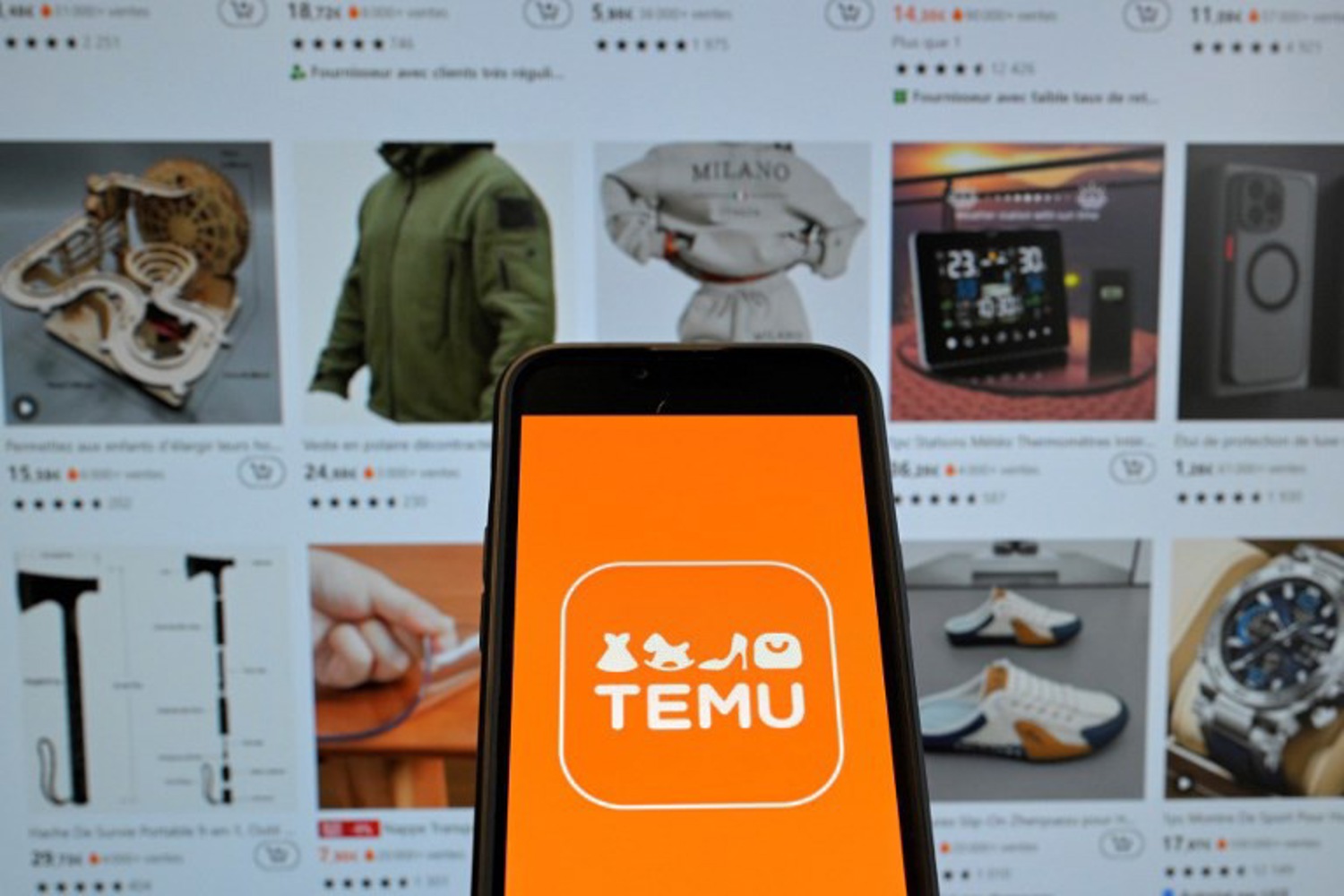
The logo of Chinese e-commerce company Temu. Credit: Nicolas Tucat / AFP
To protect users from potentially dangerous content or products, other DSA investigations are underway in the EU, notably against the Chinese website AliExpress, as well as the social networks Facebook, Instagram, X, and TikTok.
The EU also wants to combat the massive influx of small, cheap parcels into its territory, with a proposal currently under consideration to impose a tax of €2 per parcel.
Last year, 4.6 billion such parcels entered the EU – more than 145 per second – 91% of which came from China.
