
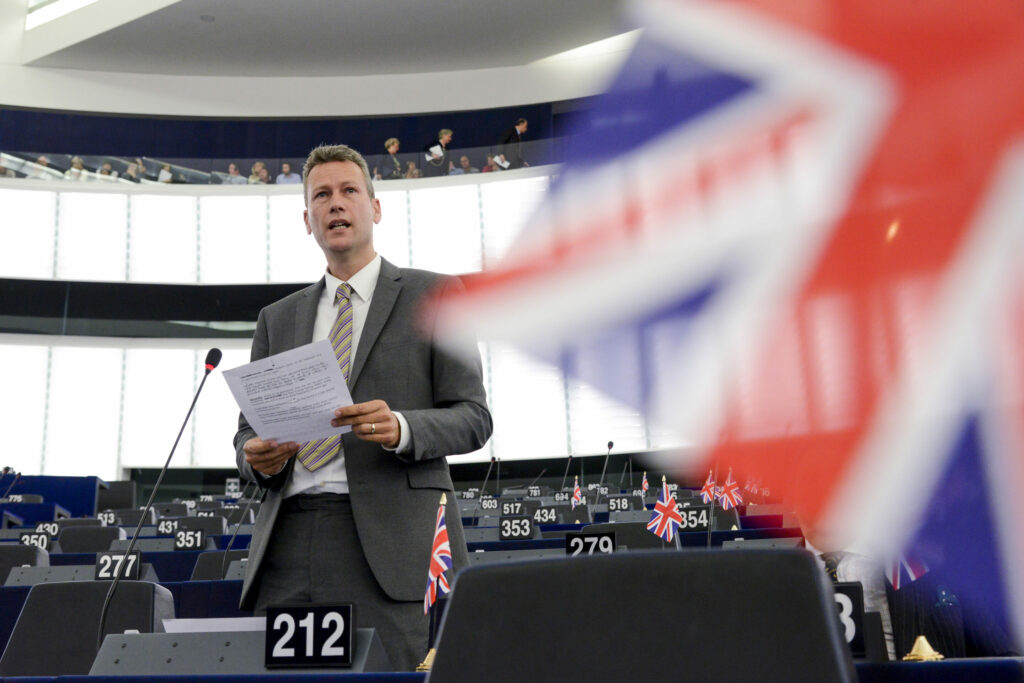
British police stopped a man at Manchester Airport on 13 September 2021 under suspicion of counterterrorism offences: taking Russian bribes while being an elected official.
The individual was arrested under the UK’s Counter-Terrorism and Borders Security Act. Officers seized his mobile phone for further examination. Raids were also subsequently ordered on his home address in Wales, where more electronic devices were seized.
That man was Nathan Gill, a former Brexit Party (and previously UKIP) Member of the European Parliament (MEP) from 2014 to 2020.
He was a key cog in the UK's Brexit movement, which led to the country's withdrawal from the EU in 2020 after the referendum. He was also the former leader of Nigel Farage's Reform UK in Wales until 2021.
Last Friday, Gill appeared in London before the UK’s Central Criminal Court, where the highest profile cases are tried. He pleaded guilty to eight counts of bribery and denied one charge of conspiracy to commit bribery.
"Our investigation uncovered an elected MEP was taking payments to peddle narratives that would have had the effect of being beneficial towards Russian interests," said the head of the UK Counter Terrorism Command, Dominic Murphy, who led the investigation.
"This case goes to the heart of our democratic values and as we’ve shown here, we will not hesitate to investigate and disrupt anyone seeking to harm or undermine these values and our national security," he added.
What happened?
The UK’s Counterterrorism policing unit's investigation uncovered how the former Brexit MEP received payment in return for making statements supporting pro-Russian media outlets in Ukraine between 2018 and 2020.
Gill was interviewed under caution in March 2022 but made no comment at the time. During the investigation, counterterrorism officers found evidence on Gill's electronic devices that he was in contact a Ukrainian national called Oleg Voloshyn.
During the exchanges on WhatsApp, Gill agreed that, in exchange for money, he would make certain statements that were supportive of pro-Russia media being present in Ukraine.
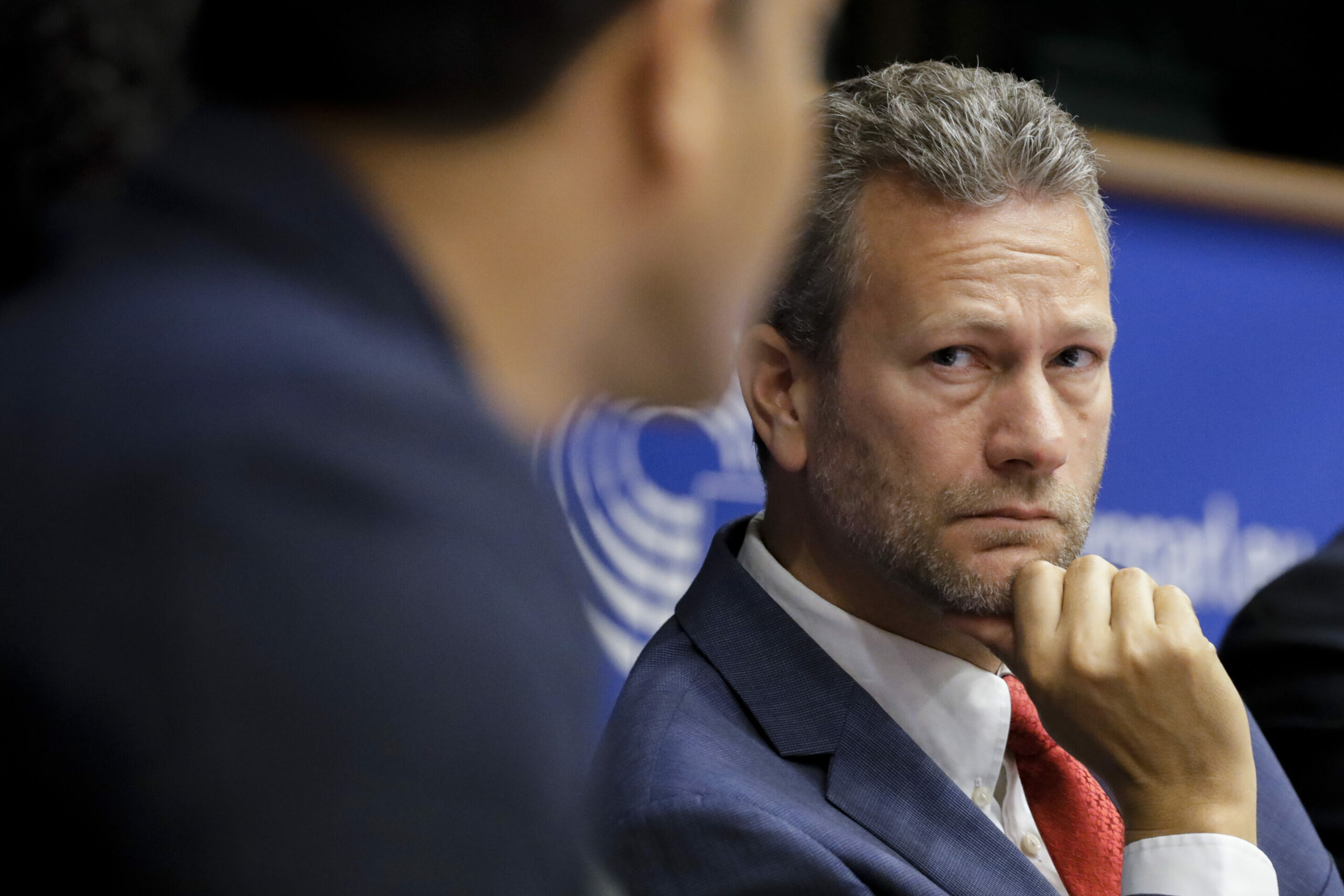
EFDD Group conference - Religious Freedom in Europe : A Christian Case Study
Voloshyn is a former pro-Russian Ukrainian MP and journalist, who was an official under the pro-Russian government overthrown during the 2014 Maidan popular uprising.
After being re-elected in 2019 with a now-banned pro-Russian party, he lost his position due to the 2022 invasion, and was charged with state treason by Ukraine a year later for attempting to manipulate public opinion in favour of Russia.
The US treasury (under former President Joe Biden) described him as a "pawn" for the Russian secret services, having sanctioned him days before the full-scale invasion of Ukraine in 2022. He is currently believed to be hiding in Russia.
Curiously, but unrelated to this case, Voloshyn is also alleged to have been a Ukrainian business partner of Paul Manafort, the US Republican also jailed for various offences involving pro-Russian lobbying in Ukraine, who was pardoned in 2020 by US President Donald Trump.
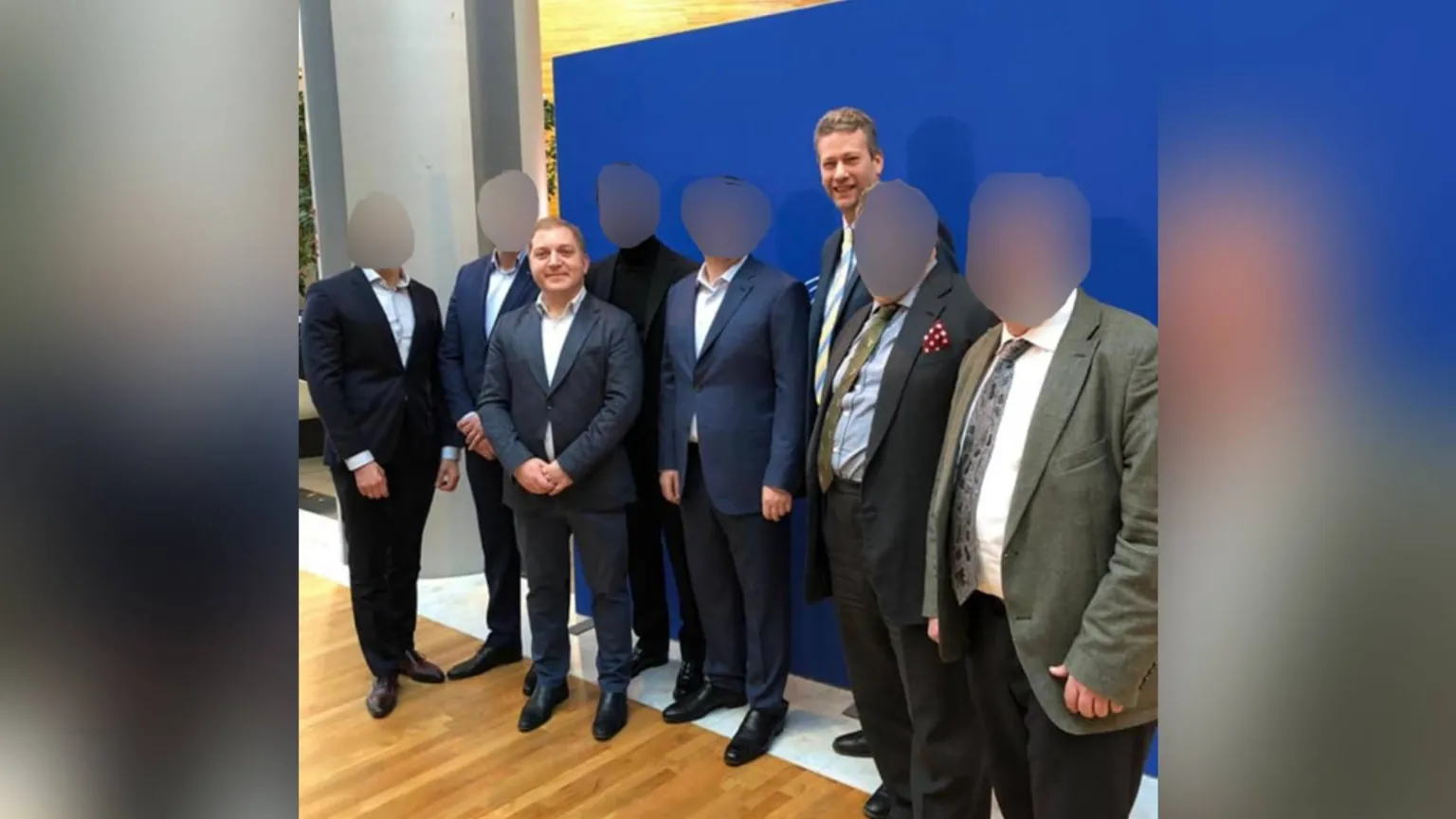
Former member of Ukrainian parliament, Oleg Voloshyn, (third from left) was found to be in contact with former Brexit Party MEp Nathan Gill. Credit: 112 Media
During the investigation into Gill, detectives from UK counterterrorism retrieved numerous WhatsApp messages from his devices which demonstrated how he pushed narratives beneficial to Russian interests.
They matched them up to open-source material which showed how the former MEP had made corresponding statements – some of which appeared in Ukrainian media through opinion pieces.
During Friday’s court case, the prosecution said the guilty pleas were "satisfactory", with the father-of-five now facing a lengthy prison sentence, according to his defence lawyer.
Pro-Russian statements
The court heard how Gill was contracted to "pose questions for the consideration of parliament, making contact with senior officials of the European Commission at the parliament, arranging for events and making statements".
In the European Parliament in Brussels on 11 December 2018 in Strasbourg, he defended the pro-Russian Ukrainian media outlets Channel 112 and News One.
"The Government of Ukraine must ensure that [press freedom] principles are sacrosanct, and that means allowing TV stations to broadcast whether you like the message or not," Gill told fellow MEPs at the time during a debate on the EU-Ukraine Association Agreement.
In July 2019, he wrote to the European Commission: "Will the Commission seek assurances from the Ukrainian Government that it will fully and promptly investigate the terrorist attack against TV channel 112 Ukraine, in which a grenade launcher was fired at the TV station building on 13 July 2019 in Kyiv?"
During his new term as a Brexit Party MEP, he attacked Ukrainian President Zelenskyy in the European Parliament in Brussels on 9 October 2019, accusing him and the former pro-EU President Petro Poroshenko of using legal means to "strip legal process to strip TV stations of their licences and [Zelenskyy] threatening those he does not like."
At the time, Voloshyn was working as a columnist at Channel 112, with the media company also having overt ties to other pro-Russian Ukrainian MPs, such as close Putin ally, Viktor Medvedchuk.
The court on Friday heard how Gill gave various media appearances in Ukraine in favour of the channels, even defending Medvedchuk from his treason charges in one appearance on Channel 112, according to the BBC.
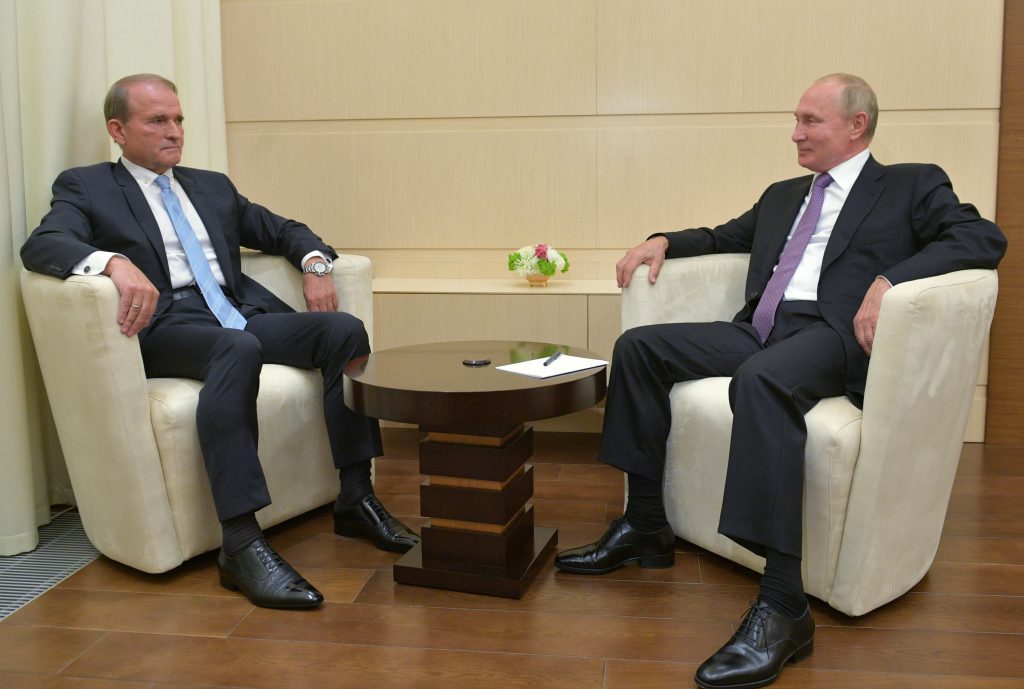
Viktor Medvedchuk and Vladimir Putin are close allies. Putin is the godfather of Medvedchuk's daughter. Credit: Kremlin Press
In Brussels, Gill organised an event in July 2019 in the European Parliament inviting MEPs for a discussion with Medvedchuk where he presented his "peace plan for Donbas", which at the time was partly-occupied following Russia's 2014 invasion.
One day after the event, Medvedchuk met with Russian President Putin at the Kremlin. He boasted about having presented his plan to "the newly-elected European deputies from Great Britain, Germany, France, Spain, Italy, Belgium, Bulgaria and Slovakia," according to an English-language read-out available on the Kremlin website.
Gill even put forward a resolution on "freedom of the press in Ukraine", which was signed by 43 MEPs from all groups in this Parliament, but was later rejected. "We need to send an unequivocal message to Ukraine and the world on the need for freedom of the press," he told parliament during a debate on Kazakhstan.
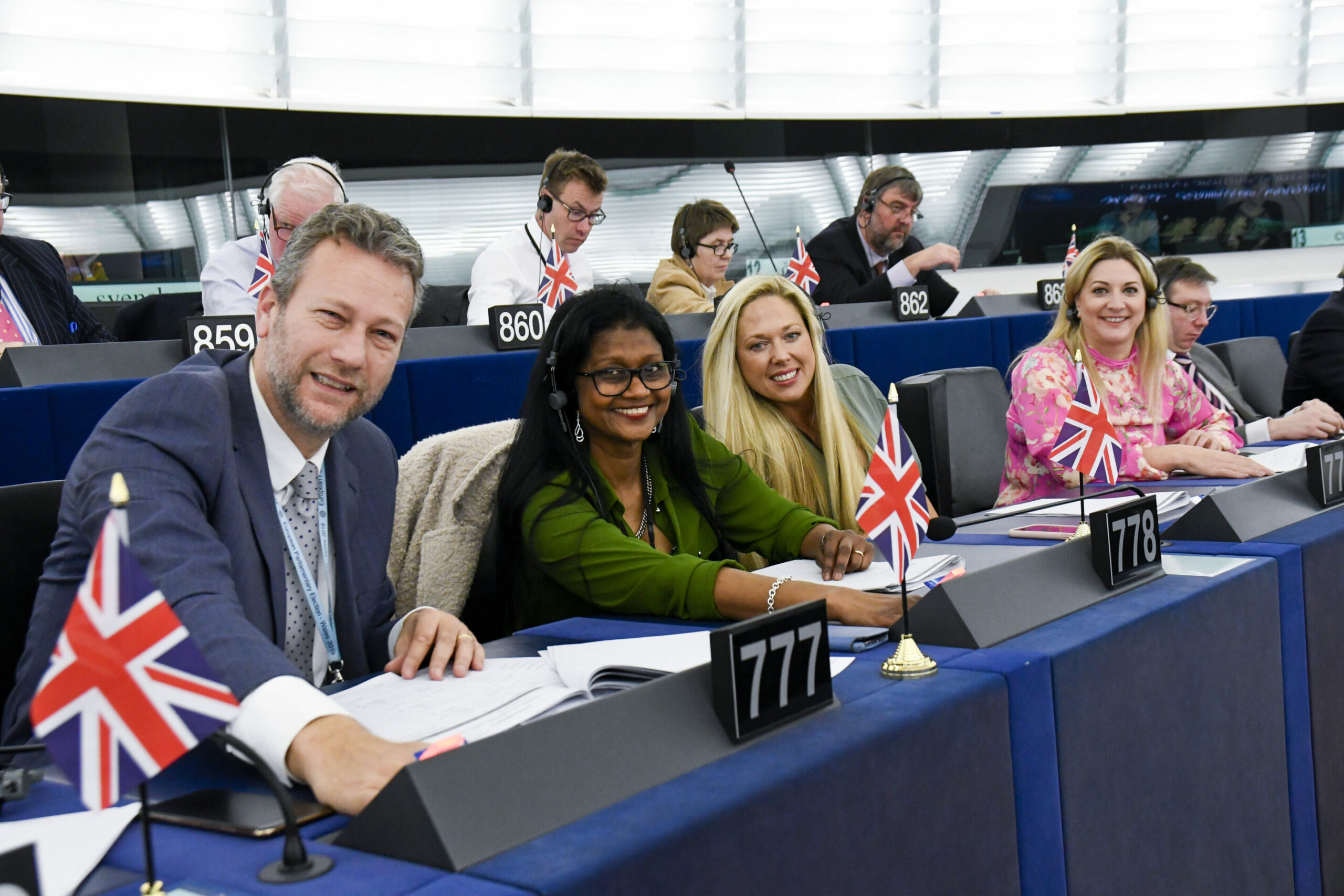
Nathan Gill and his Brexit Party colleagues Christina Jordan, Belinda de Lucy, Alex Philips in Strasbourg in 2019. Credit: EU
Social media activity also shows that Gill may have held pro-Russian beliefs for longer than the investigated period.
He posted in 2015, one year after the first Russian invasion of eastern Ukraine. "It's the EU that has created the 'new enemy' of Russia by courting the Ukraine."
Another tweet from 2016 reads: "It looks like the Dutch people said NO to the European elite and NO to the treaty with the Ukraine. The beginning of the end of the EU." His Twitter account has been inactive since his arrest.
Who is Nathan Gill?
Nathan Gill was a prominent figure of the Eurosceptic right in Britain in the 2010s.
He was leader of UKIP Wales between 2014 and 2016, and then for Reform UK Wales between March and May 2021. He served an an MEP for two terms.
On Monday, Reform UK told the BBC claimed that most senior Reform figures “don’t even know who he is." This was despite him having campaigned with Nigel Farage for the Brexit Party in 2019. They stated that Nigel Farage "can't be held accountable for the actions of every single person whom he comes into contact with."
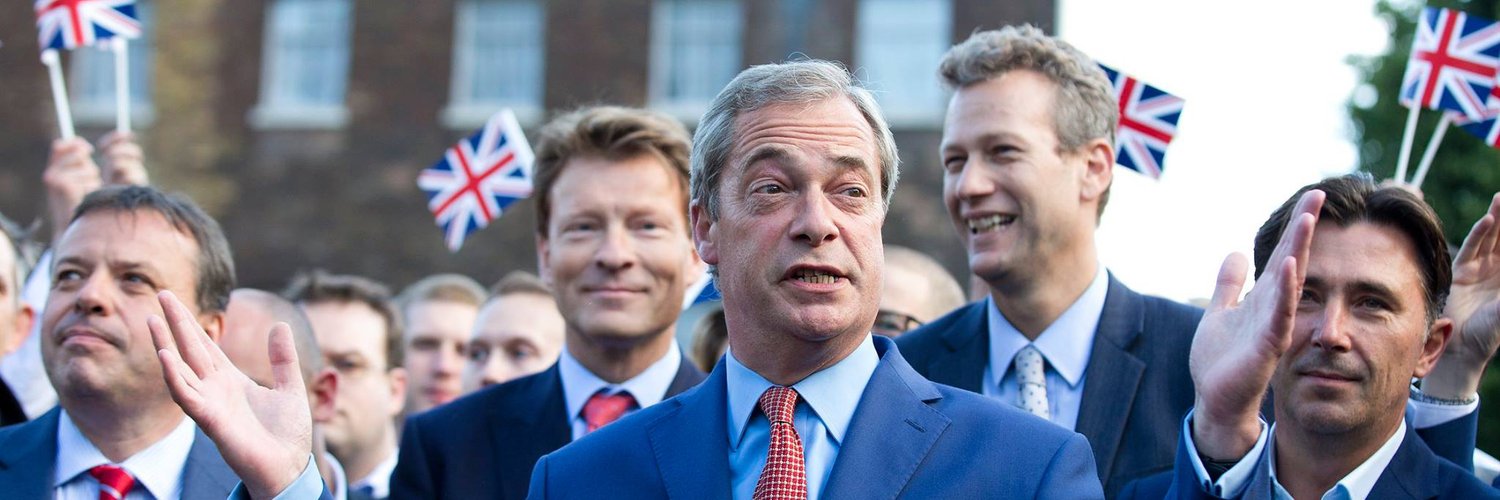
A banner from Nathan Gill's X account with senior Reform UK figures Richard Tice and Nigel Farage. Gill is third-left.
Gill's old European Parliament assistant, Llyr Powell, is currently standing for Reform UK in a by-election in Wales this October, even if he worked for him before the offences were committed.
Before entering politics, Gill ran various businesses, including a domiciliary and home care services which employed 180 people, mainly from Poland and the Philippines.
When asked about it an interview with the Western Mail, he said: "People from overseas were employed because we could not find workers to do the jobs."
