
The European Commission published on Tuesday its 2026 work programme without including any legislative proposals for revising its outdated animal welfare legislation.
The work programme sets out the list of actions the Commission will take in 2026. According to the Commission, the programme, entitled 'Europe’s independence moment', addresses current and future challenges arising from threats to its security and democracy, to conflicts and geopolitical tensions, to risks to economy and industry, and accelerating climate change.
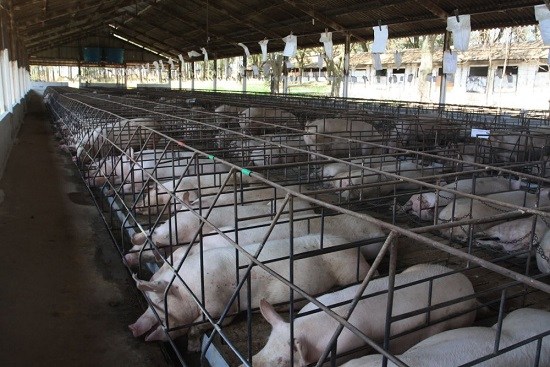
As previously reported, animal welfare organisations were cautiously optimistic that the programme would at least include a proposal on banning cages for farmed animals, based on the Commission's positive response in 2021 to the European Citizens' Initiative (ECI) ‘End the Cage Age’. Last week, a Commission spokesperson had replied affirmatively to a question about it.
However, no such proposal could be found in the final work programme. The words “animal welfare” are hardly found in the Communication on the programme. More than half of the 38 legislative and non-legislative initiatives in 2026 are about reducing administration burdens.
Animal welfare does not fit into that agenda. The Commission explained that the work programme focuses on actions that “will deepen Single Market integration, thus supporting the core priority of the current Commission mandate: competitiveness, growth, and economic resilience”.
According to Maroš Šefčovič, Commissioner for Trade and Economic Security; Interinstitutional Relations and Transparency, the work programme is “designed to strengthen EU competitiveness, security and democracy – in line with the expectations of our citizens”.
Opinion polls and a Eurobarometer in 2023 show that European citizens also expect the EU to improve animal welfare.
Asked by The Brussels Times why no legislative proposal on animal welfare had been included in the work programme, he mentioned the on-going public consultation on on-farm animal welfare (which ends in December 2025) and the Commission’s Strategic Dialogue on the Future of Agriculture in 2024 which had shaped its Vision for Agriculture and Food.
The work program does include a section on ‘Sustaining our quality of life: food security, water and nature. One non-legislative initiative is called ‘Agriculture Livestock strategy including elements on animal welfare (non-legislative, Q2 2026)’, without specification of elements. Again, economic interests dominate, the Commission explains.
“Food security and our agricultural sector must be supported. The Livestock Strategy will ensure competitiveness, sustainability and resilience of the EU livestock sector, while the review of rules on unfair trading practices in the food chain will ensure that European farmers and small producers are better protected.”
Support to young farmers
On the same day as the Commission published its 2026 work programme, it also announced its ‘Strategy for Generational Renewal in Agriculture’. The strategy sets out a roadmap to support young farmers and attract more people to farming, aiming at doubling the share of young farmers in the EU by 2040, with a goal of reaching about 24%, including new entrants.
According to the Commission, agriculture in Europe is ageing faster than other sectors. Currently, the average age of a farmer in the EU is 57 years-old, and only 12% of them are below 40 years-old, thus falling in the category of young farmers. This imbalance poses risks to long-term food security, the EU's strategic autonomy in food production, and the sustainability of Europe's farming landscapes.
“Today, we are making support for young and new farmers a political priority,” commented Christophe Hansen, Commissioner for Agriculture and Food. “We want every young person who dreams of farming to see a real path forward, with fewer obstacles and stronger support. This is why we are, amongst others, asking every Member State to act with concrete national strategies and real investment.”
The strategy says that investment in innovation and modern technologies is essential to improve productivity, increase resilience, and support the green transition. Financing must go beyond conventional tools to enable young farmers to adopt new techniques, digital tools, and sustainable solutions. This is particularly relevant for organic farming.
Commissioner Hansen was asked if young farmers can be considered as ‘pioneers’ in modernizing agriculture in Europe. Are they more interested than the old generation in organic farming, plant-based food and animal welfare? He replied that young farmers are more inclined to invest in modernizing agriculture but left a question mark about also encouraging them to improve animal welfare.
Animal welfare NGOs disappointed
It would be an understatement to write that animal welfare NGOs in Brussels were disappointed by the Commission’s omission of animal welfare legislation in the work programme. All NGOs are united in their call on the Commission to act on its commitment to modernise the legislation, including enforcing existing legislation, and set a concrete timeframe for action.
“The Commission has repeatedly insisted that it will present proposals to ‘End the Cage Age’ in late 2026, in line with the EU’s Vision for Agriculture and Food,” commented Vinciane Patelou, Head of EU at Compassion in World Farming. “Then why not include this legislation in the 2026 Work Programme?”
“This sends a worrying message to the millions of EU citizens who support it and expect this legislation to be delivered as promised. Millions of animals are still trapped and suffering in cages across Europe, farmers and food businesses still need urgent clarity, and EU citizens want their voices to be heard and for the EU to keep its promise. There can be no further delays.”
"Commissioner Šefčovič’s reply was more of a non-answer,“ said Gabriela Kubíková, Legislative Advocacy Manager at The European Institute for Animal Law & Policy. “Given the ongoing public consultation and the Commission’s repeated assurances that work is progressing as planned, it is questionable why this file was omitted from the Work Programme.”
"The omission is particularly concerning given the crucial importance of this file for the EU’s animal agriculture sector, which clearly merits inclusion among the Commission’s key priorities for next year. After our disappointment in 2023, when the revision of the legislation largely fell through despite years of consultations, studies, and evidence-gathering, it is unsurprising that trust has eroded.”
“Why are we facing yet another call for evidence, another consultation, and, eventually, another impact assessment,” asked Olga Kikou, Director of Animal Advocacy & Food Transition. “What happened to the previous ones?”
“It feels as if the Commission wants us to go through the same proposal once more simply to buy time and delay presenting any concrete proposals. This turns the entire exercise of citizen engagement into a mockery, a way to pretend that people are being heard, while in reality we are just going through a bureaucratic process that has no real impact on the decisions that shape our lives.”
“The omission of animal welfare legislation in the work programme raises concerns given the societal expectations and clear scientific evidence backing the need for better rules,” commented Georgia Diamantopoulou, European Policy Office Team Guide at FOUR PAWS. “We remain hopeful that the Commission will stay on course and deliver meaningful progress without further delay.”
Update: Asked for a comment, a source in the Commission replied on Friday that animal welfare remains a key priority for this Commission. “On the basis of a sector-by-sector approach, it aims to present legislative proposals on the revision of the existing EU animal welfare legislation.”
On the ECI specifically, “the Commission is carefully assessing important aspects to ensure that the transition to cage-free farming is sustainable for the agricultural sector and for our food systems, including food security.”
Asked to specify the "elements on animal welfare" in the livestock strategy, the Commission referred to the livestock workstream, launched by Commissioner Hansen in May 2025, but was not in a position at this stage to determine the precise scope the strategy will take.
It takes the form of a number of meetings with experts representing stakeholders. According to a presentation by DG SANTE (30.9.2025), the work includes a follow-up on the Commission’s commitment to phase out the use of cages for certain farm sector(s) such as laying hens, layer breeders, broilers, pigs, calves, and rabbits.
“A first legislative proposal is expected by the end of 2026 . . . but the sector(s) covered remain to be decided based on the stakeholder consultation and what is feasible for the sector(s) covered”.
The Danish EU Presidency plans to organize a conference (1.12.2025) on “Welfare of farm animals in the EU of 2050 – a pathway to the future.”
