
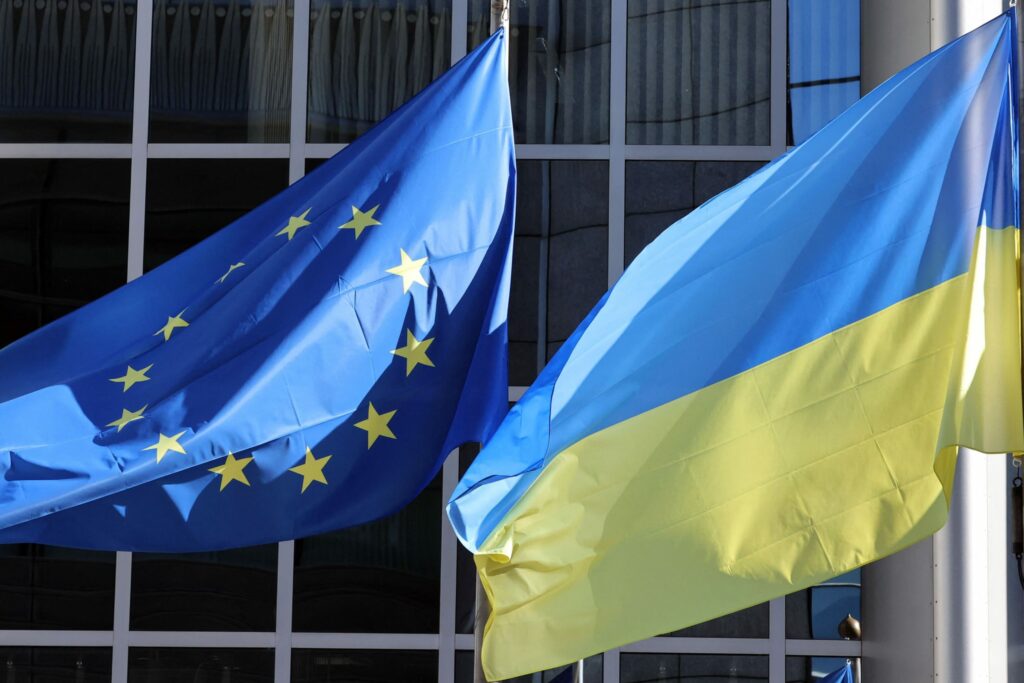
The European Union and Ukraine launched on Wednesday a strengthened trade agreement to boost economic cooperation and support Ukraine’s integration into Europe.
The upgraded 'Deep and Comprehensive Free Trade Area' (DCFTA) with Ukraine is now in force, offering both sides more stable and fairer trade arrangements.
The agreement expresses a show of support for Ukraine, as the country is well into its third year since Russia's invasion.
The upgraded agreement relaxes trade barriers, making it easier for Ukrainian and EU businesses to import and export goods.
The Commission says it also introduces new rules to protect sensitive sectors of internal EU agriculture.
Products such as sugar, poultry, eggs, wheat, maize, and honey will see only modest increases in market access, helping to reassure European farmers concerned about competition.
Other products will benefit from full or enhanced liberalisation, giving businesses greater opportunities. For some items, this means tariffs and quotas will be reduced or removed entirely, depending on the product and its impact on existing markets.
Safeguards and stronger standards
A key feature of the new deal is a robust safeguard clause, which allows either side to introduce protective measures if a sudden surge in imports causes trouble for local producers.
This aims to ensure that neither the EU nor Ukraine’s markets are overwhelmed by unexpected changes in trade.
The agreement also sets out conditions that require Ukraine to gradually align its production standards with those of the EU.
This covers areas like animal welfare, the use of pesticides, and veterinary medicines.
Ukraine will update the EU on its progress every year, a step that fits with the country’s longer-term ambitions for closer ties with the union.
Additionally, both sides have agreed to look at new ways to help Ukrainian exporters access their traditional markets outside the EU — a move that could support global food supplies at a time when many countries are facing shortages.
While temporary trade measures were granted between the EU and Ukraine after the outbreak of war in 2022, EU officials say this agreement now puts relations on a stable, long-term footing.
