
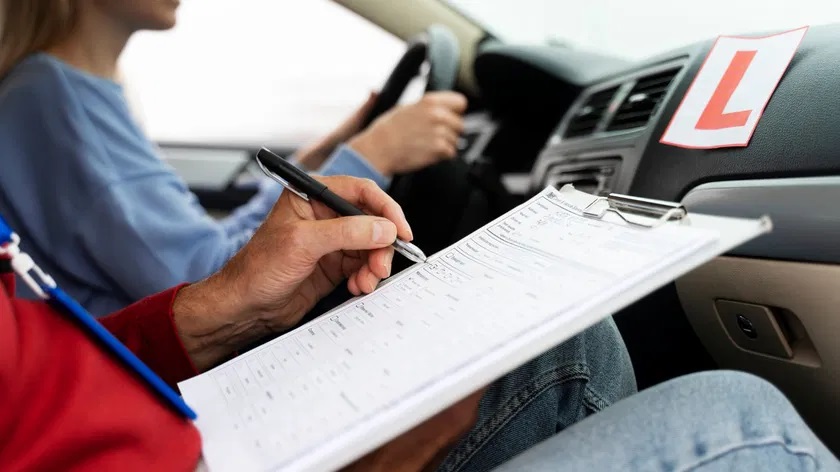
New Europe-wide rules on driving licences and road safety have came into force, bringing digital licences and tougher measures for novice drivers.
Under the updated legislation, all EU member states will issue digital driving licences that can be stored on a mobile phone or other digital devices, the European Commission said in a statement on Tuesday.
Physical licences will still be available for those who need them.
The rules also introduce an EU-wide accompanied driving scheme for 17-year-olds, allowing them to gain experience with a supervising adult before driving alone.
Stricter penalties
A probation period of at least two years will now apply to all new drivers, with stricter rules and penalties across the EU.
This step comes as recent figures show that, although drivers under 30 make up only 8% of licenced drivers, they are involved in 40% of fatal road accidents.
The new directive requires member states to systematically check drivers’ physical and mental fitness, at licence issuance and renewal, through self-assessment or other national systems.
For the first time, the EU will enforce the mutual recognition of driving disqualifications for major offences — including excessive speeding, driving under the influence, and reckless driving causing death or injury.
This means that losing a driving licence in one EU country will now apply across all member states for such offences.
Training and driving tests will also be updated to better protect vulnerable road users, such as pedestrians, cyclists, and people using e-scooters, the Commission said.
The new requirements will emphasise awareness of these groups and adapt to technological advancements, including automated driving assistance features in modern vehicles.
The directive further allows drivers with a standard category B (car) licence to drive heavier vehicles powered by alternative fuels, recognising the extra weight of batteries in electric vehicles.
EU data show 19,940 people died in road crashes across the bloc in 2024.
The legislation is part of the EU’s commitment to its “Vision Zero” target — halving road deaths and serious injuries by 2030 and moving towards near-zero fatalities by 2050.
The new rules will take effect in national law within four years, with measures on alternative-fuel vehicles and accompanied driving coming sooner.
