
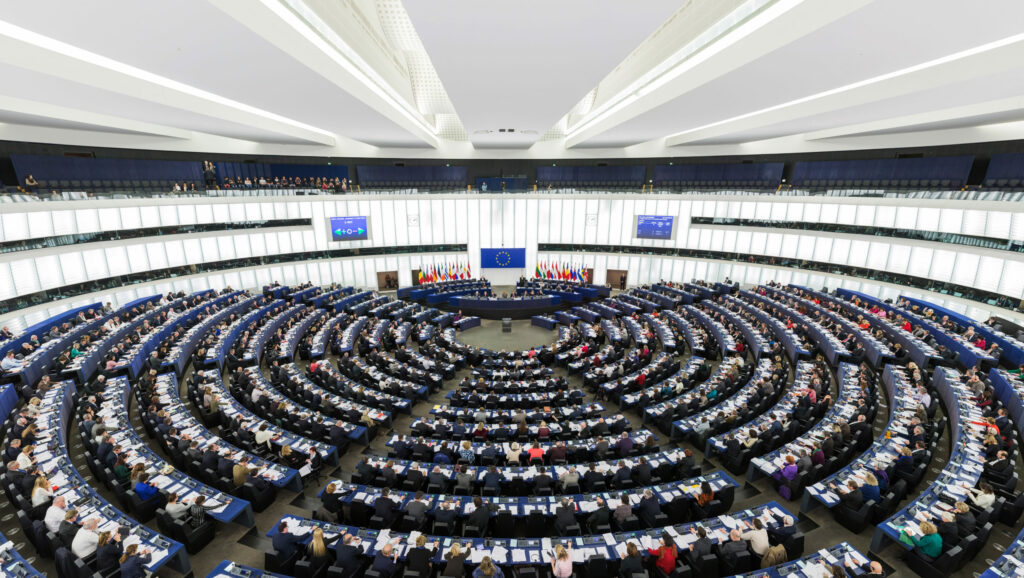
The European Parliament has voted to adopt its stance for forthcoming talks with EU Member States on new regulations intended to make interest representation by third countries more transparent.
MEPs voted 392 in favour, 88 against, with 133 abstentions, strengthening the European Commission’s initial proposal by refining definitions and including safeguards, according to statements by Parliament spokespersons.
The proposed directive would apply to paid activities seeking to influence EU policy, legislation, or decision-making. These include meetings, submitting input to consultations, running communication campaigns, and drafting policy proposals.
Official diplomatic functions, media services, legal advice, and academic research are excluded from the scope of the directive.
Funding from third-country grants unrelated to lobbying would not count as remuneration, aiming to protect civil society organisations’ work, the Parliament specified.
Registration and safeguards
To boost transparency, independent national bodies would maintain mandatory registers of interest representatives, linked through an EU-wide portal.
Registered organisations or individuals would receive a European Interest Representation Number (EIRN), valid across all EU countries.
The MEPs said that information on the registers should be factual and neutral, and registration alone should not generate distrust or negative labels for organisations.
The proposal aims to avoid measures seen in some countries that label NGOs or other entities as ‘foreign agents’.
The directive would not allow for penalties based solely on registration, nor would it require disclosure of unrelated foreign funding.
Only 16 out of 27 EU member states currently have regulation covering general interest representation, the Parliament’s figures show.
This disparity has resulted in uneven competition and encouraged lobbying activity to shift to countries with less oversight.
Negotiations between the Parliament and member states are expected to begin after the European Council agrees its own position.
The European Commission first put forward the draft rules in 2023, after a survey indicated that 81 per cent of Europeans believe foreign interference in democratic systems is a serious concern.
Related News
- EU funding to NGOs lacks transparency, says EU watchdog
- Big tech lobby spending hits new record in Brussels, claims report
- Fewer cookies: Is the EU giving away your personal data for AI?
- How a Brexit MEP took Russian bribes in Brussels
- Former head of Belgium's anti-corruption agency indicted for leaks
- 'Belgian democracy is in terrible danger,' ex-Qatargate judge calls for anti-corruption agency
