
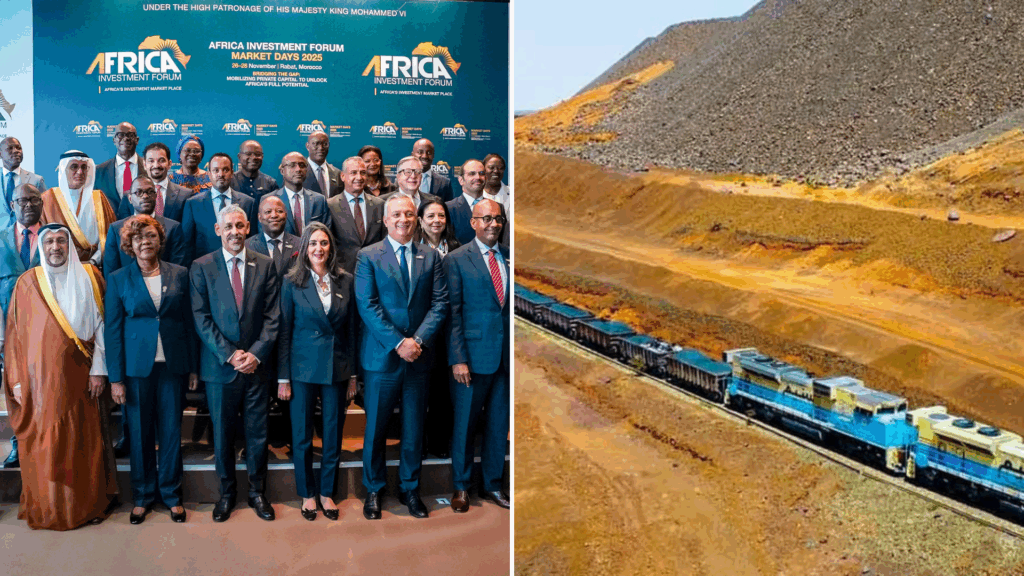
African finance ministers used this year’s Africa Investment Forum to emphasise the importance of using private capital – not aid – to drive the continent’s economic development.
Now in its eighth year, the Africa Investment Forum brings together governments and private financiers to close financial deals and encourage investment in the continent. At this year’s forum, held in Rabat, Morocco, investors expressed interested in US$15.2 billion (around €13 billion) worth of investment projects in Africa.
During a ministerial dialogue at the forum, Mauritania’s Minister of Economic Affairs and Development, Abdullah Suleiman Sheikh Sidiya, hailed Africa’s strategic shift from the aid-dependent image of the 1990s. “Africa is becoming a sought-after destination - not only for cooperation but increasingly for investment,” he said.
Zambian Minister of Finance and National Planning Situmbeko Musokotwane said the country is emerging from its debt crisis following a recent ratings upgrade. According to the minister, over the past three years, Zambia has signed around €1.7 billion in public-private partnership projects and attracted more than €6 billion in new mining investments.
Bridging Africa's investment gap
Africa’s development challenges are well documented. It has a huge annual investment gap, estimated at between €123 billion and €147 billion for infrastructure alone.
For many African states, financing is increasingly hard to come by. Since 2021, foreign direct investment flows to the continent have fallen by around a third. Electricity is a major obstacle to development, with around 80% of African firms reporting annual power cuts, and millions of ordinary people living without access to electricity.
Although encouraging domestic capital investment was the primary aim of the Africa Investment Forum, one of the most eye-catching investment pledges at the conference came from the European Investment Bank (EIB), which, along with the African Development Bank (AfDB), signed a financing package worth around €238 million to help Mauritania modernise its main railway corridor.
Under the agreement, the EIB pledged to deliver a €108 million loan, guaranteed by the European Union, to upgrade the railway linking Mauritania’s main mining region with its export terminal and boost the country’s economic growth.
Mauritania is rich in mineral resources, but remains one of the world's poorest countries and is an increasingly common departure point for Africans trying to reach Europe.
As well as financing the construction of 42 km of new track, the EIB loan will fund the acquisition of modern locomotives, wagons, and maintenance equipment. The AfDB will contribute €130 million to the project, which will be delivered by the Société Nationale Industrielle et Minière (SNIM), Mauritania’s largest employer.
Global Gateway strategy
The EIB’s investment is part of the EU’s Global Gateway strategy, a €300 billion investment programme intended to fund infrastructure and clean energy projects outside Europe, particularly in Africa.
Ambroise Fayolle, Vice-President of the EIB, said: “This project will reinforce SNIM’s transport corridor, boost exports, and support the country’s economic development.
“Just a few days after the successful AU-EU Summit in Luanda, it is a strong example of how the European Union and the EIB, working with African partners, deliver on the Global Gateway strategy.”
Jozef Síkela, European Commissioner for International Partnerships, said: “Mauritania was the first country I visited under my mandate, and already then, I saw the potential of our strategic and mutually beneficial partnership. With this major investment in strategic infrastructure, we are unlocking new opportunities for Mauritania and for Europe and deepening our partnership.
"By connecting the mining region with global markets, this project illustrates what Global Gateway delivers: local growth, new jobs, and sustainable development.”
Earlier this week, European and African leaders met at the EU-African Union summit in Angola, where they pledged to increase trade in raw materials and renewable energy.
