
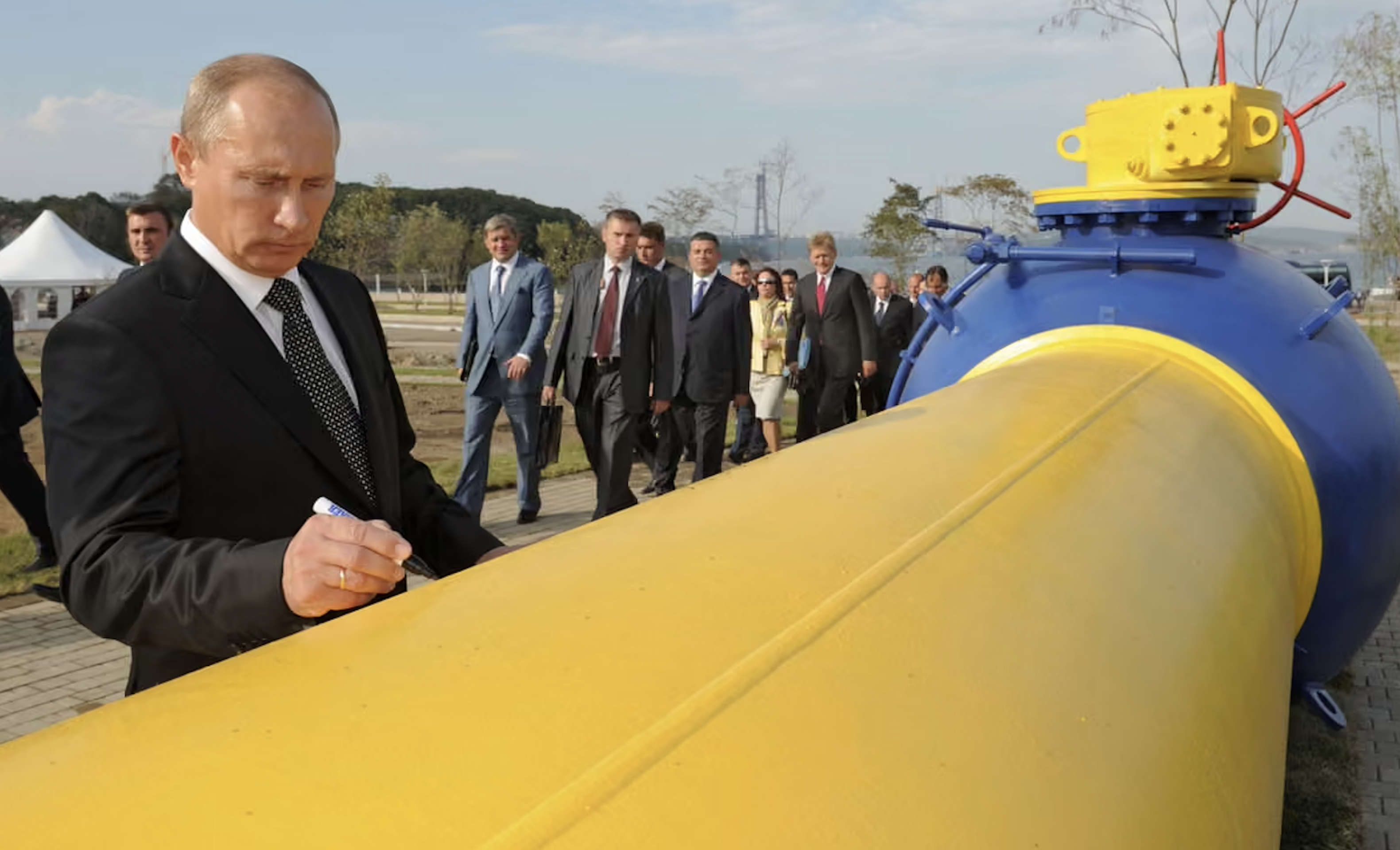
The European Union has agreed a historic deal to cancel all Russian fossil fuel imports by 2028. But is the agreement really a final nail in Moscow’s European energy business?
Spelling an end to Russia’s fossil fuel imports has been a long time coming in Europe. Ever since Vladimir Putin launched his full-scale invasion of Ukraine in 2022, the writing has somewhat been on the wall.
Europe was for years largely dependent on Russian gas in particular to fuel its factories and keep the lights on across the continent. Ending that dependence has become geopolitically prudent, given that Putin has been more than willing to use energy as a hybrid weapon.
Russia also makes hundreds of billions every year from energy exports, so robbing Moscow of as much of that revenue as possible will help disrupt its war effort and hopefully bring the Ukraine conflict to a quicker end.
To achieve this, the EU’s REPowerEU plan went about trying to source alternative suppliers, increasing the amount of domestic clean power capacity and eliminating demand by ramping up efficiency measures.
But the Russian molecules kept flowing, especially via liquified natural gas imports. So it was decided that more drastic action was needed, by banning the signing of new energy contracts with Moscow and nixing existing deals.
Earlier this week, late into the night, negotiators agreed that the European energy system will be free of Russian gas by 2028.
Six weeks after the regulation becomes law, new contracts will be banned. Short-term pipeline and LNG contracts will need to be wrapped up by June 2026. Long-term contracts will be unlawful after September 2027.
That all sounds pretty definitive but there is devil to be found in the detail of this agreement.
That September 2027 deadline for long-term pipeline contracts could be extended by two months if European countries have not sufficiently filled their gas storage reserves.
There will also be an emergency handbrake of sorts that governments can pull if they believe their security of supply is threatened. Its existence does somewhat undermine the finality of the import ban.
EU regulators are going to have to be extra vigilant about Russia circumventing this ban too. Intermediaries like Azerbaijan and Türkiye could provide a backdoor for Moscow’s molecules through practices like gas supply swaps.
How easy it will be in practice to police this will be crucial to the ban’s chances of success.
What next?
This agreement needs to be given the green light by the Council and Parliament. Normally this is just a rubber-stamping exercise and it should be completed by Christmas.
Early next year, the European Commission will also have to publish a proposal on how to ban Russian oil imports. Attempts to include deadlines in this agreement ultimately failed.
More importantly, the EU is going to have to decide what energy path it must now take. If the strategy is simply to replace Kremlin gas with supply from somewhere else, then not much will really change. Dependencies will remain, emissions will continue.
But the Union could target gas demand more aggressively, by turbocharging clean energy buildout even more than it has done already and getting belatedly serious about energy efficiency protocols.
The former option seems like it will win out though if recent policy decisions are anything to go by. Most emblematic of that choice is the ongoing political argument about the EU’s new carbon market for road transport and buildings.
It is likely that its entry into force will be delayed from 2027 until 2028, perhaps even later. That is at least an extra 12 months where the market will not be providing an extra incentive to decarbonise and reduce fossil fuel demand.
Want more updates and analysis of what is happening in the world of energy and climate? Interested in finding out more information about public tenders and consultations? Sign up to our Energy Rundown newsletter here!
