
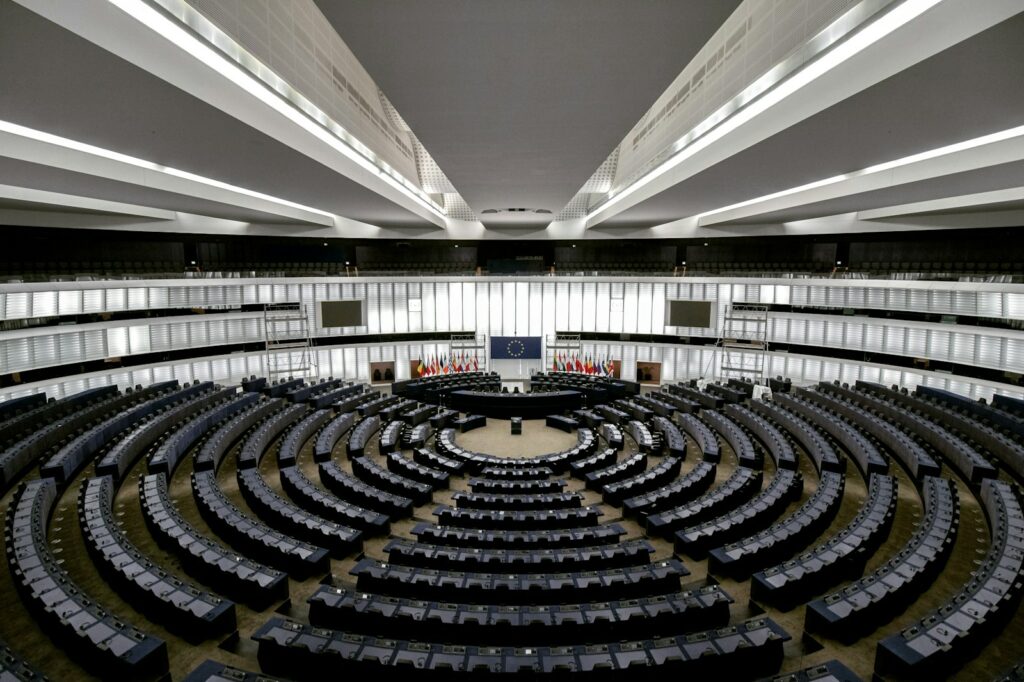
The European Parliament has adopted a resolution criticising Belarus for repeated violations of Lithuanian airspace and a range of other "hybrid" activities.
The resolution, which was supported by 438 Members of the European Parliament (MEPs), with 37 against and 48 abstentions, highlights a string of incidents involving unmanned aerial vehicles (UAVs, or drones) and balloons entering Lithuanian airspace since the start of 2024, the parliamentary press service informed on Thursday.
The MEPs cited risks to civil aviation, public safety, and the broader economy, and noted that at least one unmanned device entering Lithuania’s airspace carried explosive material.
In addition to airspace incursions, the text points to a rise in cyberattacks, state-backed disinformation efforts, economic pressure, and the use of migration for political purposes linked to Belarus.
The document claims these actions form part of a wider Russia-led campaign aimed at destabilising the European Union (EU), its member countries, and NATO, the military alliance.
The MEPs condemned Belarus’s reported detention of EU freight transport operators following the closure of the Lithuanian-Belarusian border and described Lithuania's defensive measures as proportionate.
The resolution calls for Belarus to end all such measures against Lithuania, release detained drivers and property, and pay compensation for financial losses.
Call for stronger EU measures and border security
The resolution also urges the EU’s governing Council to impose stricter targeted sanctions against Belarusian officials and organisations, especially those involved in drone production and operations against critical infrastructure.
Also included are calls for increased EU–NATO collaboration, enhanced surveillance and defences against drones, and greater information-sharing between member states.
The European Parliament criticised the recent US decision to partially lift sanctions on Belarus without coordinating with the EU, and reiterated the bloc’s refusal to recognise Aliaksandr Lukashenka as Belarus’s legitimate leader.
The resolution backs stepped-up investment in border security and new EU projects, including the European drone defence initiative and the Eastern Flank Watch scheme, as well as deeper cooperation with Ukraine on drone protection and cyber-defence technologies.
The MEPs also called for further efforts to counter disinformation from Belarus, seek international accountability for Belarusian actions, and strengthen resilience against hybrid threats across EU societies.
