
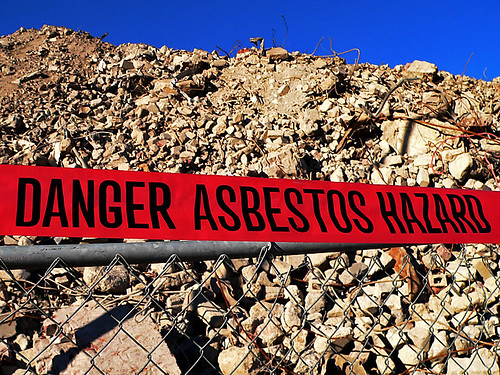
The European Commission has introduced new measures aimed at improving protection for workers exposed to asbestos, a substance known to cause cancer.
Around 75% of workplace cancers in the EU are related to asbestos exposure, the Commission said in a statement on Thursday.
The new measures include updated guidelines to help EU countries, employers, and workers implement existing rules that sharply reduce the amount of asbestos workers can be exposed to.
Alongside advice on safety training and monitoring, the guidelines provide practical information and real-life examples across industries such as construction and demolition, where exposure risks are highest.
By 21 December 2025, all EU member states must adopt the revised “asbestos at work” Directive into national law.
This updated directive lowers official asbestos exposure limits at work sites and introduces further steps to protect workers.
The Commission worked with trade unions, employer groups, national authorities, and safety experts to develop the new guidance and recommendations.
More cancers recognised for compensation
The Commission has also expanded the list of occupational diseases linked to asbestos in its latest recommendation, ensuring recognition and compensation for a wider range of work-related illnesses caused by exposure to the substance.
Newly added diseases include cancer of the larynx and ovary, as well as several non-cancerous conditions linked to asbestos, such as pleural plaques with lung impairment and non-malignant pleural effusion.
EU countries have been urged to update their compensation systems to reflect these changes.
The Commission also encourages countries to extend compensation to cases where occupational exposure to asbestos is proven in workers diagnosed with colon, rectal, or stomach cancer.
Efforts to improve prevention, early diagnosis, and research into asbestos-related diseases are also being promoted.
Asbestos is still found in older buildings across Europe, and workers who handle renovation or recycling of these materials remain at risk, according to the European Commission.
