
In a statement on Sunday, EU’s High Representative Kaja Kallas repeated her call from a previous tweet for calm and restraint by all actors, to avoid escalation and to ensure a peaceful solution to the crisis, in the aftermath of it called the ‘US intervention in Venezuela’.
The language in the statement did not differ much from the tweet. It fell again short of expressing any concerns or strong words about what since then has widely been described as a violation of both international and American law under the pretext of a “law-enforcement operation” against a “narco-terrorist” regime.
If the motives for the intervention and the capture of the Venezuelan president Maduro and his wife were unclear in the beginning, US President Trump did quickly clarify that it was all about Venezuela’s oil resources:
“We are going to have our very large US oil companies, the biggest in the world, go in, spend billions of dollars, fix the badly broken infrastructure, the oil infrastructure, and start making money for the country”. The oil resources amount to 17 % of the world’s known reserves and by controlling them the US would be able to determine the oil price and affect exports to China and other countries.
The military invention in Venezuela brings to mind previous interventions in other Latin American countries when the US acted at will in what it considered as its backyard to protect its economic interests. This time, the Trump administration has openly written in its recent National Security Strategy that it wants to “restore American pre-eminence in the Western Hemisphere.”
The strategy report described the policy as ‘The Trump Corollary to the Monroe Doctrine’ aiming at denying ‘non-Hemispheric competitors the ability to position forces or other threatening capabilities, or to own or control strategically vital assets, in our Hemisphere’. In fact, the Monroe Doctrine from 1823 aimed at preventing European colonial powers from colonizing the Americas.
The EU statement was issued on behalf of all EU Member States besides Hungary and expresses some understanding of the US intervention in Venezuela.
“The EU has repeatedly stated that Nicolás Maduro lacks the legitimacy of a democratically elected president and has advocated for a Venezuelan-led peaceful transition to democracy in the country, respectful of its sovereignty. The right of the Venezuelan people to determine their future must be respected.”
Furthermore, “The EU shares the priority of combating transnational organised crime and drug trafficking, which pose a significant security threat worldwide. At the same time, the EU stresses that these challenges must be addressed through sustained cooperation in full respect of international law and the principles of territorial integrity and sovereignty.”
Does this imply that the military intervention in a sovereign country to capture its president to put him to trial in an American court for alleged drug smuggling and ‘narco-terrorism’ can be justified and was legal? The statement is evasive on this point and only writes that, “At this critical time, it is essential that all actors fully respect human rights and international humanitarian law”.
The previous tweet mentioned also respect of the UN Charter. In article 2(4), the Charter states that, ‘All Members shall refrain in their international relations from the threat or use of force against the territorial integrity or political independence of any state, or in any other manner inconsistent with the Purposes of the United Nations’.
The only exception, according to article 51, is the ‘inherent right of individual or collective self-defence if an armed attack occurs against a Member of the United Nations, until the Security Council has taken measures necessary to maintain international peace and security’.
Asked on Monday, at the first press conference in 2026, whether the US has followed international law until now, the European Commission spokespersons declined to reply. They repeated the call in the statement that international law must be respected and hoped that the intervention will provide an opportunity for a democratic transition.
Does this mean that the final assessment of the US military intervention will depend on its outcome and on what will happen in Venezuela? “We didn’t say that,” the Commission told The Brussels Times. “We recalled the principles of international law that we are guided by.”
The Commission’s chief spokesperson added that there are bodies (other than the Commission) that are better placed to decide on the legality or non-legality of the US intervention and referred to the United Nations Security Council which will convene on Monday to assess the “situation in legal terms”.
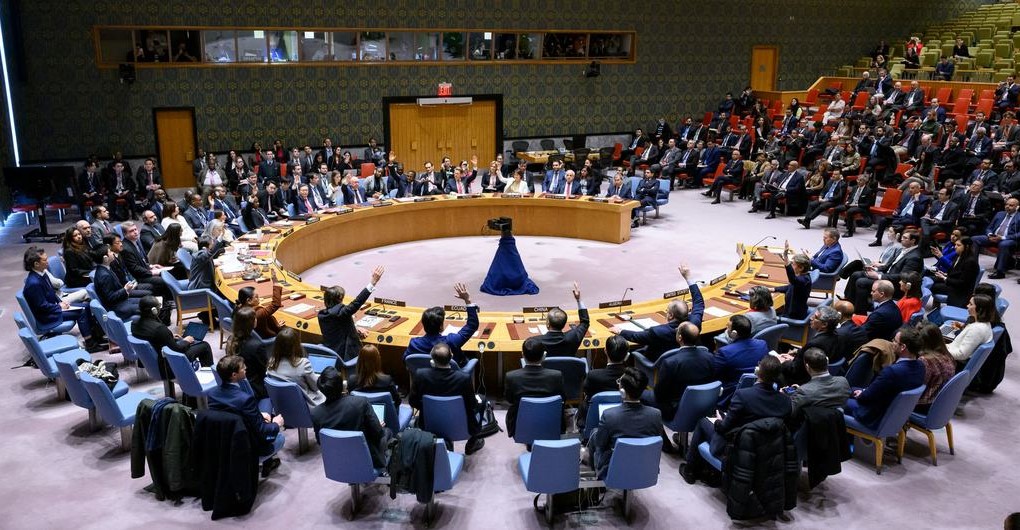
The UN writes that the security council is meeting in an emergency session in New York to discuss the recent United States action in Venezuela under its agenda item on threats to international peace and security. The UN chief António Guterres warned on Saturday that the US had set a “dangerous precedent” for the world order.
