
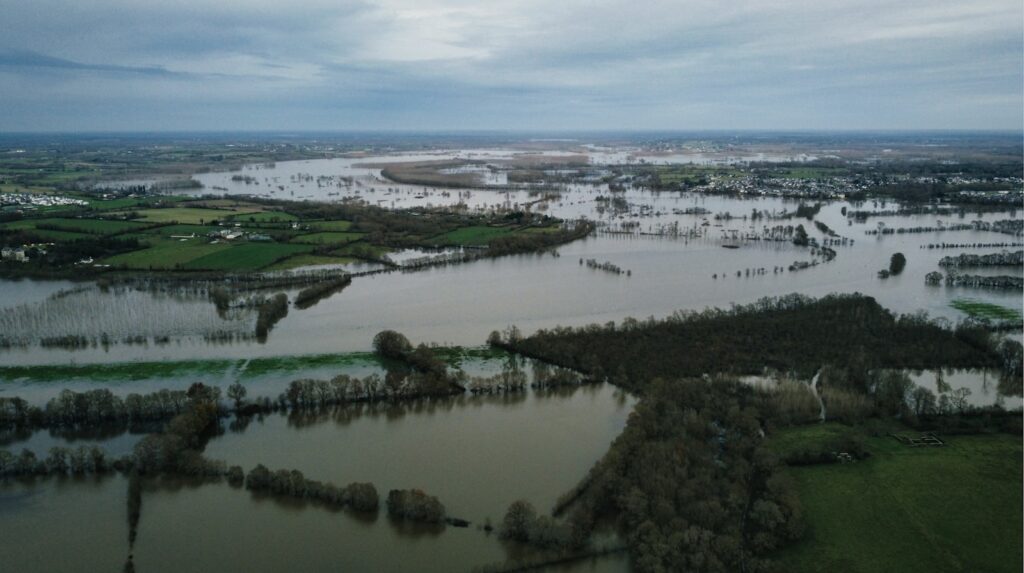
Europe faces growing risks from hazards such as large-scale wildfires and flooding, and the EU needs new ways to anticipate, prevent and respond to crises, the European Commission said in a recent publication.
The Commission’s publication presents 10 EU-funded projects focused on societal resilience and citizen engagement — meaning efforts to help communities prepare for, cope with and recover from disasters — alongside tools intended to support civil protection authorities and first responders.
Several projects centre on involving citizens directly in disaster preparedness and planning, the Commission stressed in a statement on Friday.
The C2IMPRESS project developed new risk assessment frameworks designed to help citizens take climate action, while the RiskPACC project brought citizens and civil protection authorities together to co-create solutions aimed at improving disaster resilience.
Other projects focus on early warning and decision-support systems for authorities. GOBEYOND developed multi-risk early warning systems for geohazards and weather events using impact-forecasting algorithms, while PARATUS created an open-source platform to analyse and evaluate different disaster response scenarios, the Commission said.
Tools for warnings, response and emergency care
Decision-support technology was also featured. MEDiate developed a system designed to account for multiple interacting natural hazards and cascading impacts, while MEDEWSA worked to strengthen forecasting and early warning systems across the European-Mediterranean-African region using new tools such as artificial intelligence, the Commission said.
Projects aimed at supporting frontline services included NIGHTINGALE, which developed triage technology combining artificial intelligence, wearable devices and real-time coordination, and RESCUER, which developed a “sense augmentation” toolkit intended to help firefighters, police officers and paramedics operate in difficult conditions.
The HuT project focused on communication and decision support for preparing for natural climate-related disasters, while TRANSCEND involved citizens in designing and developing security technologies.
