
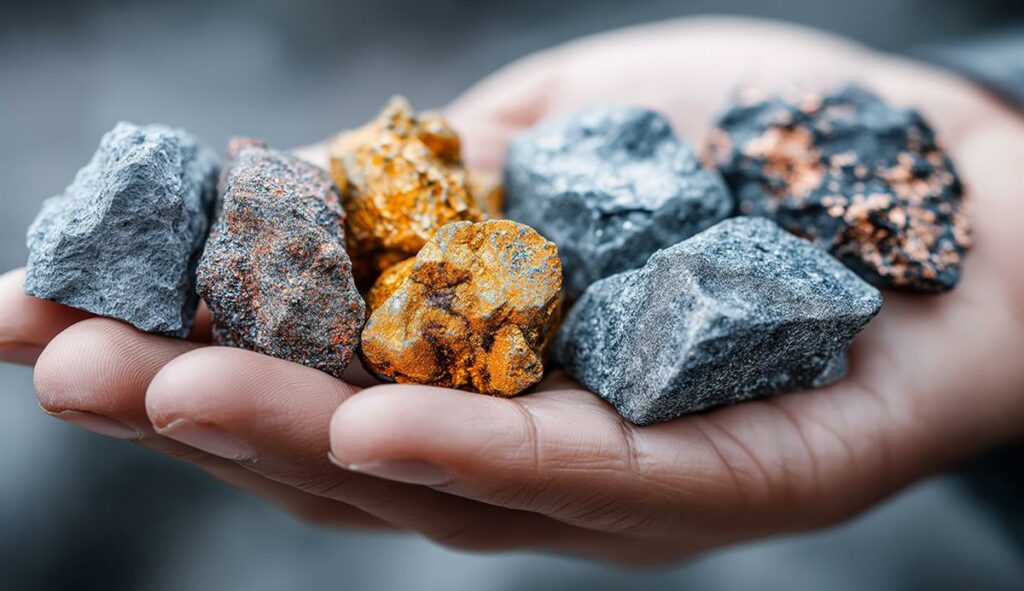
The European Union is having difficulties securing the supply of the critical raw materials it needs to meet its energy and climate goals, according to a new audit report published this week by the European Court of Auditors (ECA). The European Commission, however, believes that progress will be made.
Critical raw materials (CRMs) are economically important raw materials for which there is a high supply risk. The most recent list – embedded in the Critical Raw Materials Act in 2024 – identifies 34 critical materials, 26 of which are needed for key renewable energy technologies and 17 are regarded as strategic raw materials.
Batteries, wind turbines and solar panels require critical raw materials such as lithium, nickel, cobalt, copper, and rare earth elements. Most of these materials are currently concentrated in either one or a handful of non-EU countries such as China, Türkiye, and Chile.
In the light of the EU’s commitment to reducing net greenhouse gas emissions by at least 55 % by 2030 and achieving net zero by 2050, the role of CRMs is pivotal in order to successfully decarbonise the energy system, ECA underlines. The CRM Act sets only non-binding targets by 2030, and these apply only to a small number of raw materials that are regarded as ‘strategic’
The audit examined three ways for the EU to achieve “strategic autonomy” and secure the supply of CRMs: imports diversification (at most 65 % from a single country), domestic mining/production (at least 10 %) and recycling (at least 25 %). However, EU action on import diversification is not producing tangible results, bottlenecks hinder domestic production, and recycling is still in its infancy.
“Without critical raw materials, there will be no energy transition, no competitiveness, and no strategic autonomy. Unfortunately, we are now dangerously dependent on a handful of countries outside the EU for the supply of these materials”, said Keit Pentus-Rosimannus, the Estonian ECA Member responsible for the audit. In Estonia, she served as minister of environment, foreign affairs and finance.
According to the auditors, EU will struggle to secure the supply of the strategic raw materials it needs by 2030. Efforts to diversify imports have yet to produce tangible results although the EU has signed 14 strategic partnerships on raw materials or free trade agreements over the last five years.
Seven of the partnerships are located in countries with low or very low governance scores, according to the World Bank’s 2023 indicators. In its pursuit of CRMs, the EU has apparently downplayed the risk of low governance scores.
As these issues were not part of the audit scope, the auditors could not confirm if current safeguards are sufficient. While the partnerships need to deliver, governance and human rights issues should also be taken into account, the audit team explained at a press briefing.
The EU also aims to boost domestic extraction of strategic materials. In reality, exploration activities are underdeveloped. Even when new deposits are found, it can take up to 20 years or more for an EU mining project to become operational. This makes any concrete contribution by the 2030 deadline hard to imagine, according to ECA.
According to data presented in the Commission’s 2023 study on CRMs, EU countries with raw materials are Portugal, France, Finland, and Greece but the lead times of mining projects from discovery to first production are on average between 12 and 16 years. Variations in permit granting procedures, which in some cases are delegated to regional or even local authorities, can also add to this.
Ukraine is believed to possesses vast, largely untapped reserves of CRMs. Holding 22 of the identified CRMs, Ukraine is considered a strategic partner for diversifying supply chains away from China. But imports from Ukraine have decreased during the war. The EU will have to compete with the US following the mineral agreement between the US and Ukraine on access to Ukraine’s CRMs.
The CRM Act also envisages that at least 25 % of the EU’s strategic raw materials should originate from recycled sources by 2030. But the outlook is not promising: 7 out of 26 materials needed for the energy transition have recycling rates between 1 % and 5 %, while 10 are not recycled at all. Furthermore, most production and recycling targets are not specific to individual raw materials but aggregate figures.
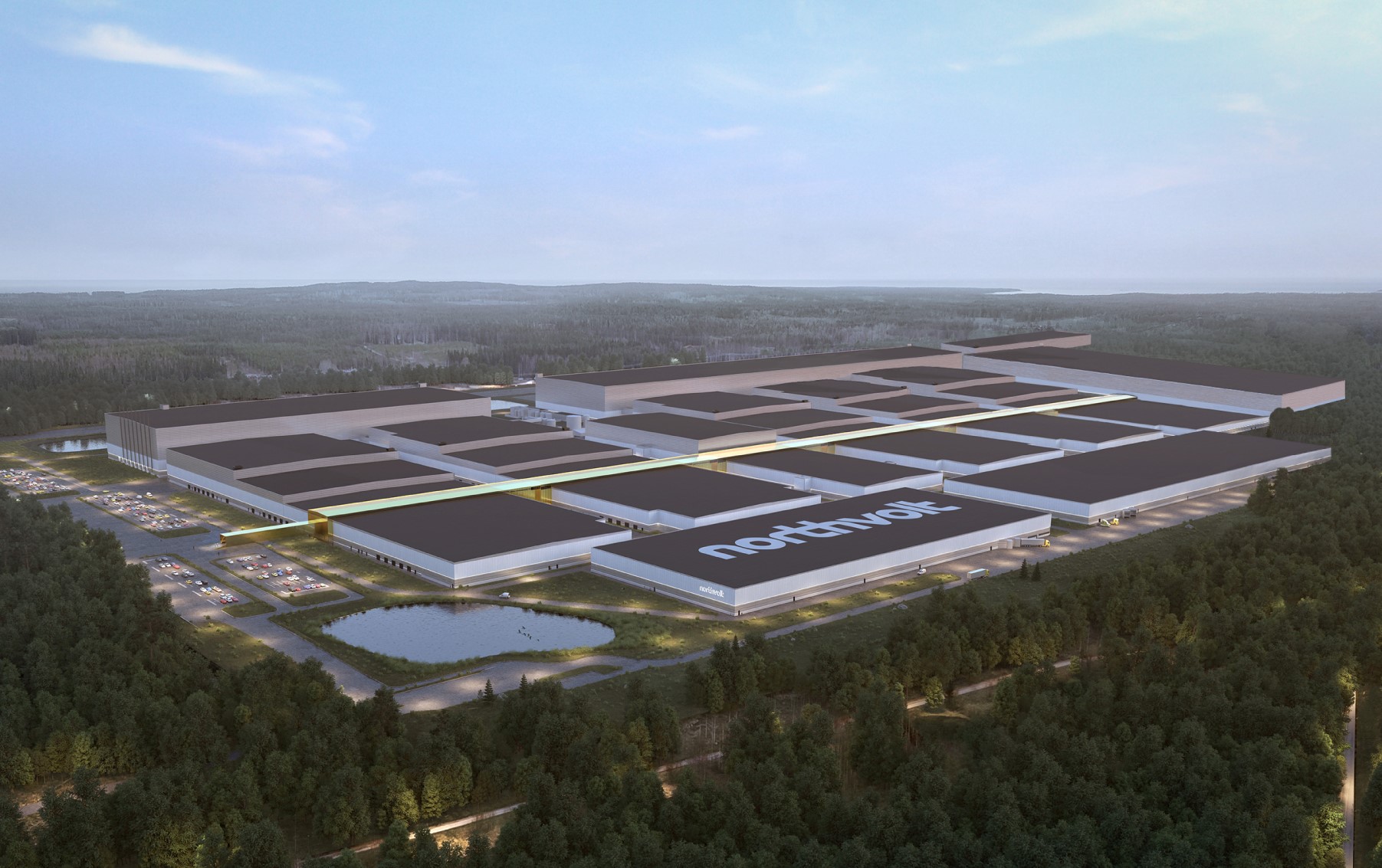
Northvolt’s gigafactory for production of batteries in Sweden, credit: Northvolt. A precautionary tale about securing raw materials and customers.
As previously reported, the Swedish company Northvolt, which built the first Gigafactory in the EU for the production of batteries, filed for bankruptcy in 2024. It had planned to secure 50 % of the raw materials from recycled batteries using 100 % renewable energy. But it never finalised its raw materials strategy before the bankruptcy.
The Commission launched so-called strategic projects for all three options to secure CRMs but they were in the beginning only strategic by name as no funding was attached to them. Many EU-supported projects are unlikely to succeed in time, the auditors say.
The Commission accepted all five audit recommendations (one sub-recommendation partially). All recommendations are equally important, according to ECA. In its reply, the Commission said that the points raised by the ECA during the audit had already been largely addressed.
“It’s important to remind that it's a very young policy and a shared responsibility with the member states,” a Commission spokesperson remarked. “We know that we still need to do more, in line with the report and that is why we are working on the establishment of a Critical Raw Material Centre in 2026, with the mandate to help securing access to CRMs for the European industry."
Partnerships are also translating into concrete outcomes. While agreements are long-term frameworks that de-risk investment and improve governance rather than instant import guarantees, evidence already shows impact, the spokesperson said, referring in particular to the cooperation between the EU and Canada.
“Taking into account the audit report’s findings, the Commission considers that the EU can make meaningful progress towards the 2030 benchmarks set out in the Critical Raw Materials Act (CRMA), while recognising that sustained efforts will be required,” the spokesperson told The Brussels Times.
"The first 60 Strategic Projects already make a substantial contribution to the 2030 targets, with further progress expected through upcoming project selections."
Asked whether the strategic projects are conditional on the use of renewable energy and the speeding up of permits for mining and processing, the spokesperson said, “No, strategic projects are not required to use renewable energy. However, the Commission ensures that project promoters implement their projects sustainably, with robust measures to monitor and minimise environmental and social impacts.”
In the new Battery Calls under EU’s Innovation Fund, aimed at accelerating the growth of and investment in the EU's battery manufacturing industry, projects should meet a number of operational objectives by 2030. One of them is to achieve the lowest possible carbon footprint of the supply chain from raw materials extraction through battery manufacturing, use and recycling.
