
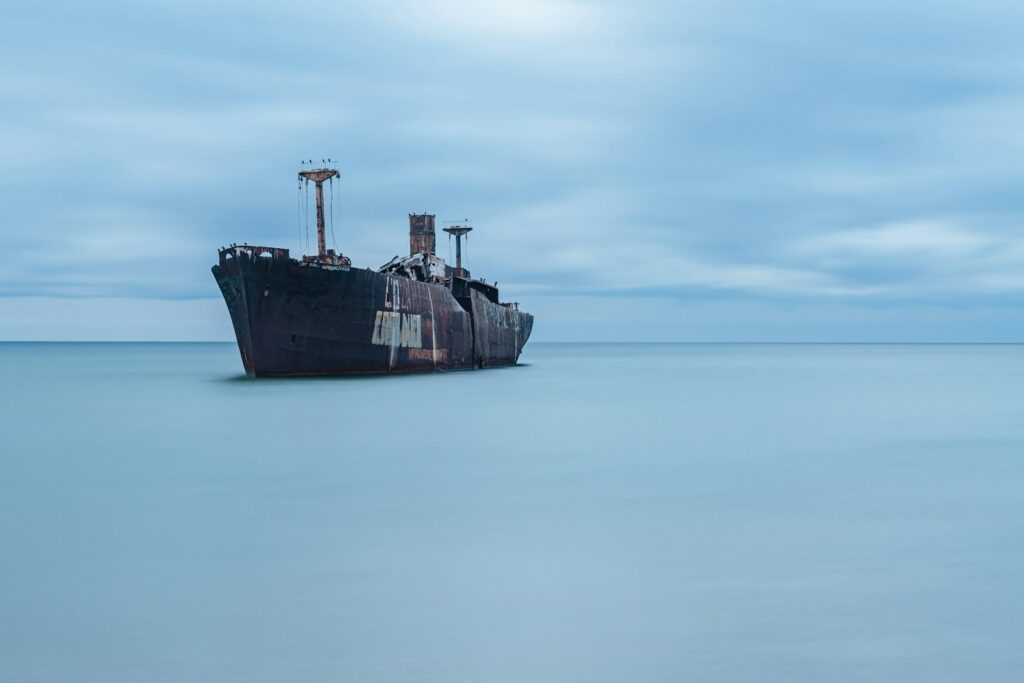
Coastal sediments near major shipbreaking yards in Aliağa, western Turkey, contained concentrations of two groups of toxic chemicals — PCBs and PBDEs — of up to 4,750 and 5,053 nanograms per gram, respectively, according to a new study summarised.
Persistent organic pollutants (POPs) are long-lasting carbon-based chemicals that can build up in living organisms and spread through land, air or sea, the European Commission informed in a report on Thursday.
Global controls include the Aarhus Protocol, in effect since 1998, and the Stockholm Convention, in force since 2004, it added.
Some POPs, including polychlorinated biphenyls (PCBs) and polybrominated diphenyl ethers (PBDEs), have been granted temporary exemptions for use in certain industrial components, and can still enter the environment.
Waste containing POPs can also accumulate after bans take effect, and PCB-contaminated materials and wastes have been estimated at 17 million tonnes globally.
The research examined a 30-kilometre stretch of coastline around Aliağa, which hosts some of the world’s largest shipbreaking yards as well as heavy ship traffic and nearby industrial activity including petroleum, petrochemical, iron-steel and power plant operations.
The researcher tested surface sediments collected in May 2023 for 46 types of PCB and 23 PBDEs.
Higher concentrations found near shipbreaking yards
PBDEs were identified in sediments at shipbreaking yards for the first time, the researchers said in the study cited by Commission.
In most samples, concentrations of both PCBs and PBDEs exceeded guidelines drawn from the Canadian Environmental Protection Act, 1999.
An ecological risk evaluation based on EU technical guidance found that levels of some chemicals posed moderate to high risks to benthic ecosystems — organisms living on or near the sea floor.
Sediments from Nemrut Bay, where land-based industrial activity is more abundant, had higher concentrations than those from Aliağa Bay, while samples from shipbreaking yards recorded the highest concentrations and those near beaches the lowest.
Higher-chlorinated PCBs were linked with shipbreaking, while lower-chlorinated PCBs and PBDEs were linked with land-based industrial emissions and urban run-off.
Compared with studies from about a decade earlier in the same area, concentrations of six indicator PCBs increased from 125–669 nanograms per gram to 152–1,591 nanograms per gram, the study found.
Earlier research from 2009 reported PCB concentrations of 2.7–2,450 nanograms per gram — around half of those observed in the latest sampling.
The study was authored by H. Demirtepe and published in "Environmental Pollution" in 2025, with sampling carried out in May 2023.
