
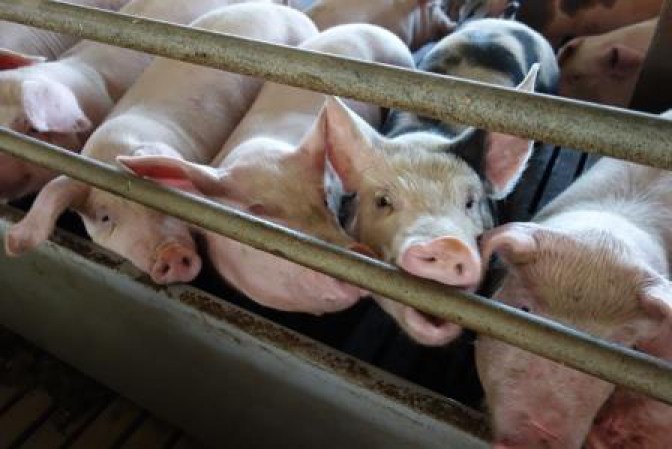
Animal welfare NGOs have recently sent letters to the European Commissioner for Health and Animal Welfare Olivér Várhelyi about the EU's outdated animal welfare legislation and certain issues on which no progress has been made so far.
A letter was sent last week to Várhelyi concerning the use of high concentrations of carbon dioxide gas (CO2) as a stunning method in slaughterhouses. Previously, he had also received a letter following the so-called PigStun-project, on developing non-aversive stunning methods for pigs – aiming to encourage EU pig slaughterhouses to adopt more animal-friendly methods.
The outcomes of the PigStun project have been highly encouraging, according to its report. As a direct result of the project, there are now at least two commercially viable and more humane alternatives to the use of CO2 for the stunning of pigs: argon and improved electrical systems. These methods would spare them avoidable pain, distress and suffering at slaughter.
A Commission spokesperson told The Brussels Times last December that no legislative follow-up of the legislation was foreseen, as alternatives to the current practices already exist and can be used by operators. However, the use of C02 is still permitted despite the scientists' opinion on its aversiveness for animals.
In their letter of 5 February, the NGOs wrote that urgent action is needed by the Commission and called for the removal of high concentrations of CO2 from the list of permitted stunning methods for pigs.
Missing the point
They do not accept the Commission’s reasoning that the regulation already permits the use of the more humane alternatives identified in the PigStun-project.
"This misses the critical point that pig slaughterhouses are unlikely to switch to more humane alternatives as long as EU law allows them to continue to use high concentrations of CO2," they noted.
The NGOs added that the United Kingdom's Animal Welfare Committee recently recommended that the CO2 stunning should be phased out in the UK within five years
"At this stage, the signals from the Commission do not suggest that a ban or phase-out of CO₂ stunning is forthcoming," said Olga Kikou, Director of Animal Advocacy & Food Transition.
"We are deeply concerned that, once again, the Commission appears more focused on prioritising economic arguments framed around 'competitiveness' and 'resilience' than on responding to citizens' expectations and clear scientific evidence on animal welfare," she added. "That direction of travel is out of step with societal expectations and with what we now know about the severe suffering caused by this method."
Now, the Commission confirmed that it received the letter and that a response will be sent "in due course," but gave no deadline.
When approached by The Brussels Times, the spokesperson declined to comment on a potential banning or phasing out of the CO2 stunning of pigs, as suggested in the letter.
Under the Code of Good Administrative Behaviour (Decision 2024/3083), the Commission is committed to answering enquiries from the public in the most appropriate manner and without delay. If a reply cannot be sent within 15 working days, the service responsible shall send a holding reply, indicating a date by which the addressee may expect a reply.
