
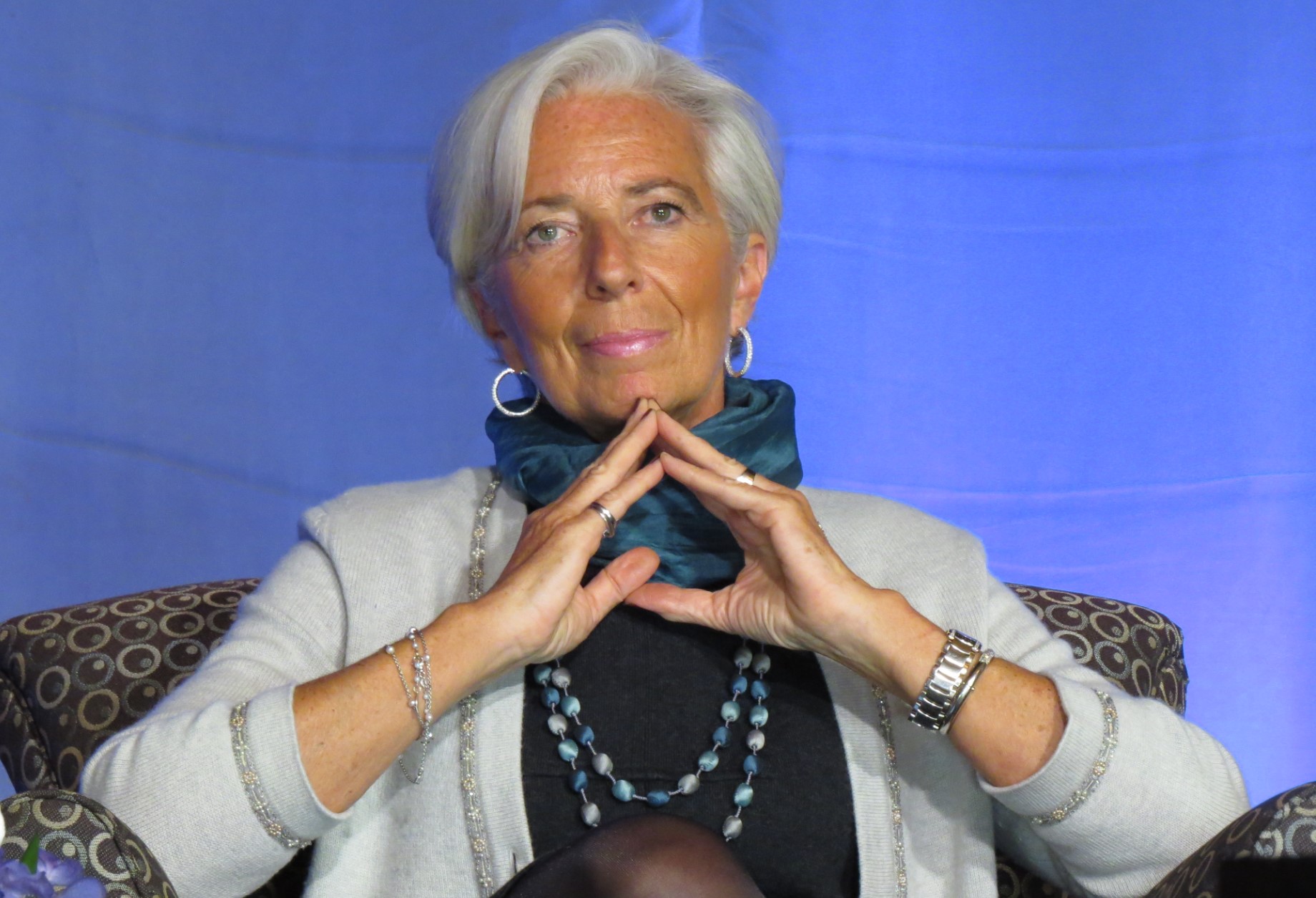
European Central Bank President Christine Lagarde said international rules and institutions built after the Second World War are “fraying” and need reforms that reflect shifts in global economic power.
Lagarde made the remarks while accepting the Wolfgang Friedmann Memorial Award at Columbia Law School on 20 February 2026, as her speech was released on Friday.
She compared law and money as “institutional systems built on trust backed by authority”, saying laws work because people believe in their legitimacy and money works because people believe it will be accepted for future payments and broadly hold its value.
Lagarde described talk of a “new world order” as “a return to older patterns of coercion and mercantilism”, arguing it was “not new”, “not world” and “not an order.”
She traced the development of the post-1945 international architecture — including the United Nations, the Bretton Woods system, the General Agreement on Tariffs and Trade and the World Trade Organization — and said it was “co-constituted by countries, great and small, from across the world.”
The period since 1945 saw the greatest reduction in interstate war in recorded history, while trade expanded and lifted hundreds of millions out of poverty, Lagarde said.
Trade rules, China and reform proposals
Lagarde said China’s “extraordinary rise” changed the balance of forces within the system and that the multilateral trading framework “was not built” for a major power whose growth model could generate trade surpluses large enough to affect the politics of its partners.
She noted that global interdependence remains high, with almost half of all trade embedded in global value chains and cross-border financial positions at historically high levels.
Severe trade fragmentation could reduce global output by up to 7% of GDP, while adding technological decoupling could raise losses in some countries to 12%, according to International Monetary Fund estimates cited in the speech.
Lagarde said the International Court of Justice has more cases on its docket than at any point in its history, and said states that feel wronged still turn to international tribunals rather than abandoning them, according to the published remarks.
She also referred to Europe’s response to Russia’s war against Ukraine, saying Europe immobilised Russian assets rather than seizing them outright because of legal principles governing sovereign assets.
On trade, Lagarde said 70% of global trade is still conducted under WTO rules and that the United States has put forward proposals for reform.
She added ministers would meet in Cameroon next month to discuss the WTO’s future and called it “increasingly untenable” that China claims exemptions designed for much poorer countries.
Lagarde also pointed to the growth in bilateral and regional agreements, saying the number has more than doubled since 2008 to reach 375 last year.
