
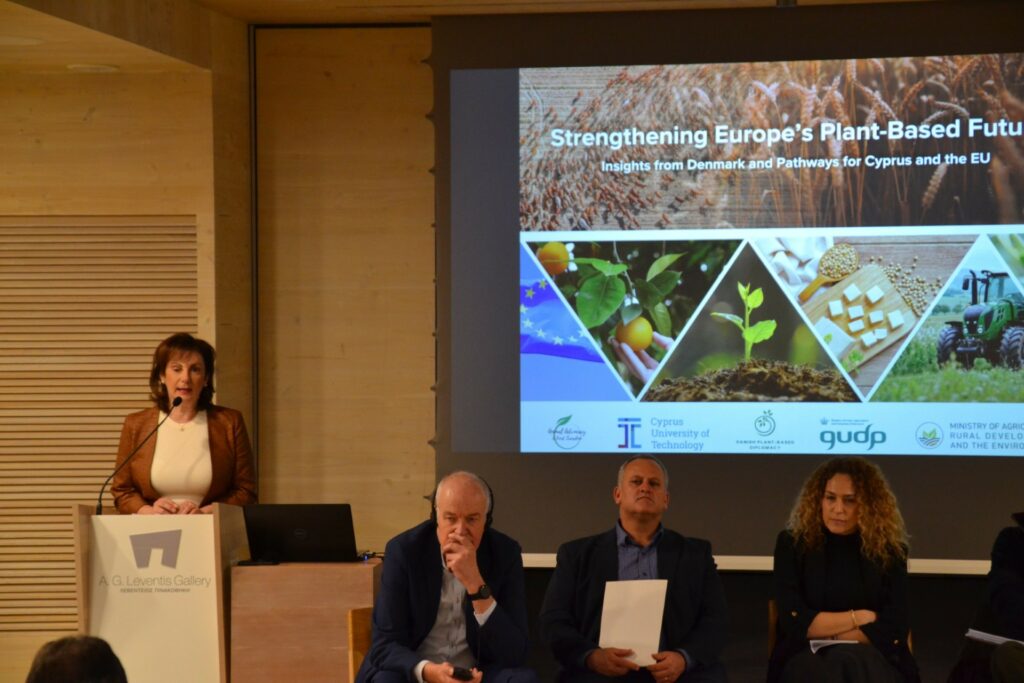
The Cyprus EU Presidency highlighted the importance of plant-based food as part of the EU’s competitiveness, food security and resilience agenda, at a conference in the country's capital, Nicosia, last week.
The event, called 'Strengthening Europe’s Plant-Based Future: Insights from Denmark and Pathways for Cyprus and the EU', was organised by the Cypriot Ministry of Agriculture in cooperation with the Cyprus University of Technology, the Danish Plant-Based Diplomacy, and Brussels-based NGO Animal Advocacy & Food Transition.
Cyprus is dependent on imported proteins (exceeding 90%), which makes diversification "not merely desirable, but strategically necessary," according to the Cypriot ministry. It stressed that the conference was part of a broader discussion following a call in January 2025 to the European Commission to propose an Action Plan for Plant-Based Foods.
The proposal referred to the strategic dialogue on the future of EU agriculture. The dialogue, which had been launched by the Commission in February 2024, recommended that the Commission develop an EU Action Plan for Plant-based Foods to strengthen the plant-based agri-food chains from farmers all the way to consumers by 2026.
'Reshaping the way we think'
In the proposal, over 130 NGOs outlined key opportunities and pathways for the EU to strengthen the plant-based foods value chain, measures that can assist in building a healthier, more sustainable, fair, competitive, self-sufficient and resilient food system for all.
Plant-based foods covered by the action plan would range from fresh fruits, vegetables, whole-grains, legumes, nuts, mushrooms, tofu and tempeh, as well as plant-based alternatives to animal-sourced products that are nutrient-rich and compatible with WHO guidelines on salt, sugar and fat content.
In a special message, Danish Minister for Food, Agriculture and Fisheries Jacob Jensen noted that "geopolitical tensions, climate change and pressure on natural resources are reshaping the way we think about food and agriculture," adding that plant-based foods represent "a strategic response to some of the biggest challenges of our time."
The debate comes as financial and supply chain risks linked to current protein production models are receiving increasing attention. Climate impacts, feed volatility and pressure on natural resources are expected to affect productivity and costs, reinforcing the need for diversification and innovation across Europe’s agri-food system.
"We look forward to Cyprus using its Presidency to continue advancing this important discussion at the European level," commented Olga Kikou, Director of Animal Advocacy & Food Transition.
"Countries like Cyprus highlight the richness and diversity of Europe’s environments, cultures, dietary habits and agricultural traditions," she said. "A European strategy on plant-based foods must reflect this diversity and give each Member State the tools to adapt solutions to its own realities and strengthen its food systems."
Sustainable balance
The Strategic Dialogue observed in 2024 a trend in the EU towards a reduction of consumption of certain animal-based products and an increased interest in plant-based proteins.
"To improve the sustainable balance between animal and plant-based protein intake at the European population level, it is crucial to support this trend by rebalancing towards plant-based options and helping consumers to embrace the transition," they said.
The Commission’s Vision for Agriculture and Food (February 2025) mentioned "the need to consider both the way protein is produced and consumed in the EU", but downplayed animal welfare and did not address the transition to plant-based food.
The Brussels Times reported in 2024 that the cost difference between plant-based and animal products is rapidly shrinking, making vegetarian options more accessible than ever before.
