
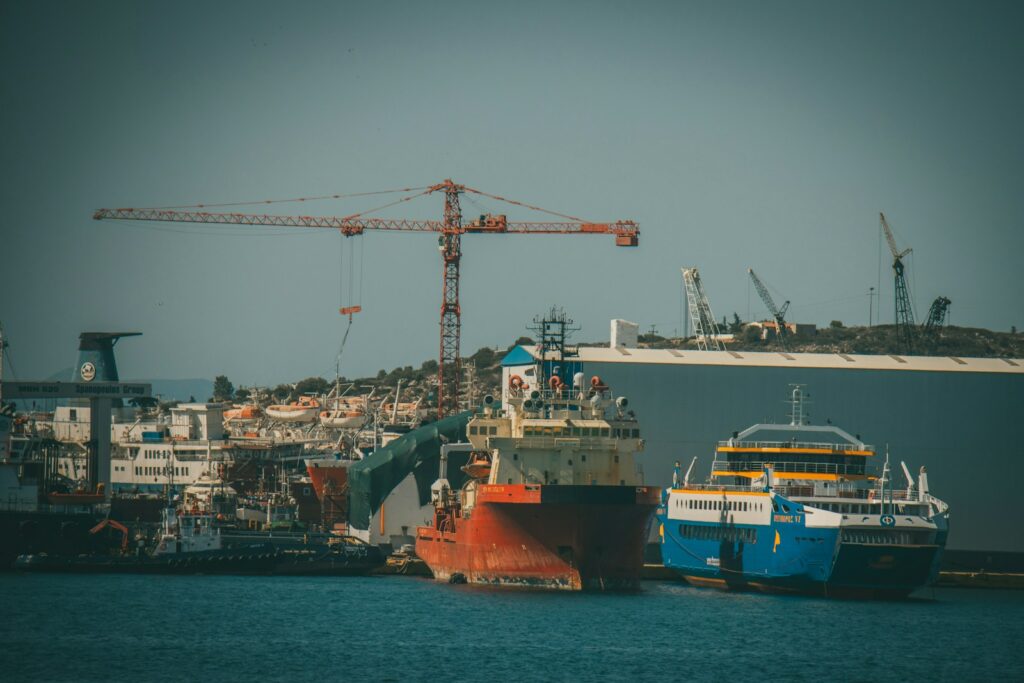
The European Commission has adopted an Industrial Maritime Strategy setting out actions for EU shipbuilding and shipping, alongside a separate EU Ports Strategy.
The plan covers Europe’s maritime manufacturing and shipping industries, with measures linked to clean energy and digital technology, as well as defence-related capabilities, the Commission said in a statement on Wednesday.
It described EU shipbuilding and shipping as linked to trade flows, mobility and defence, and to protecting assets and resources in Europe’s Exclusive Economic Zones.
The strategy is organised around three pillars.
Under “Build, Equip and Repair”, the Commission said it will launch an EU Industrial Maritime Value Chain Alliance and set out actions to support digital and circular changes in shipyards.
Under “Transport and Connect”, the Commission said it plans measures to simplify reporting and administrative procedures for shipping, support green and digital changes, and reinforce EU engagement at the International Maritime Organization on global maritime standards.
It also said it will continue using current state aid guidelines for maritime transport, including measures intended to encourage vessels to choose EU flags.
Security, funding and skills
The third pillar, “Secure and Protect”, covers naval, underwater, dual-use and military mobility capabilities, the Commission said, including work to support naval production capacity and an intention to pursue a dual-use ferry construction support mechanism with enhanced military specifications.
The Commission noted the strategy is backed by cross-cutting work on research, finance and skills, including efforts to identify skills gaps in maritime education and expand training and upskilling networks.
Funding sources named include the Connecting Europe Facility, Innovation Fund, Horizon Europe and the European Defence Fund, as well as national revenues from the EU Emissions Trading System and risk-sharing tools under InvestEU.
A high-level Maritime Industries and Ports Board will be set up to support implementation, chaired by the responsible Commissioner and executive vice-presidents.
