
Local and regional leaders have called for the EU’s next seven-year budget to rise to 1.27% of the bloc’s gross national income, warning that proposed reforms could weaken long-term regional investment.
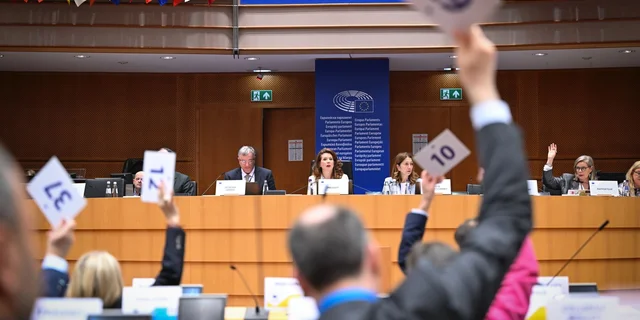
Members of the European Committee of the Regions (CoR) adopted an opinion on 4 March after raising concerns with EU budget Commissioner Piotr Serafin about plans for the EU’s 2028–34 Multiannual Financial Framework (MFF) — the EU’s long-term spending plan, the CoR said.
The opinion, drafted by Finnish city councillor Sari Rautio, also argued that €150 billion of repayments linked to the post-pandemic NextGenerationEU recovery scheme should be kept out of the main budget headings because they are loan repayments rather than new money for investment.
If NextGenerationEU repayments are excluded from the European Commission’s proposal, the MFF would rise only slightly — from 1.13% now to 1.15% of EU gross national income — the European Court of Auditors said.
Cohesion and agriculture funding lines
The CoR called for a “do no harm to cohesion” principle to apply across all EU policies, including measures linked to competitiveness.
It also backed making funding more flexible, but said this should not lead to centralisation or turn long-term investment programmes into short-term crisis tools.
The group asked for separate budget lines to be kept for Cohesion Policy and agriculture, and for guarantees that Cohesion Policy support remains available to all categories of region and not only the poorest.
CoR president Kata Tüttő criticised the idea of a “monster fund” based on national plans — referred to as NRPPs in the statement — saying it would not simplify spending and would increase complexity at national level.
Serafin stated the Commission is proposing a bigger EU budget to strengthen security and competitiveness, while modernising it to be more flexible in crises and preserving predictability for cohesion and agriculture.
