
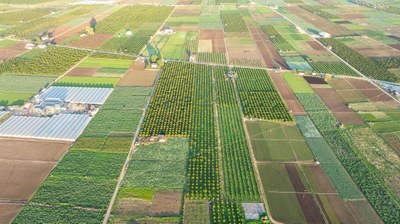
Climate-resilient farming methods can help stabilise farmers’ incomes while protecting Europe’s food supply and ecosystems, according to the European Environment Agency (EEA).
European agricultural production is facing pressure from climate change, soil degradation and rising costs for inputs such as fertilisers, pesticides, irrigation, imported feed and energy, the EEA said on Tuesday in its published briefing “Building climate-resilient agriculture in Europe: an economic perspective.”
The briefing analysed 51 farm-level case studies across Europe, from the United Kingdom to Ukraine, and found that climate-resilient agriculture practices can support income stability alongside benefits for food security and the environment.
The EEA defines climate-resilient agriculture as approaches that reduce farms’ exposure and sensitivity to climate shocks while maintaining long-term economic viability.
The case studies grouped practices into four areas: soil and water management, crop system diversification, landscape-level management and livestock system redesign.
One example highlighted was reduced tillage — using less ploughing — which the EEA said can improve soil structure and water retention, helping farms cope better with drought and heavy rainfall.
In the case studies cited, reduced tillage was associated with cutting diesel use by around 50%, reducing production costs by about 40%, and lowering labour needs by roughly 25–30%, depending on context.
Transition risks and the need for support
Farms were often most economically vulnerable during the shift to climate-resilient systems, the analysis found.
Many of the practices provided public benefits — including landscape features and ecosystem services — but offered limited short-term private returns for farmers.
In parts of southern Europe where farms are already under climate stress, resilience measures can deliver immediate benefits by reducing losses and costs, the briefing said, adding that benefits may take longer to appear in other regions.
Targeted investment, stronger governance and better monitoring of climate risks and adaptation were identified as needs for supporting farms through upfront costs and transition risks.
