
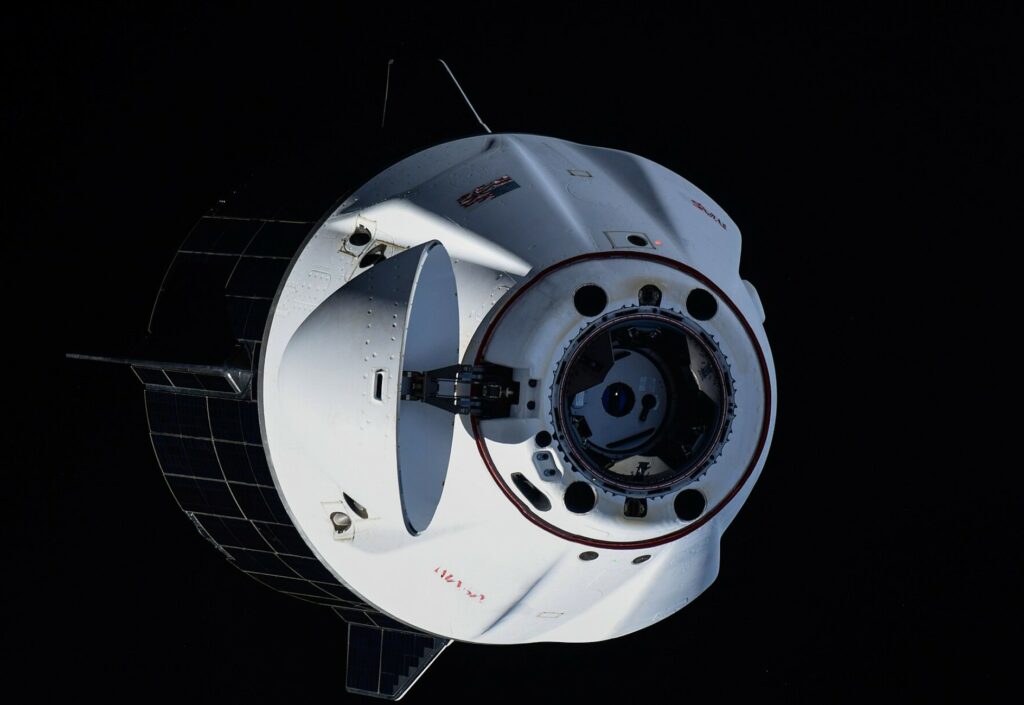
Europe’s space agency has backed a plan to buy a Crew Dragon flight to the International Space Station in early 2028 and agreed new work with Japan on an asteroid mission.
The decisions were taken at the European Space Agency (ESA) Council’s 345th meeting in Interlaken, Switzerland, held from 18 to 19 March 2026, the organisation announced on Thursday.
Member states endorsed the concept of EPIC — short for ESA Provided Institutional Crew — a proposed mission intended to provide a medium-duration stay for ESA astronauts aboard the ISS.
The plan foresees acquiring a Crew Dragon mission in the first quarter of 2028 in collaboration with “interested international partners.” Crew Dragon is the crew spacecraft built by US company SpaceX.
Asteroid mission and space safety
ESA member states also approved cooperation with Japan’s space agency, JAXA, on Ramses, a mission to study the asteroid Apophis in detail, the organisation said.
JAXA intends to contribute a thermal infrared imager (TIRI), lightweight solar array wings and its H3 rocket.
Separately, member states approved collaboration with the Carnegie Institution for Science to host and operate ESA’s FlyEye-2 telescope at Las Campanas Observatory in Chile, expanding Europe’s ability to detect and track near-Earth objects — asteroids or comets whose orbits come close to Earth.
Canada’s participation was approved in four ESA programmes: ACCESS, ERS‑EO, Moonlight and FutureNAV.
The decision follows what ESA described as Canada’s largest subscription to ESA since it began partnering with the agency in 1979.
The Council designated Juan Carlos Cortés Pulido as the new Chair of the ESA Council, with Tanja Permozer and Kimmo Kanto as Vice-Chairs for a two-year term starting on 1 July 2026.
