
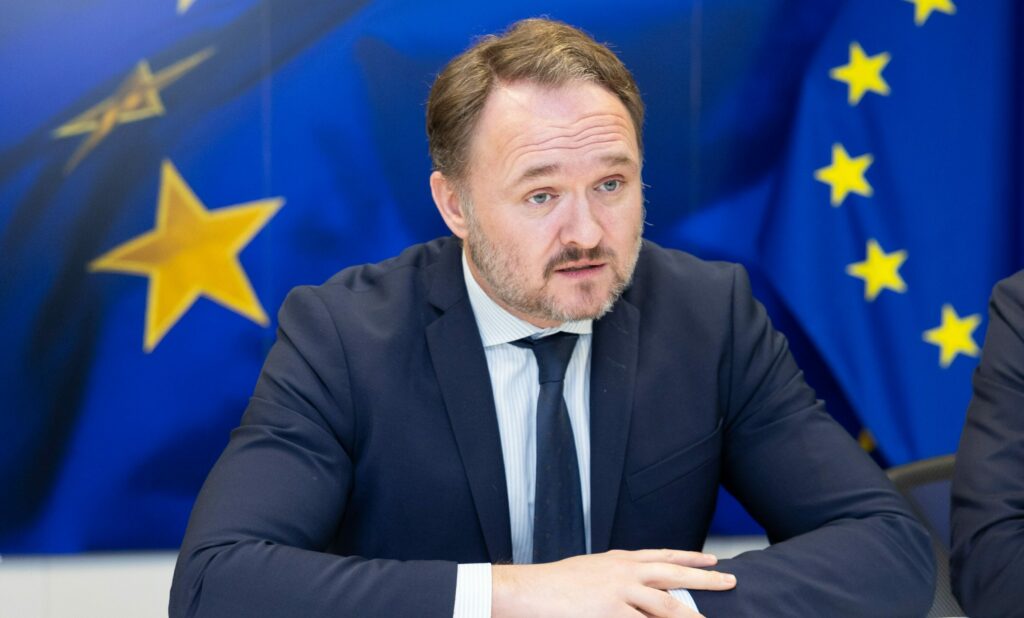
The European Commission has called for a reduction in oil demand in Europe amid an ongoing energy crisis worsened by the conflict in the Middle East.
After meeting with EU energy ministers on Tuesday, European Commissioner Dan Jorgensen refrained from suggesting specific measures such as reducing car use or limiting air travel.
However, he warned of an escalating situation, stressing the need to cut oil demand and urging Member States to consider this when implementing crisis measures.
Gas up by 70% oil by nearly 60%
Since the conflict began a month ago, the price of gas in Europe has surged by 70%, while oil prices have risen by nearly 60%. This has added €14 billion to the energy costs of the European Union.
Countries have responded with varying measures to the price spike.
France, facing budgetary constraints, has introduced targeted aid worth €70 million for farmers, fishers, and transport businesses to offset fuel costs.
Spain has approved a broader €5 billion plan, which includes a VAT reduction and discounts of up to €0.30 per litre of fuel at petrol stations.
Commission plans to issue toolkit
Italy has temporarily lowered fuel prices by €0.25 per litre through a decree, a step also echoed by Portugal and Sweden.
The European Commission has urged Member States to avoid measures that might inadvertently increase fuel consumption.
It plans to soon propose a toolkit to tackle high energy costs, including a measure to ensure that electricity faces lower taxation than fossil fuels.
IEA recommendations
In the meantime, the Commission has advised countries to consider the International Energy Agency’s recommendations.
These include reducing motorway speed limits, promoting remote work, carpooling, increased use of public transport, and limiting air travel where alternatives are available.
The EU is also bracing for a prolonged energy crisis.
On gas, the Commission suggests lowering stock refill targets for next winter to ease pressure on prices.
Electrification
For electricity, Brussels recommends temporary tax reductions.
At present, a coordinated reduction in demand for oil and gas remains one of the few tools available to lessen price pressure, according to Phuc-Vinh Nguyen, an energy expert at the Jacques Delors Institute.
He noted that another key measure was a Europe-wide electrification plan scheduled for May, which could potentially be expedited by identifying best practices for transitioning to electric systems.
