
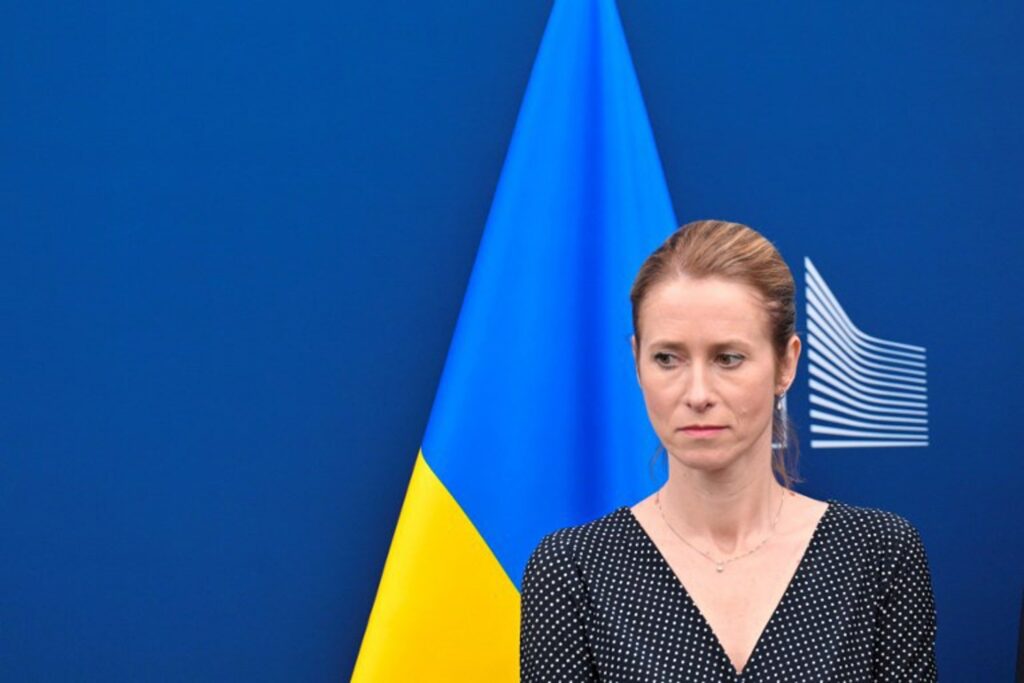
European Union foreign policy chief Kaja Kallas said the EU is preparing a new round of sanctions against Russia and will provide Ukraine with an additional €80 million drawn from the profits of frozen Russian assets, during a visit to Kyiv.
Kallas said she visited Bucha on the outskirts of Kyiv to mark four years since its liberation, recalling that images of murdered civilians and mass graves emerged there in March 2022, the European External Action Service (EEAS) informed in a release on Thursday.
She said a year of peace talks had not produced a breakthrough because Russia had been “deliberately stalling”, while Ukraine had shown willingness for peace.
The EU is advancing work on a special tribunal for the “crime of aggression” and an International Claims Commission linked to Russia’s war, and is aiming to reach the “next milestone” on both by the Council of Europe ministerial meeting in May, she informed.
Kallas stated the EU’s “20th package” of sanctions against Russia was “ready to go” and would tighten measures “especially around Russia’s shadow fleet” — a term used for ships accused of helping Russia move oil and other cargo outside existing restrictions.
Air defence and winter energy needs
Air defence was described as Ukraine’s top priority, with Kallas saying the country needed more Patriot missiles — US-made air defence systems — to protect its skies.
She added that ministers would not allow the war involving Iran to divert attention away from Ukraine.
International support was being mobilised to provide Ukraine with generators and repair equipment so the country could be better prepared for next winter, Kallas said.
Asked about Ukraine joining the EU, Kallas said she could not give a concrete date, but said accession depended both on reforms in candidate countries and decisions by the EU.
She also declared that European ministers “should work for Europe, not for Russia”, in response to a question about leaked audio recordings reportedly involving Russia’s foreign minister Sergei Lavrov and Hungary’s foreign minister Péter Szijjártó.
