
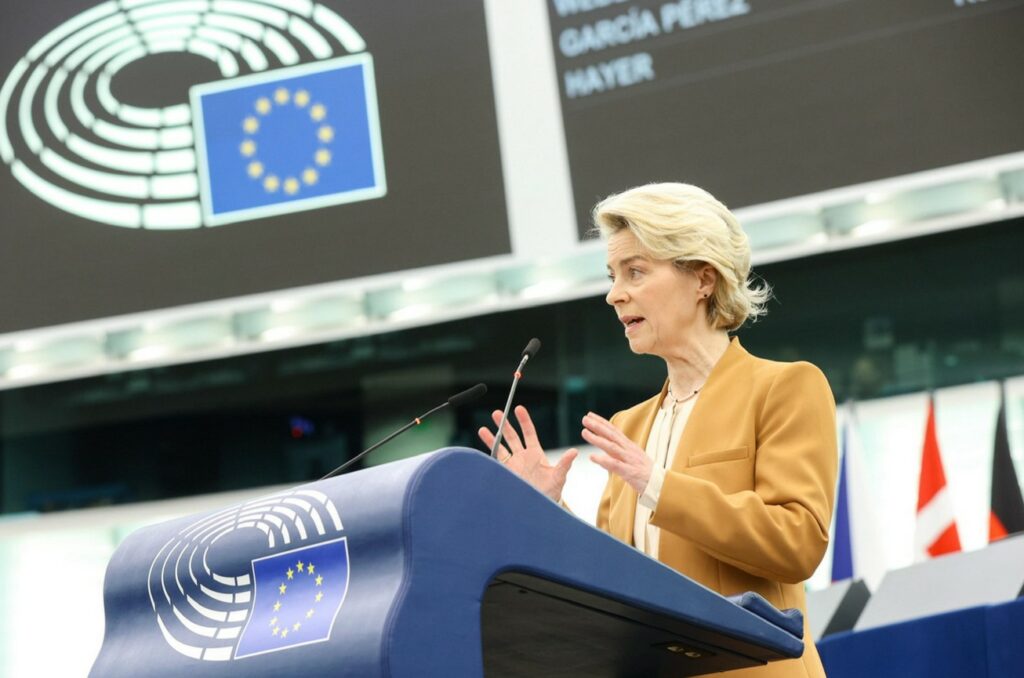
The EU’s fossil fuel import bill has risen by more than €22 billion since the outbreak of war in the Middle East 44 days ago, even though the bloc has not imported any additional energy, European Commission President Ursula von der Leyen informed.
Von der Leyen said in a statement on Monday that EU leaders held an “orientation debate” focused mostly on the economic impact of the conflict, warning that disruptions to energy supplies from the Gulf would continue for some time even if fighting stopped immediately.
She noted a ceasefire had been announced in recent days, but negotiations had since stalled, and thanked Pakistan for what she described as its role in reaching that point.
The Commission President stated any agreement would need to address concerns linked to Iran’s nuclear and ballistic missile programme and actions obstructing navigation through the Strait of Hormuz, adding that the “ongoing closure” of the strait was causing significant damage and that restoring freedom of navigation was a priority.
She also said continued strikes on Lebanon risked derailing the wider process, and that the EU was mobilising ReliefEU stocks to provide immediate aid to the Lebanese population.
Energy price measures due next week
Von der Leyen said the European Commission would present a set of measures to EU leaders at an informal European Council meeting in Cyprus next week, with a formal Commission communication due the Wednesday before the meeting.
She emphasised the package would include steps to tighten coordination between member states on energy, including coordinated gas storage filling to avoid countries competing in the market at the same time, and coordinated releases of oil stocks.
The Commission also plans to discuss how member states can support vulnerable households and sectors facing high energy prices, with von der Leyen saying measures should be targeted, fast and temporary.
She informed the Commission would consult member states this week on more flexible state aid rules to allow temporary support for the most exposed sectors, with the aim of adopting a temporary framework this month.
Von der Leyen said the Commission was also looking at ways to reduce energy demand, including measures linked to energy efficiency such as building renovations and replacing equipment in industrial operations.
She set out further work on longer-term changes affecting parts of energy bills, including proposals on electricity taxes and grid charges that the Commission intends to present in May.
She also referred to planned changes to the EU Emissions Trading System (ETS) — the bloc’s carbon market — saying the Commission had proposed adjustments to the Market Stability Reserve and remained on track to present a full review of the ETS in July.
Renewables and nuclear now account for more than 70% of the EU’s electricity generation, von der Leyen said, adding that the Commission wants faster progress on grid connections, storage and flexibility so that clean power is not left unused.
She informed the Commission planned to present an electrification strategy before the summer, including a new target for electrification, and would convene an investment conference to help mobilise private capital alongside existing EU funding.
