
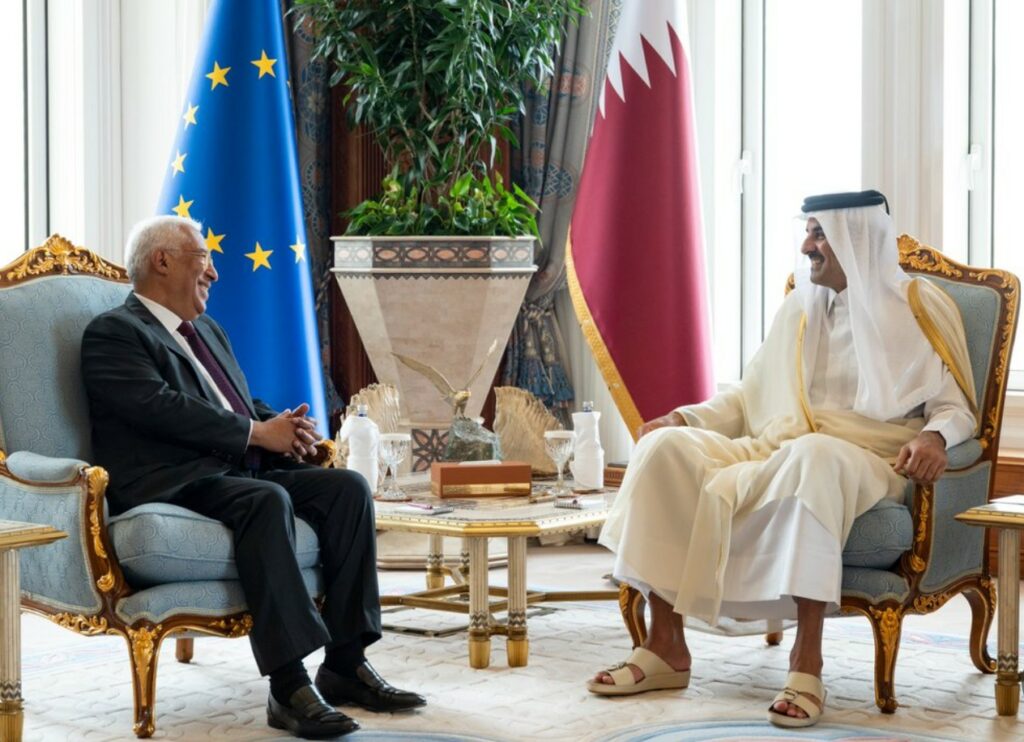
European Council President António Costa said he had held two days of talks with leaders in the United Arab Emirates, Saudi Arabia and Qatar amid what he described as a fragile ceasefire and recent attacks on the Gulf states.
Costa said the European Union “stands in full solidarity” with Gulf countries and called Iran’s attacks “unacceptable”, adding that they violated the states’ sovereignty and territorial integrity, according to his remarks, cited by the European Council press service on Wednesday.
He disclosed that his visit focused on two priorities: working towards what he called a stable and lasting ceasefire, and restoring freedom of navigation through the Strait of Hormuz, an oil and trade shipping route between the Gulf and the Arabian Sea.
Costa declared the EU had consistently called for de-escalation and negotiations “in full respect of international law”, and urged parties to use momentum from what he described as a recent US-Iran ceasefire brokered by Pakistan to address international concerns about Iran.
Strait of Hormuz and shipping
The Strait of Hormuz and the Red Sea were described as “vital arteries” for the global economy, supply chains and world trade in Costa’s statement.
He said restoring freedom of navigation in the Strait of Hormuz was “crucial and urgent”, and said Europe was committed to helping guarantee the “safe and unimpeded passage of ships.”
Costa said this was the objective of a coalition that France and the UK were assembling with partners around the world.
Turning to Lebanon, Costa described Hezbollah as an “existential threat” to the country and a destabilising factor for international peace and security.
He said EU institutions supported what he called a decision by Lebanese President Joseph Aoun to ban Hezbollah’s military activities, and described talks held the previous day between Israel and Lebanon in Washington as a “welcome step.”
